Have you ever stared at an Italian menu, wondering if it’s called antipasto or antipasta? You are not alone.
This is one of the most common spelling confusion points for food lovers. People search for this keyword because they have seen it spelled both ways online, on menus, or in recipes and want to know which one is correct before they look silly using the wrong word.
This article solves that confusion once and for all. We will explore the difference between these terms, look at the history, and give you the confidence to use the right word every time.
Antipasto or Antipasta maens
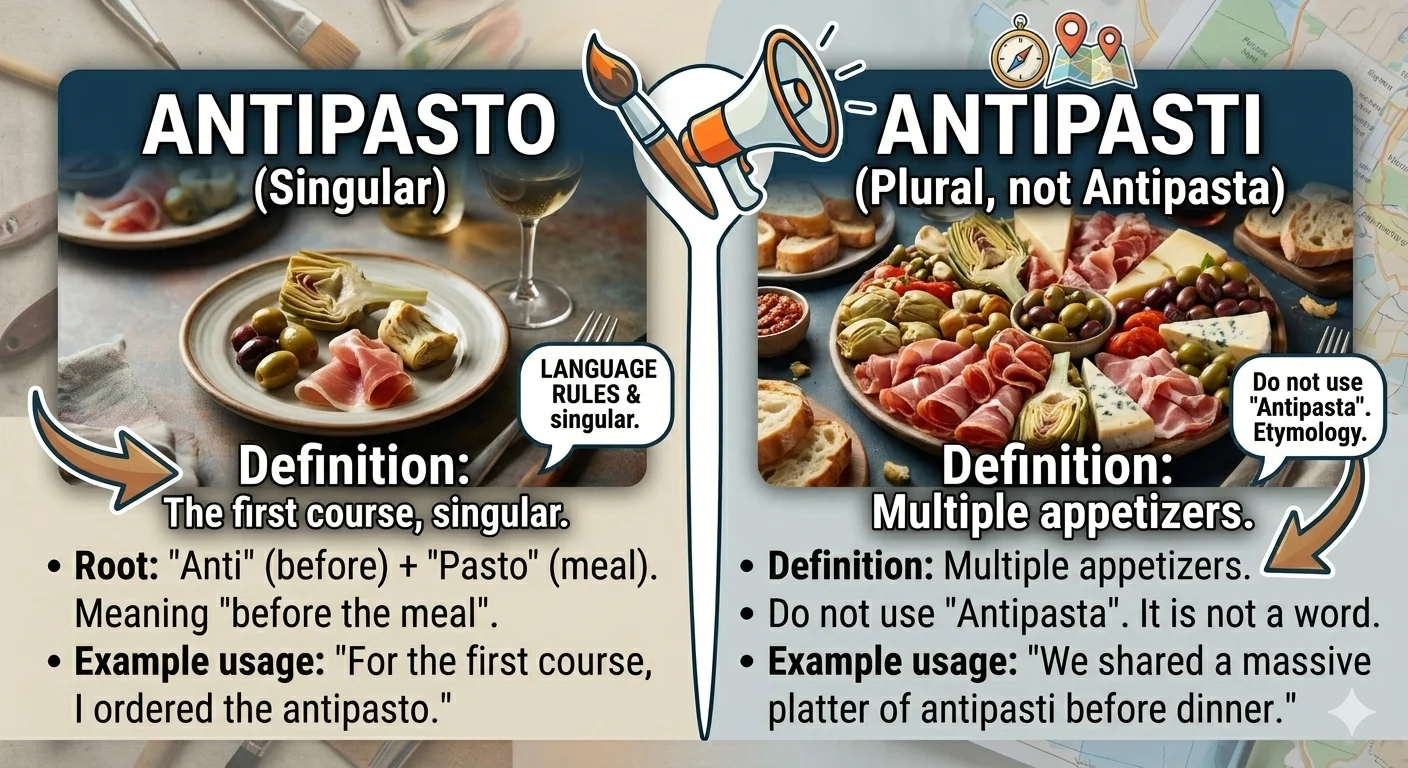
The correct term is Antipasto. “Antipasta” is a common misspelling.
Think of it this way: Antipasto means “before the meal” (from the Italian words ante [before] and pasto [meal]). “Antipasta” would technically mean “before the pasta,” which is a misunderstanding of the word .
Examples:
- Correct: “We shared a delicious antipasto platter with prosciutto and olives.”
- Incorrect: “I ordered the antipasta salad.”
- Plural Correct: “The antipasti at that restaurant are always fresh.”
The Origin of Antipasto
To understand why we say antipasto, we have to look at history. The word comes from Latin. “Ante” means before, and “pastus” means food . So, literally, it means “before the food.”
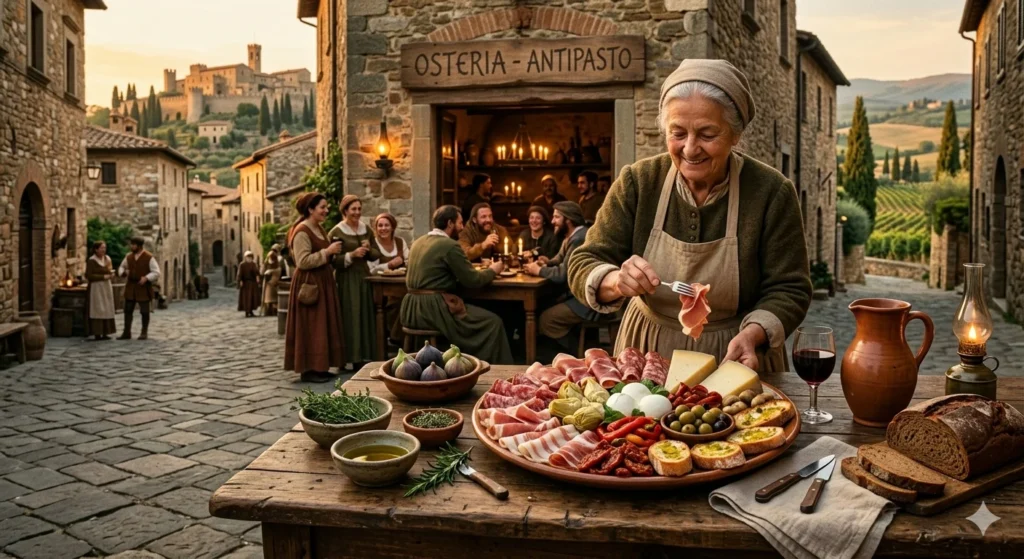
This tradition dates back to Medieval Italy. During that time, meals often started with small, room-temperature finger foods like sugared nuts, sliced ham, and pickled vegetables. The purpose was simple: to awaken the appetite and prepare guests for the feast to come .
So, why do people say “antipasta”? This mistake likely happened because “pasta” is the most famous Italian food word in the English language. Over time, English speakers misheard “pasto” (meal) and replaced it with the more familiar word “pasta,” creating the incorrect term “antipasta” .
British English vs American English Spelling
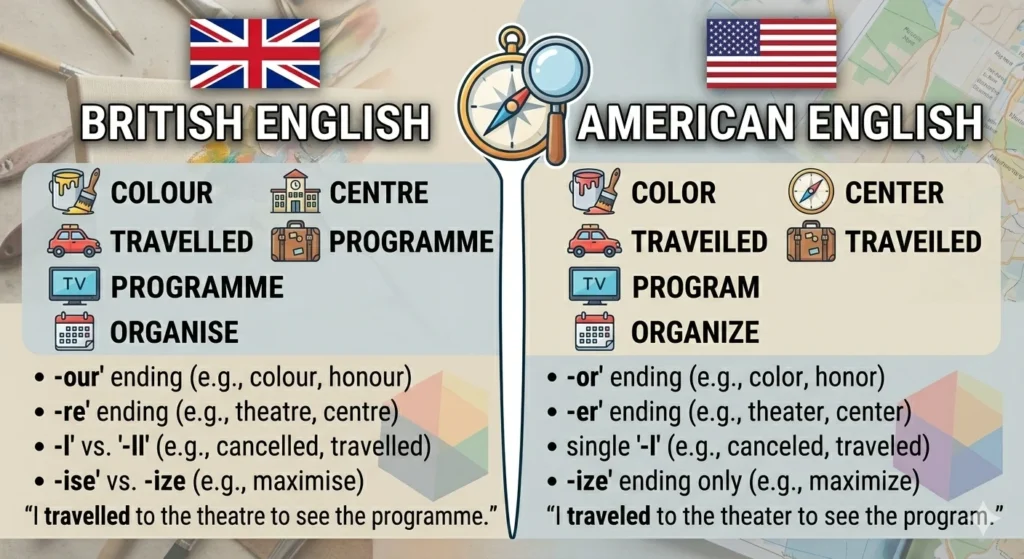
Here is the good news: both British and American English agree on this one. The standard spelling is antipasto in all forms of English. The difference lies in how we pronounce it and use the plural.
- British English: Pronounced /ˌæntɪˈpæstəʊ/ (an-tih-PASS-toh) .
- American English: Pronounced /ˌɑntiˈpɑstoʊ/ (ahn-tee-PAH-stoh) .
Which Spelling Should You Use?
Choosing the right word depends on where your audience is from and how formal the situation is.
- In the US: Most people will understand you if you say “antipasta,” but they will know it is incorrect. Using antipasto makes you sound more knowledgeable.
- In the UK and Commonwealth: Stick to antipasto. British English tends to be stricter about maintaining original spellings of foreign words.
- In Italy: You must use antipasto (singular) or antipasti (plural). If you use “antipasta,” locals will know immediately that you are a tourist .
- Global/Online Writing: Always use antipasto. It is the standard form recognized by dictionaries like Oxford and Collins .
Common Mistakes with Antipasto
Even native speakers make mistakes with this word. Here are the most frequent errors and how to avoid them.
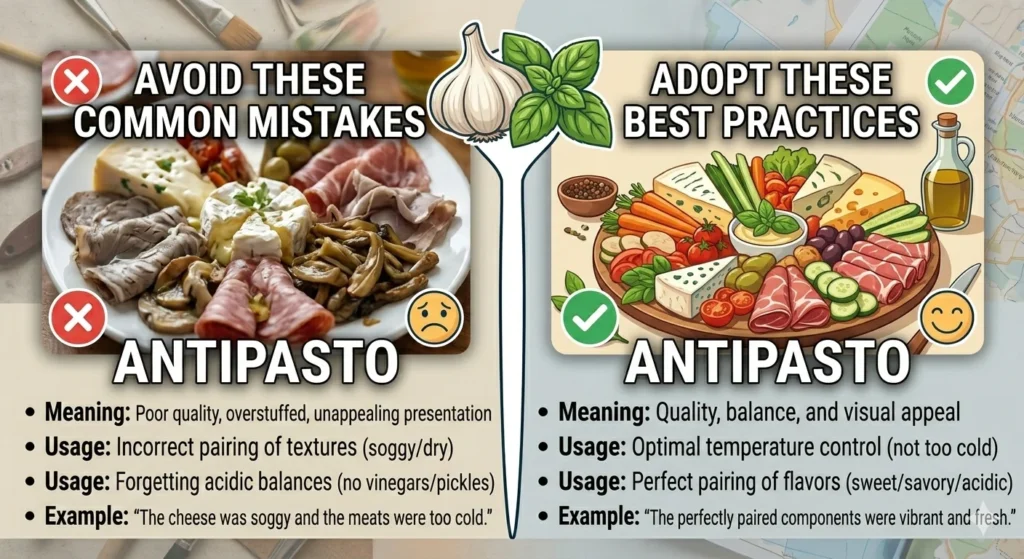
- Using “Antipasta” for the food: This is the biggest one. Remember, pasta is the noodles, pasto is the meal.
- Confusing singular and plural: If you are talking about a big board full of different meats and cheeses, you are technically eating antipasti (plural).
- Antipasto vs Charcuterie: People often mix these up. While they look similar, antipasto is Italian and usually includes vegetables, cheeses, and meats. Charcuterie is a French term that specifically refers to prepared meats (like pâté and cured meats) and often does not include cheese .
- Antipasto vs Appetizer: While an appetizer is a general term for a small starter, antipasto is a specific style of starter—typically a cold platter of assorted goods .
Antipasto in Everyday Examples
Seeing the word used in different contexts helps solidify the correct usage. Here is how “antipasto” looks in the wild.
- In an Email: “Hi team, I’m bringing an antipasto platter to the potluck. I’ll include mozzarella, tomatoes, and salami.”
- In the News (Restaurant Review): “The restaurant shines with its fresh antipasti, featuring locally sourced seafood and marinated vegetables.”
- On Social Media: “Just made the best antipasto salad for dinner! #ItalianFood #Recipe”
- In Formal Writing (Menu): “Antipasto della Casa: A selection of imported cured meats and aged provolone.”
Antipasto – Google Trends & Usage Data
Data shows that antipasto is the dominant search term globally. However, “antipasta” sees a surprising amount of traffic, specifically in the United States and parts of Canada.
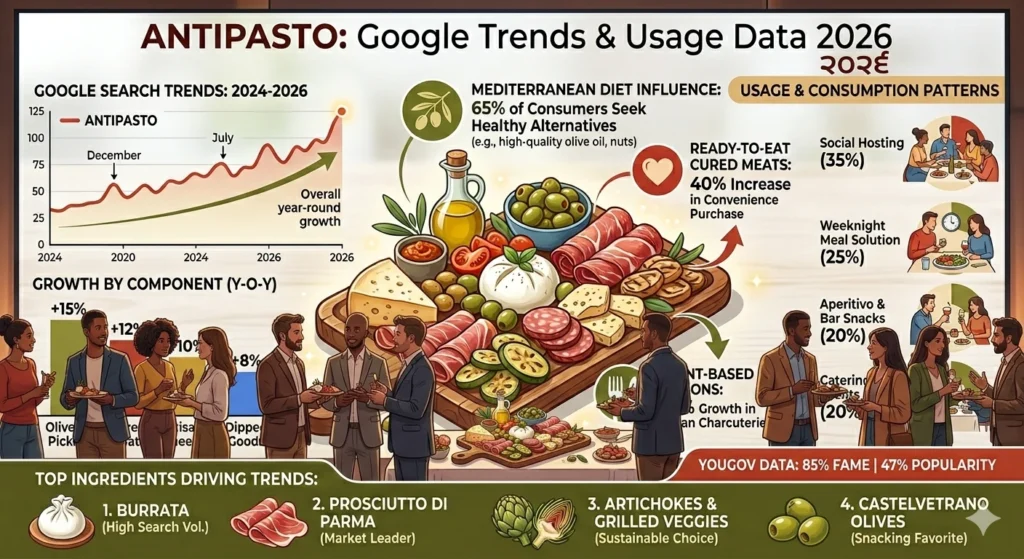
This data suggests that while the correct spelling is “antipasto,” the misspelling “antipasta” is so common that search engines and content creators must account for it. This is why you see recipes for “Antipasta Salad” online—they are optimizing for what people are actually typing into the search bar, even if the spelling is incorrect.
What is the difference between antipasto and antipasta? The answer is simple: about 400 years of language evolution and a common mishearing. Antipasto is correct; antipasta is the mistaken variant.
Why is it called antipasta? It is called that by mistake. English speakers likely confused the Italian word pasto (meal) with the more familiar word pasta (noodles) .
What is the difference between antipasti and aperitivo? This is a key distinction. Antipasti is the food course (the platter of meats, cheeses, etc.). Aperitivo is the pre-dinner drink (like a Spritz or a glass of wine) that often comes with small snacks to stimulate the appetite .
What’s another name for antipasto? While there is no direct synonym, it is often compared to an “appetizer plate,” an “Italian starter,” or a “charcuterie board,” though these are not exact matches .
What is antipasto salad? An antipasto salad is a dish that takes the ingredients of a traditional antipasto platter (salami, cheese, olives, peppers) and tosses them together, often over lettuce or with a dressing. It turns the “before meal” course into the main meal itself .
Is antipasti a starter? Yes, absolutely. In a formal Italian meal, the order is usually: Aperitivo, then Antipasti (the starter), then Primo (pasta/rice), Secondo (meat/fish), and Dolce (dessert) .
Antipasto vs appetizer: What is the difference? An appetizer is a broad category for any food served before a main course. Antipasto is a specific type of appetizer that follows the Italian tradition of serving cured meats, cheeses, and vegetables.
Conclusion
So, is it antipasto or antipasta? The answer is clear: Antipasto is the correct spelling and the one you should use in any formal writing, restaurant setting, or conversation with food lovers. “Antipasta” is a common misspelling that has crept into informal English, but it has no real meaning in Italian .
Remember the golden rule: Antipasto means “before the meal.” If you are talking about one delicious plate of food, use antipasto. If you are sharing a massive board with friends, you are enjoying antipasti. Now that you know the difference, you can order—and spell—with confidence.

“John Galsworthy was a refined storyteller known for expressive, emotional writing. At Wishveb.com, he brings graceful, heartfelt wishes to readers.”