Do you know the difference between a meeting that happens twice a year and one that happens every two years? Many people mix up the words “biennial” and “biannual.” This confusion can lead to missed events, wrong deadlines, and costly mistakes.
People search for these words because they sound almost the same but mean very different things. One small letter changes the timing completely. This article solves that confusion once and for all. You will learn the simple rule to tell them apart, see clear examples, and never mix them up again.
Biennial or Biannual means
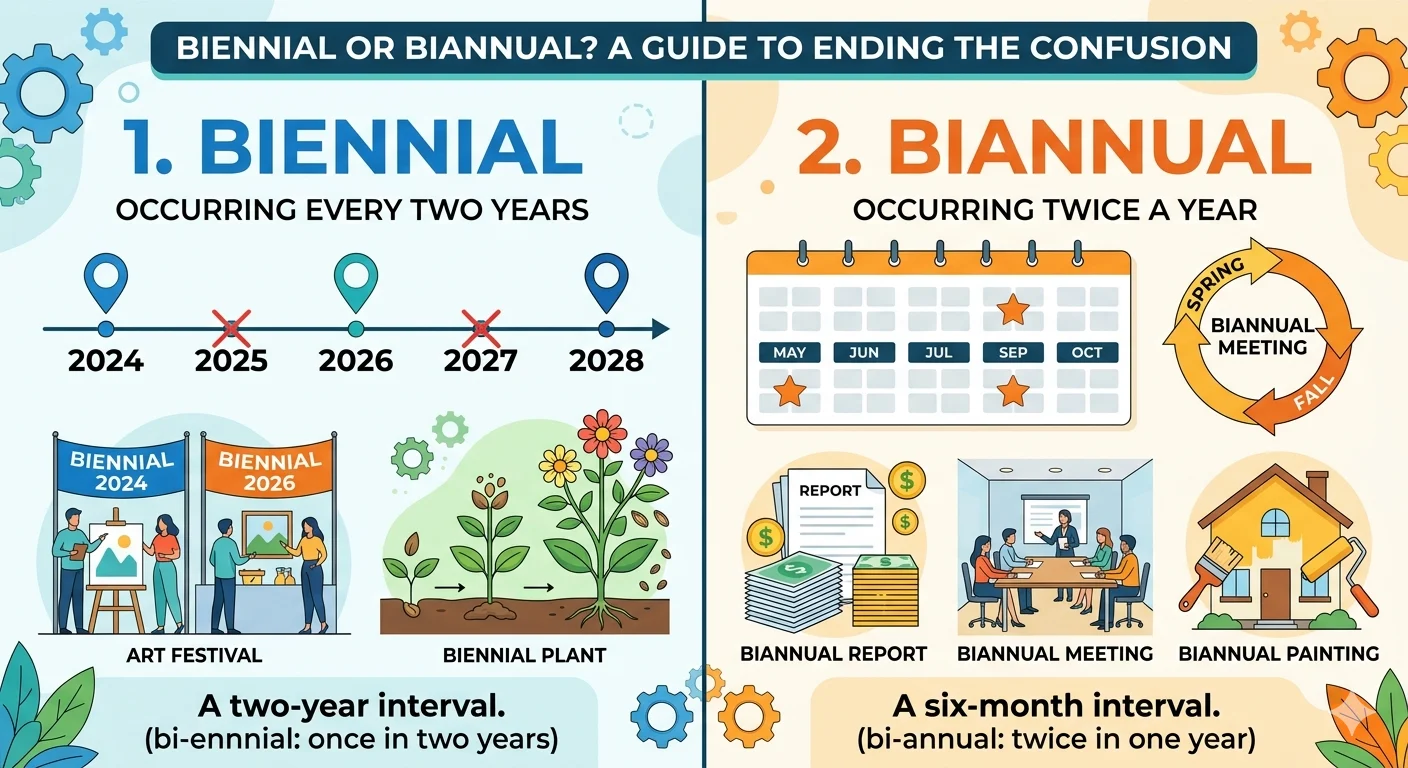
Biennial means every two years. Biannual means twice a year.
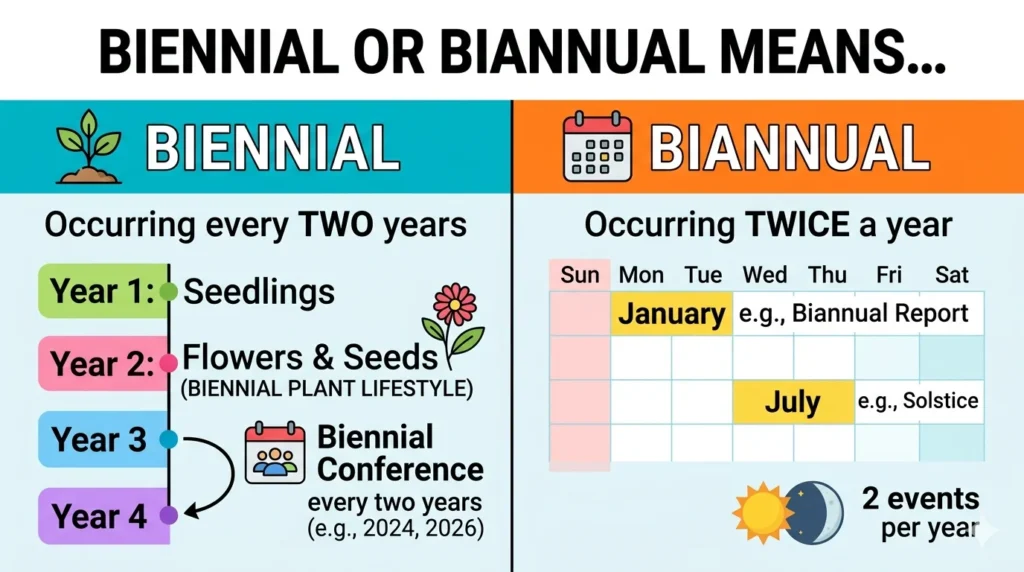
Here is the simple trick: Think of “bi” meaning two, but look at the rest of the word.
- Biennial = two years (event happens once every two years)
- Example: The art show is a biennial event. It happens in 2024, 2026, and 2028.
- Biannual = two times in one annual (yearly) cycle
- Example: The team has biannual reviews in March and September.
Is every 2 years biannual or biennial?
Every two years is biennial.
Is biannual every 6 months?
Yes. Biannual events happen twice a year, which is every six months.
How do I say “every 2 years”?
You say “biennial” or “every two years.”
The Origin of Biennial and Biannual
Both words come from Latin roots. The prefix “bi-” means two. The difference lies in the second part of each word.
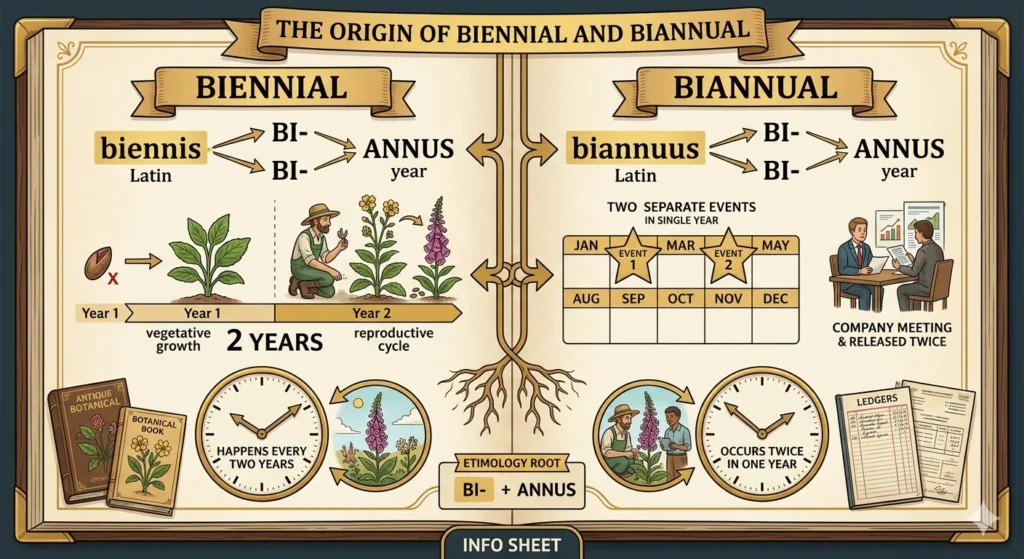
Biennial comes from:
- Latin “bis” (twice) + “annus” (year)
- It entered English in the early 1600s
- Originally used for plants that live for two years
Biannual comes from:
- Latin “bi-” (two) + “annus” (year)
- It appeared later, around the 1800s
- Created to describe events happening twice yearly
The spelling difference exists because English borrowed from Latin at different times. “Biennial” followed French spelling patterns. “Biannual” followed direct Latin spelling. This history explains why biennial vs biannual etymology shows two paths for similar ideas.
British English vs American English Spelling
Both British and American English use the same spellings for these words. The confusion is not about spelling but about meaning. However, usage frequency differs.
| Word | British English | American English |
|---|---|---|
| Biennial | Common | Common |
| Biannual | Used less often | Used more often |
| Semiannual | Rare | Preferred over biannual |
Examples:
- UK: “The biennial conference will be held in Edinburgh.”
- US: “The semiannual sales event happens in January and July.”
Note: Americans often use semiannual vs biannual to avoid confusion. “Semiannual” clearly means twice a year. Biennial or biannual synonym choices often depend on where you are writing.
Which Spelling Should You Use?
Your choice depends on your audience and how clear you want to be.
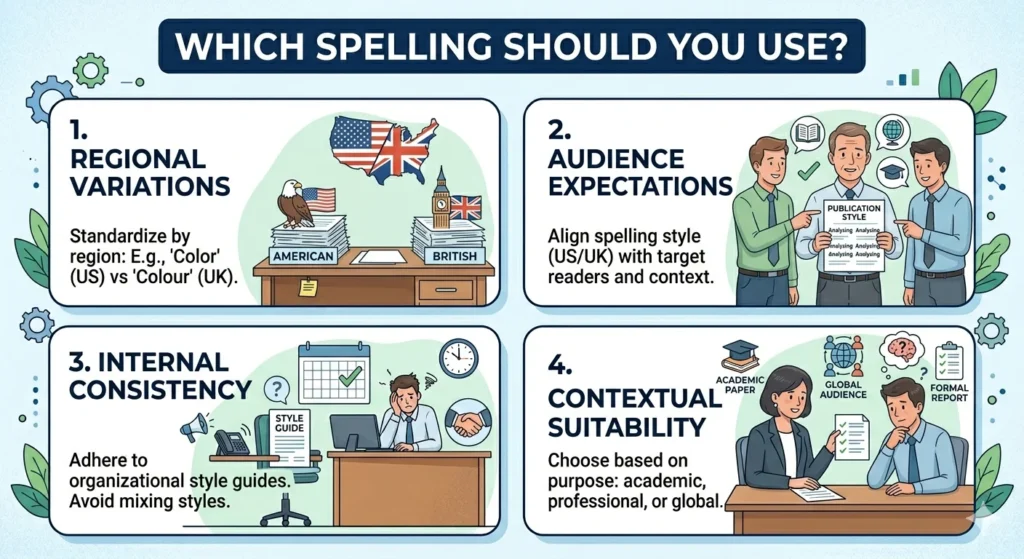
For US audiences:
Use “semiannual” for twice a year. Use “biennial” for every two years. Americans often misunderstand “biannual.”
For UK and Commonwealth audiences:
“Biannual” is accepted for twice a year. “Biennial” is standard for every two years. Both words are understood.
For global audiences:
Avoid “biannual” completely. Instead:
- Use “twice a year” or “semiannual” for two times yearly
- Use “every two years” or “biennial” for once in two years
Professional advice: In contracts, schedules, and formal writing, always spell out the meaning. Do not rely on the word alone. Write “biennial (every two years)” or “biannual (twice yearly)” to prevent errors.
Common Mistakes with Biennial and Biannual
Here are frequent errors and how to fix them.
Mistake 1: Using them as synonyms
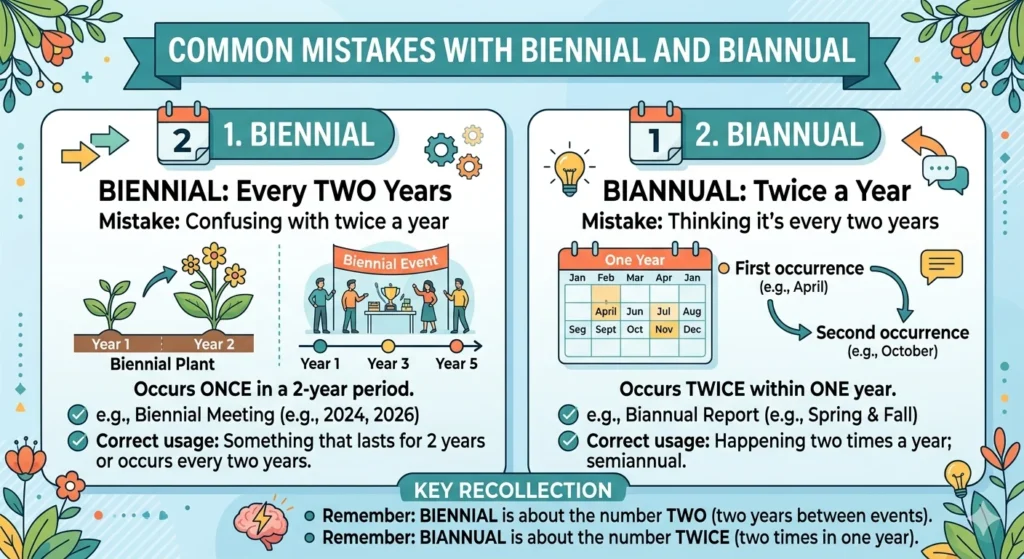
- Wrong: “The committee meets biannually in 2023 and 2025.”
- Right: “The committee meets biennially in 2023 and 2025.”
Mistake 2: Confusing pronunciation
Biennial pronunciation: by-EN-ee-uhl (three syllables)
Biennial vs biannual pronunciation:
- Biennial: by-EN-ee-uhl
- Biannual: by-AN-yoo-uhl
Say them out loud. The stress on different syllables helps tell them apart.
Mistake 3: Using “bi-yearly”
“Bi-yearly” is unclear. It can mean both twice a year and every two years. Avoid it entirely.
Mistake 4: Assuming everyone knows the difference
Many native speakers mix these up. Always clarify in important documents.
Biennial and Biannual in Everyday Examples
Emails:
- “Our biennial budget review will take place in March 2025.” (next one is two years later)
- “Please prepare for the biannual sales report due in April and October.” (two reports per year)
News headlines:
- “City plans biennial arts festival starting 2024” (once every two years)
- “Company announces biannual dividend payouts” (twice yearly)
Social media:
- “It’s time for our biannual closet clean-out! Who’s joining?” (twice a year)
- “The biennial garden tour returns this spring” (every two years)
Formal writing:
- “The board shall hold biennial elections in even-numbered years.”
- “Employees receive biannual performance reviews in June and December.”
Every two years biannual is wrong. Remember: every two years biennial is correct.
Biennial or Biannual Google Trends & Usage Data
Google Trends shows interesting patterns for biennial or biannual searches.
By country:
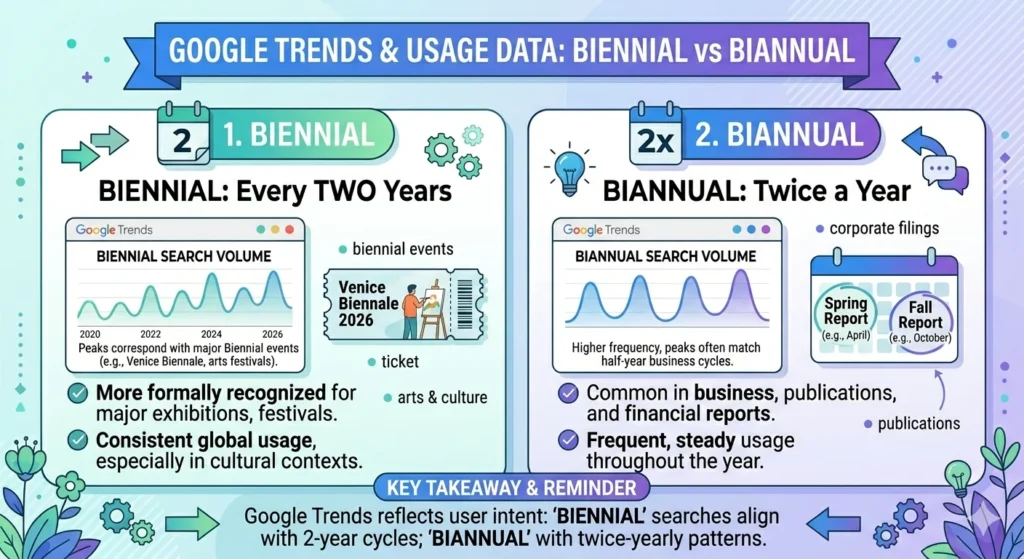
- United States: “Biannual” is searched more often, often by confused users
- United Kingdom: “Biennial” appears more in professional contexts
- Australia: Both terms are used equally
By context:
- Business writing: “Biannual” is declining, replaced by “semiannual”
- Academic writing: “Biennial” remains standard for two-year cycles
- Event planning: “Biennial” is clear; “biannual” causes confusion
Most searches for biennial or biannual meaning spike in January and September. These are common planning periods when people set schedules and need clear terms.
Comparison Table: Word Meanings at a Glance
| Term | Meaning | Example | Frequency |
|---|---|---|---|
| Biennial | Every two years | World Cup (every 2 years) | Once in 24 months |
| Biannual | Twice a year | Pay raises in June and December | Two times in 12 months |
| Semiannual | Twice a year | Spring and fall sales | Two times in 12 months |
| Biennium | A two-year period | The 2023-2024 biennium | 24-month span |
| Annual | Once a year | Birthday celebration | One time in 12 months |
What is 2 years called?
A two-year period is a “biennium.” An event that happens every two years is “biennial.”
FAQs
1. Is every 2 years biannual or biennial?
Every two years is biennial. “Biannual” means twice a year, not every two years.
2. What is 2 years called?
A two-year period is called a “biennium.” An event happening once every two years is “biennial.”
3. Is biannual every 6 months?
Yes. Biannual events happen twice a year, which is roughly every six months.
4. How do I say “every 2 years” correctly?
Say “biennial” or simply “every two years.” Both are clear and widely understood.
5. Can I use “bi-yearly” instead?
No. “Bi-yearly” is ambiguous. It can mean both twice a year and every two years. Avoid it.
6. What is the difference between semiannual and biannual?
They both mean twice a year. “Semiannual” is clearer and preferred in American English. “Biannual” causes more confusion.
7. How do I remember the difference?
Use this trick: “Biennial” has two “n”s like “two years.” “Biannual” has two “a”s like “twice annual.”
8. What are common biennial or biannual examples?
- Biennial: Olympics, World Cup, major art exhibitions
- Biannual: pay reviews, magazine subscriptions, seasonal sales
Conclusion
The difference between biennial and biannual is simple once you know the rule. Biennial means every two years. Biannual means twice a year. One letter changes the timing completely.
To avoid confusion, follow these key takeaways:
- Use “biennial” only for events every two years
- Use “semiannual” or “twice a year” instead of “biannual” when writing for US audiences
- In important documents, always clarify the meaning in parentheses
- Never use “bi-yearly” – it is too vague
Remember the trick: “Biennial” has two “n”s for two years. “Biannual” has two “a”s for twice annual. When in doubt, spell out the timing clearly. Your readers will thank you for removing the guesswork.

“Bram Stoker was a creative storyteller known for his powerful writing style. At Wishveb.com, he inspires readers with heartfelt, expressive wishes.”