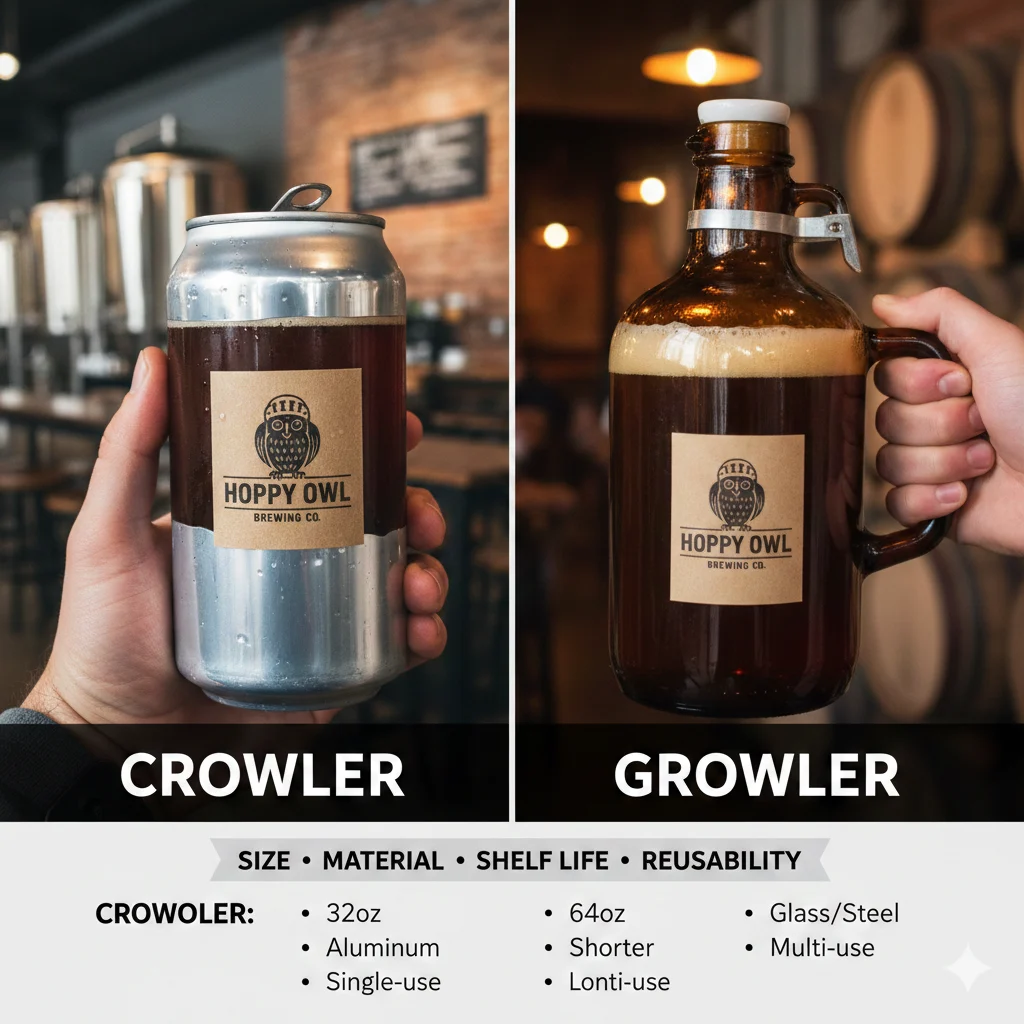
Are you standing in a brewery taproom, unsure whether to ask for a crowler or growler? You are not alone. Thousands of beer lovers search for this keyword every month because the words sound similar but mean very different things.
The confusion is real. One is a reusable glass jug from the 1800s. The other is a modern aluminum can sealed by a machine. Both let you take draft beer home, but they work differently. This article explains the exact difference, clears up spelling questions, and helps you choose the right option for your next brewery visit.
Whether you searched for beer crowler or growler because you want fresh beer for a party, or you typed is it crowler or growler because a friend used the wrong word, this guide solves it all.
Crowler or Growler means
A growler is a reusable glass or stainless steel jug. It usually holds 64 ounces of beer. You bring it back to the brewery for refills.
A crowler is a single-use aluminum can. It holds 32 ounces of beer. A machine seals it in front of you. You recycle it after drinking.
Simple rule: Growler = glass jug you reuse. Crowler = big beer can you recycle.
Example: You buy a growler once, keep it forever, and pay only for refills. You buy a crowler each time, pay for the can and the beer, and toss it in recycling.
How many beers are in a crowler? A 32-ounce crowler holds two full pints of beer. That equals about 2.6 standard 12-ounce cans .
How many beers are in a growler? A standard 64-ounce growler holds four pints, or about 5.3 standard 12-ounce cans .
The Origin of Crowler and Growler
The word growler is old. Really old.
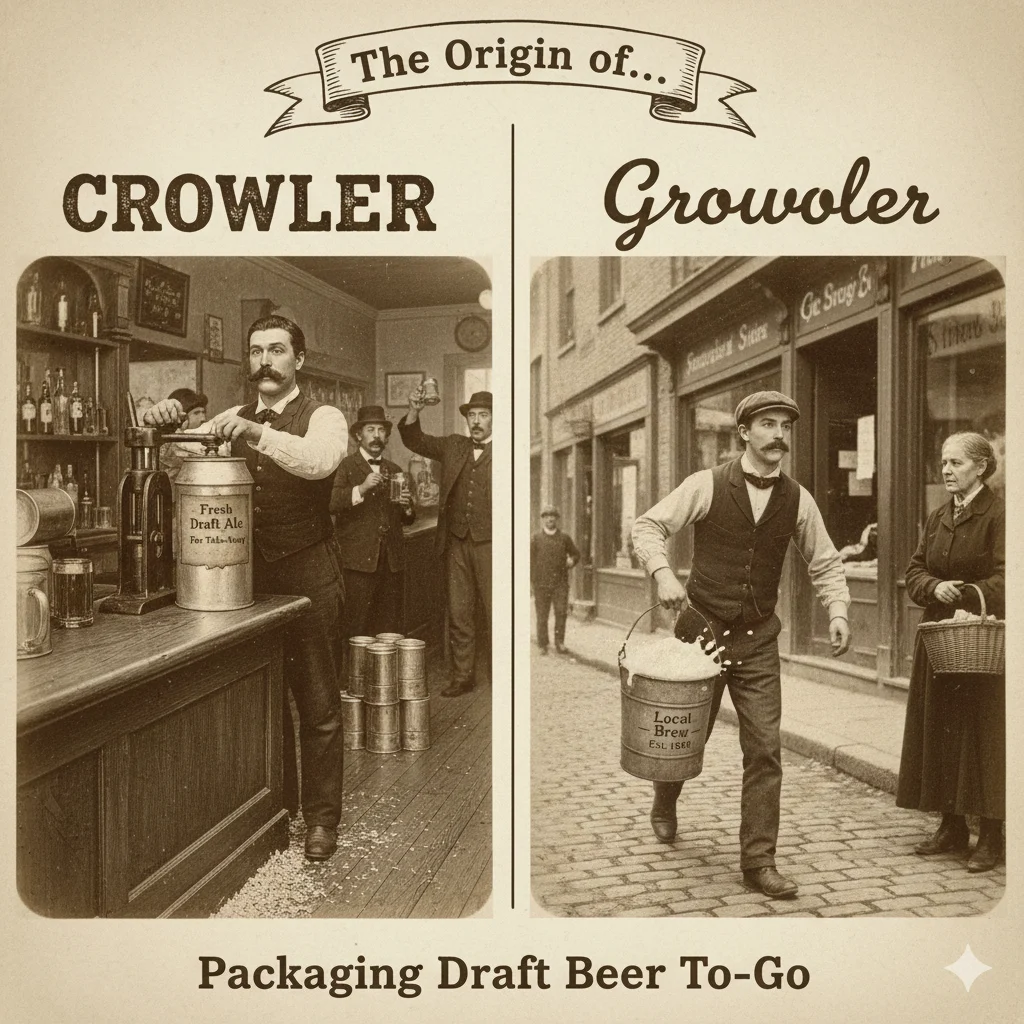
In the late 1800s, people in America and England carried beer home from pubs in small metal pails. As the beer sloshed around, carbon dioxide escaped from the lid. It made a rumbling sound. People said the pail “growled.” The name stuck .
What does growler slang mean? Today, it just means a beer jug. But back then, saying “I’m picking up the growler” meant you were getting beer to go. No negative slang meaning—just history.
The crowler is brand new. Oskar Blues Brewery and Ball Corporation invented it in 2013. Oskar Blues had already been the first craft brewery to can beer in 2002. They wanted a better way for customers to take beer home without heavy glass jugs .
They took “can” and “growler” and smashed them together. Crowler was born.
Spelling differences exist only because “crowler” is a trademarked product name that became a common word. Nobody spells it “crawler” or “crouler.” The two words are distinct by design.
British English vs American English Spelling
Good news: There is no spelling war here.
Both American and British English spell these words the same way. “Growler” and “crowler” are identical in the US, UK, Canada, and Australia. The words describe specific beer containers invented in America, so the spelling traveled as-is .
However, the usage differs. Growlers became popular in the UK around 2010, about 20 years after the US craft beer boom. Scottish breweries and shops like Growler Beers in Edinburgh helped spread the term .
Here is the comparison:
| Term | American English | British English | Common Misspellings |
|---|---|---|---|
| Growler | 64oz glass/stainless jug | Same meaning, sometimes 2-3 liter sizes | Growler (correct), Growler jug |
| Crowler | 32oz sealed aluminum can | Less common, but same spelling | Crawler, Crouler, Can-growler |
| Howler | 32oz glass jug (half growler) | Sometimes called “baby growler” | Howler (correct), Half-growler |
The only real difference? British writers sometimes spell it “growler” with a lowercase G, while American breweries often capitalize “Crowler” because it is trademarked. Both are acceptable.
Which Spelling Should You Use?
Choose your words based on where you live and who you are talking to.
If you are in the United States:
- Say growler for the 64oz reusable glass jug.
- Say crowler for the 32oz sealed aluminum can.
- Brewery staff will know both instantly.
If you are in the United Kingdom, Australia, or New Zealand:
- Say growler—this term is well-known and growing fast .
- Crowler is less common but understood in craft beer shops.
- Some pubs use “howler” for the 32oz glass size.
If you are writing for a global audience:
- Define both words the first time you use them.
- Remember: Crowler is the new one. Growler is the old one.
Pro tip: When searching crowler or growler reddit, use both terms. Craft beer forums use them interchangeably, and you will find better discussions by searching “crowler vs growler.”
Common Mistakes with Crowler and Growler
Even experienced beer drinkers make these errors. Here is how to avoid them.
Mistake 1: Calling a crowler a “can growler” in conversation.
- Correction: It is fine in casual talk, but the proper name is crowler. The machine is a crowler machine. The can is a crowler can .
Mistake 2: Thinking growlers stay fresh forever.
- Correction: Unopened growlers last about one week in the fridge. Opened growlers go flat in 24–36 hours. Crowlers last 30 days unopened .
Mistake 3: Confusing howlers and crowlers.
- Correction: Both hold 32 ounces. A howler is GLASS and reusable. A crowler is ALUMINUM and single-use .
Mistake 4: Believing crowlers are refillable.
Mistake 5: Spelling it “crawler.”
- Correction: A crawler is a slow-moving vehicle or a website bot. You drink beer from a crowler.
Mistake 6: Assuming growlers are always cheaper.
- Correction: The refill price per ounce is often similar. But the upfront cost of a glass growler ($5–$30) is much higher than buying your first crowler .
Crowler or Growler in Everyday Examples
At a Brewery (Conversation):
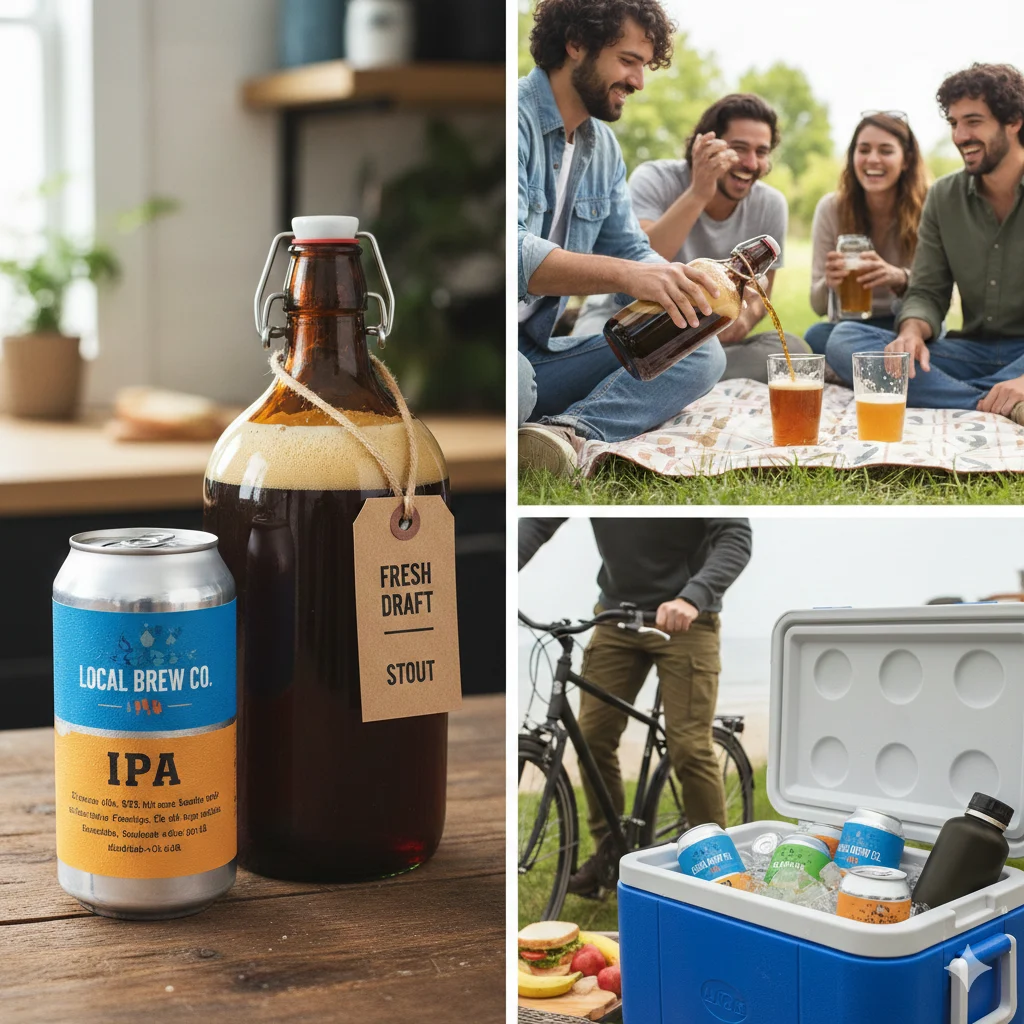
Bartender: “Want beer to go?”
Customer: “Yeah, I’ll take a crowler of the IPA and a growler fill of the stout.”
Bartender: “Got it. The crowler machine will seal that IPA right up.”
On Social Media (Instagram):
“Fresh crowler drop at the brewery today. 32oz of hazy juice. 🍻 #crowler #craftbeer”
In a News Article:
“The rise of the crowler has changed how small breweries sell beer to go. Unlike glass growlers, aluminum crowlers block UV light and keep beer fresh for weeks.”
In Formal Business Writing (Brewery Proposal):
“We recommend purchasing a crowler seamer to complement our existing growler filling station. This will allow customers who forget their growlers to still purchase fresh beer in recyclable cans.”
On Reddit (r/craftbeer):
User1: “Crowler or growler for beer you aren’t drinking today?”
User2: “Crowler 100%. It’s sealed without oxygen. Growler is for sharing tonight.”
Crowler vs Growler – Google Trends & Usage Data
Crowler search volume has risen sharply since 2013. Growler remains steady, with higher overall volume because the term is older.
United States:
- Growler dominates in traditional brewpubs and older demographics.
- Crowler dominates in taprooms, modern craft breweries, and social media.
- Coastal states (California, New York, Colorado) search “crowler” more than Midwest or South.
United Kingdom:
- Growler is the primary search term.
- Crowler searches are growing but mostly limited to beer trade publications and American-style breweries .
Canada & Australia:
- Both terms used. Crowler is common in cities with US beer influence.
Key Insight: People searching crowler vs can want to know if crowlers are worth it compared to regular 12oz cans. People searching crowler machine are usually brewery owners looking to buy equipment.
Crowler or Growler? Side-by-Side Comparison Table
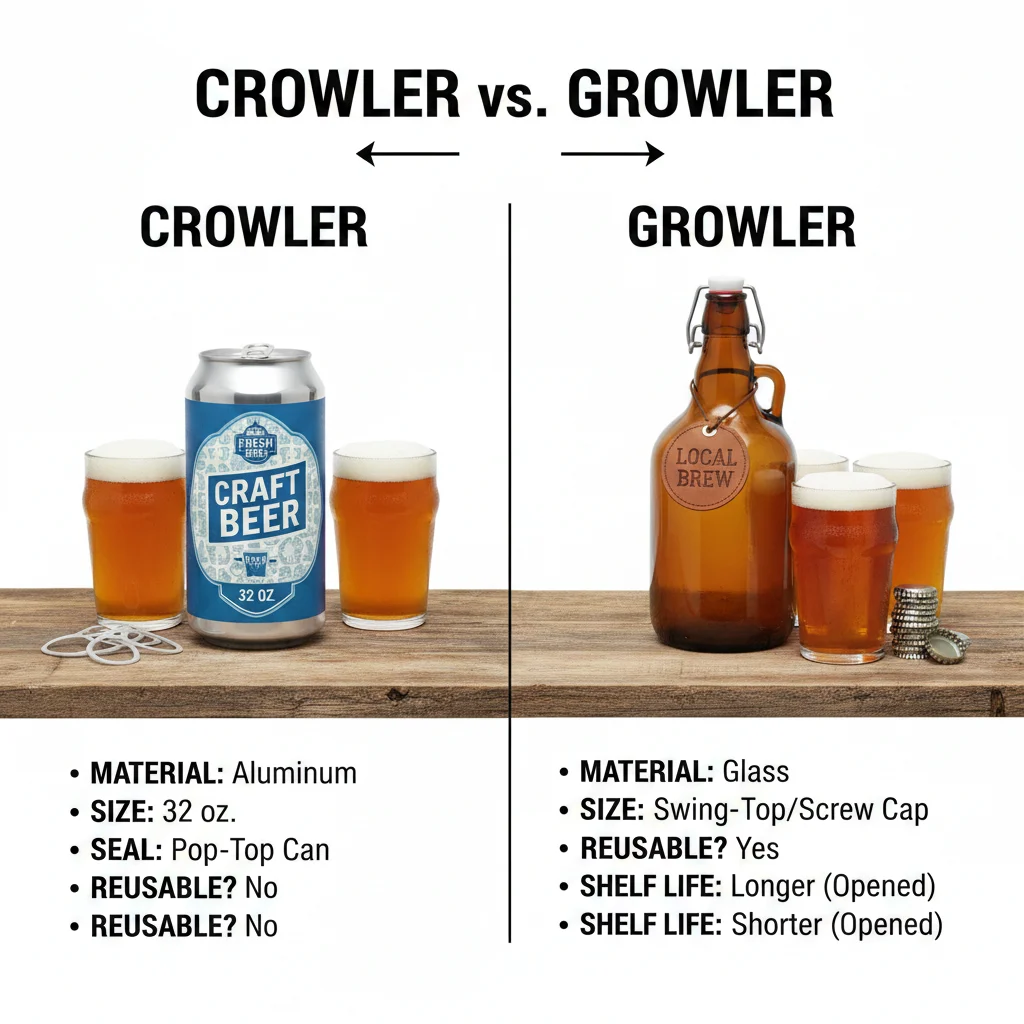
| Feature | Growler | Crowler |
|---|---|---|
| Size | 64 oz standard (also 32 oz howler, 128 oz) | 32 oz standard |
| Material | Glass or stainless steel | Aluminum |
| Reusable? | Yes – refillable hundreds of times | No – single use, then recycle |
| Freshness (unopened) | 1 week refrigerated | Up to 30 days refrigerated |
| Freshness (opened) | 24–36 hours | Drink immediately (can’t reseal) |
| Upfront cost | $5–$30 (one-time purchase) | $2–$5 included in fill price |
| Fill cost | $12–$19 for 64 oz | $10–$18 for 32 oz |
| Cost per ounce | ~$0.19–0.30 | ~$0.31–0.56 |
| Light protection | Poor (glass lets light in) | Excellent (blocks UV) |
| Oxygen seal | Screw cap, some air exposure | Hermetic machine seal |
| Allowed at beaches/parks? | Often no (glass ban) | Yes (aluminum can) |
| Best for… | Sharing with friends tonight | Drinking over several weeks |
Frequently Asked Questions (FAQs)
1. How many beers are in a crowler?
A 32-ounce crowler holds two pints of beer. That is roughly 2.6 standard 12-ounce cans or bottles .
2. How many beers are in a growler?
A standard 64-ounce growler holds four pints. That equals about 5.3 standard 12-ounce beers .
3. What does growler slang mean?
It is not negative slang. The term comes from the 1800s when beer in metal pails “growled” as gas escaped the lid. It simply means a jug of beer to go .
4. Are crowlers or growlers cheaper?
Short answer: Crowlers cost less upfront. Growlers cost less per refill over time. A new growler costs $5–$30. A crowler fill includes the can cost. If you drink takeout beer weekly, a growler saves money. If you visit occasionally, crowlers are cheaper and more convenient .
5. Why are growlers more expensive than 6-packs?
Good question. A 64-ounce growler fill often costs $12–$19, while a six-pack of the same beer might be $10. Why? You are paying for labor (bartender filling it), on-site consumption value (you tasted it first), and brewery economics. Growlers also overflow during filling, wasting beer. Some breweries price growlers higher to encourage can sales .
6. What is a crowler machine?
A crowler machine is a countertop can seamer. The bartender fills an empty aluminum can with draft beer, places a lid on top, and the machine crimps the lid shut. It creates an airtight seal. The process takes about 10 seconds .
7. Crowler vs can: which is better?
A crowler IS a can—just bigger. Compared to a 12-ounce can, a crowler holds more beer and is filled fresh at the brewery. Regular cans are mass-produced and may sit on shelves for months. Crowlers are “instant gratification” packages meant to be drunk fresh .
8. Can I bring my own crowler can to a brewery?
Usually not. Crowlers are filled and sealed using specific cans that fit the seaming machine. Most breweries only seal their own branded crowler cans.
9. What is the difference between growler vs crowler vs howler?
- Growler: 64 oz, glass or steel, reusable
- Howler: 32 oz, glass or steel, reusable (half growler)
- Crowler: 32 oz, aluminum, single-use, machine-sealed
10. Do crowlers keep beer fresh longer than growlers?
Yes. Crowlers are purged with CO2 before filling to remove oxygen. Aluminum blocks light. The hermetic seal is airtight. Beer in a crowler stays fresh 3–4 weeks. Glass growlers let in oxygen and light, so beer fades in about one week .
Conclusion
So, crowler or growler—which one should you choose?
It depends on your plan.
If you are at a brewery with friends, you want to drink that IPA tonight, and you don’t want to carry glass home? Get the crowler. It is light, portable, and stays fresh until you pop the top. You can buy three different crowlers and taste them over the month. No cleaning. Just recycle and done.
If you are a regular at your local taproom, you love a specific lager, and you want the lowest price per ounce over time? Buy a growler. Pay the deposit, keep it clean, and bring it back every week. It is the original eco-friendly beer vessel.
If you searched is it crowler or growler because you heard both and got confused—now you know. Crowler is the can. Growler is the jug. Neither is wrong. Both get fresh beer from the tap into your fridge.
Growler vs crowler vs howler is really about how you drink. Big party? Growler. Solo tasting? Crowler. Half the beer, same vessel as a growler? That is a howler.
Next time you walk into a brewery and see the crowler machine sitting next to the growler wall, you will know exactly what to ask for.