Have you ever felt like you were watching your life from the outside, like a movie? Or maybe you’ve zoned out on a long drive and didn’t remember the last few miles. This feeling of being disconnected is often called dissociation or disassociation. Many people search for this term because they are trying to understand a strange personal experience, or they are confused by the two different spellings they see online.
The confusion is real: is it “dissociate” or “disassociate”? Is one a medical term and one a mistake? This article solves that confusion. We will explain the psychological feeling, clear up the spelling debate once and for all, and even touch on what these words mean in chemistry and tech. By the end, you’ll know exactly which word to use and what it means when you ask yourself, “Am I dissociating or disassociating?”
Dissociation or Disassociation means
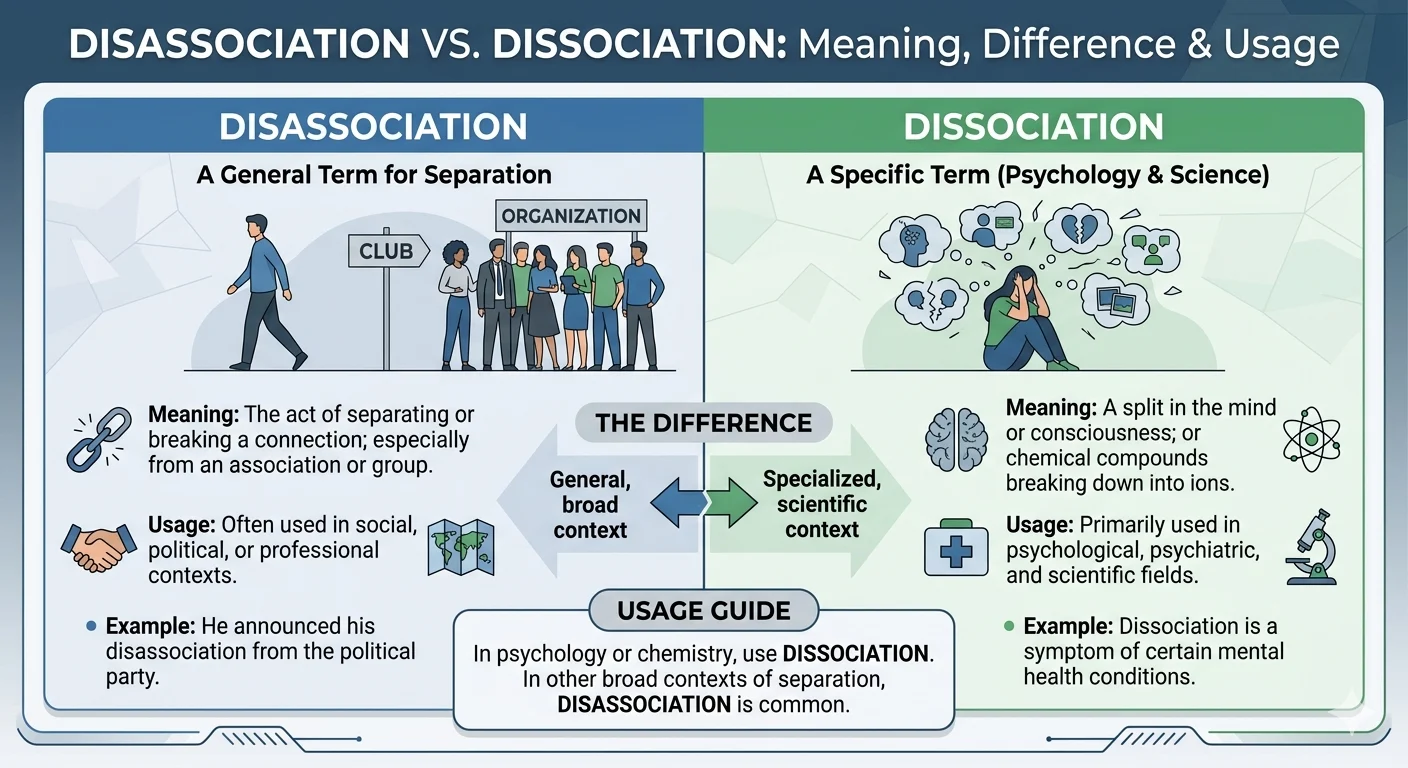
The quick answer: In psychology, dissociation is the correct medical term. Disassociation is an older, longer version of the word that means the same thing but is rarely used by doctors today.
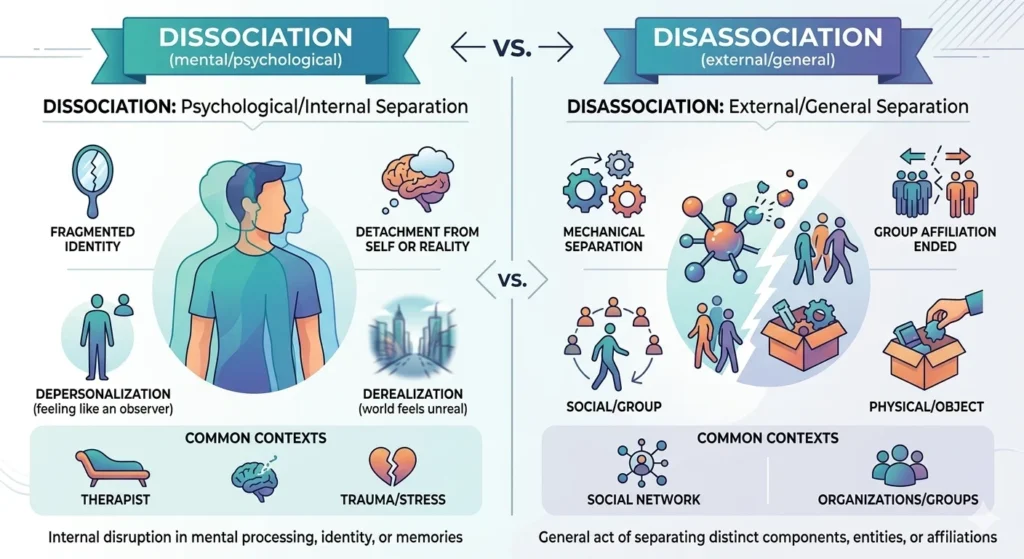
Think of it like this: both words describe a “mental disconnect.”
- Dissociation: A mental process where you feel separated from your thoughts, feelings, memories, or sense of identity. For example, during a stressful meeting, you might feel like you are floating above your body, watching yourself speak.
- Disassociation: This means the same thing, but it is used more in general, non-medical writing. For example, a news report might say a celebrity is trying to disassociate themselves from a scandal.
If you are asking “Is dissociation and disassociation the same thing?” — Yes, they are synonyms, but dissociation is the standard term used by mental health professionals.
Here is a comparison table to show the difference at a glance:
| Term | Primary Usage Context | Example Sentence |
|---|---|---|
| Dissociation | Psychology/Psychiatry (Medical term), Chemistry. | “The patient experienced dissociation after the traumatic event.” |
| Disassociation | General writing (News, informal), Networking (Wi-Fi attacks). | “The company tried to disassociate itself from the scandal.” |
A Note on Nuance: While dictionaries list these words as synonyms, some linguists point to a subtle difference in feel. To disassociate often implies an action—you actively disassociate yourself from a group. To experience dissociation often implies a state or condition—you are in a state of dissociation. However, in modern usage, especially in psychology, dissociation has absorbed both meanings.
The Origin of Dissociation
The word comes from the Latin prefix dis- (meaning “apart” or “away”) and sociare (meaning “to join” or “unite”). So, literally, it means “to become separated from a union.”
Why do spelling differences exist? In the 1800s, French psychologist Pierre Janet coined the term “désintégration,” which evolved into the English “dissociation” to describe a split in consciousness. Later, the word “disassociate” popped up as a back-formation from “disassociation.” While “disassociate” is technically older, dissociation became the preferred term in medical texts like the DSM-5 (Diagnostic and Statistical Manual of Mental Disorders). Basically, doctors liked the shorter word because it was easier to use.
This link to memory is why the term is so important. When someone experiences trauma, the mind doesn’t just feel “apart” from the body; it can also separate itself from memories. This is why dissociation is the clinical term used to explain why some people can’t remember large chunks of their past, a condition known as dissociative amnesia.
British English vs American English Spelling
Unlike words like “color” vs “colour,” this isn’t a regional spelling fight. It’s a fight between medical precision and general use. However, usage data shows a clear winner.
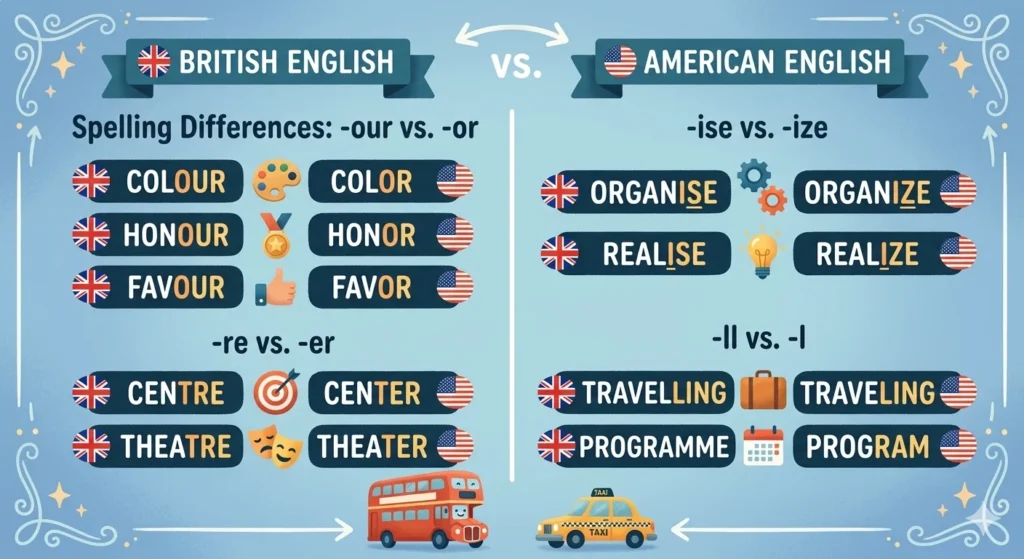
In short, you will almost always see “dissociation” in medical journals and therapy articles. “Disassociation” is still correct English, just less popular in science.
Which Spelling Should You Use?
Your audience determines your spelling.
- If you are in the US, writing a school paper, or seeing a therapist: Use dissociation. It shows you understand the clinical context.
- If you are in the UK or Commonwealth writing for a general blog: Both are accepted, but “dissociation” is still preferred because it is shorter.
- If you are writing about Chemistry: You must use dissociation. In science, it refers to a compound breaking apart, like when salt dissolves in water.
- If you are talking about Wi-Fi: Use disassociation. In tech, a “disassociation attack” is when someone forces your device off the internet.
Common Mistakes with Dissociation
People often mix up these words or use them in the wrong context. Here are the most frequent errors:
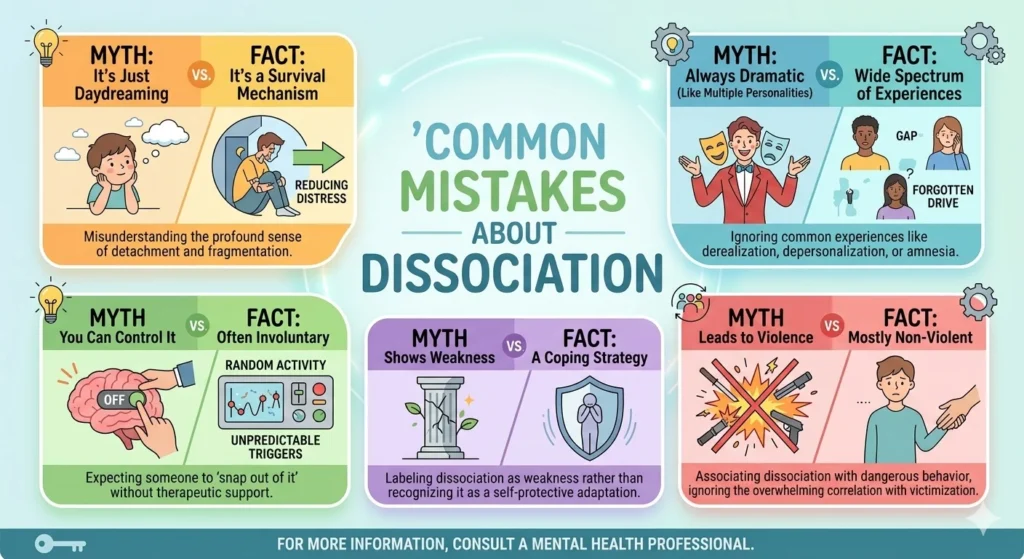
- Using “Disassociation” in a Therapy Session: If you tell a psychologist, “I feel disassociated,” they will understand you, but the correct diagnostic term is dissociation. The DSM-5 uses “dissociative disorders,” not “disassociative disorders.”
- Confusing it with Derealization: People often use these words as the same, but they are different. Dissociation is the broad category (the umbrella). Derealization is a specific type of dissociation where the world feels fake or foggy.
- Confusing it with Depersonalization: Similarly, depersonalization is another specific type of dissociation where you feel detached from your own body, thoughts, or feelings, as if you are an outside observer. It is a symptom of dissociation, not a synonym for it.
- Incorrect Pronunciation: Both words sound almost the same, which adds to the confusion.
- Dissociation pronunciation: dih-SOH-shee-ay-shun
- Disassociation pronunciation: dis-uh-SOH-see-ay-shun
- Note the extra “s” sound in the middle of disassociation.
Dissociation in Everyday Examples
Seeing the words in context helps you understand the vibe of each term.
- In an Email (Informal): “I need to disassociate myself from that project.” (Here, it means to separate yourself professionally).
- In the News: “The politician tried to disassociate from his former allies.” (This implies a social or professional split).
- Describing the Feeling (Internal): “I was listening to my friend talk, but it felt like I was watching us from the corner of the ceiling. I was there, but I wasn’t there. That’s the best way I can describe my dissociation.”
- In a Medical Text: “Dissociation is often a response to trauma, serving as a defense mechanism to protect the mind from overwhelming stress.”
- On Social Media: “I think I’m experiencing dissociation right now. I feel numb and nothing feels real.” (Here, the user is describing a personal mental health symptom).
Dissociation Google Trends & Usage Data
According to Google’s Ngram Viewer (which analyzes millions of books), “dissociation” appears in literature nearly five times more often than “disassociation” since the year 1900. This gap widened significantly after 1950, coinciding with the rise of modern psychology. In the US and UK specifically, “dissociation” is the dominant spelling in published works.
“Disassociation” sees a spike in usage only in two specific scenarios:
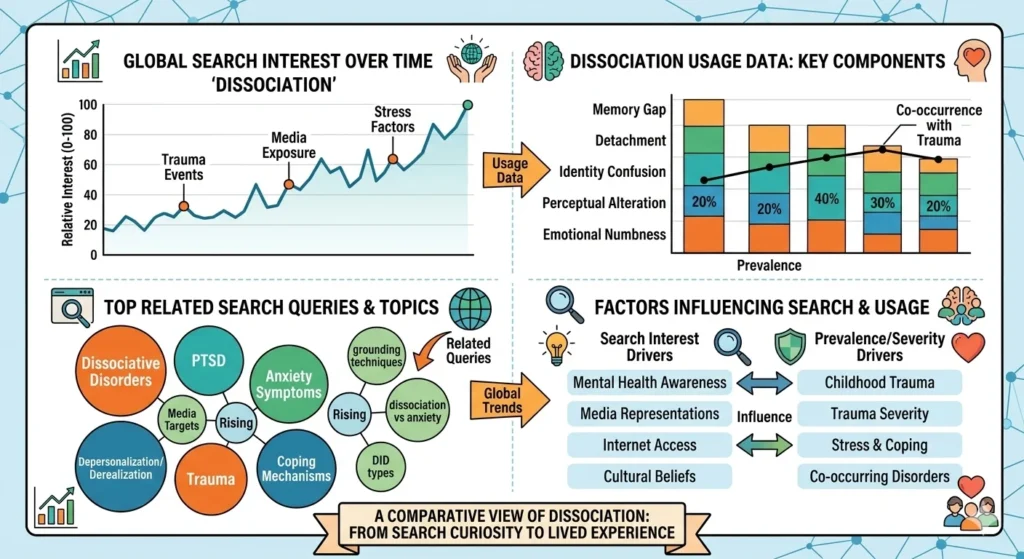
- Legal/Formal Writing: When describing the act of separating from a group.
- Tech Support Forums: When discussing “disassociation attacks” on Wi-Fi routers.
If you are searching for help with mental health, stick to “dissociation” to get the most accurate results.
Frequently Asked Questions (FAQs)
1. Is dissociation and disassociation the same thing?
Yes, they mean the same thing: to disconnect or separate. However, dissociation is the preferred term in psychology and medical contexts, while disassociation is a longer synonym used more often in general writing.
2. What are the 5 stages of dissociation?
The medical community often refers to 4 stages or 5 symptoms, but a common breakdown includes: 1) Derealization (world feels unreal), 2) Depersonalization (feeling detached from your body), 3) Dissociative Amnesia (memory gaps), 4) Identity Confusion (feeling uncertain about who you are), and 5) Identity Alteration (switching behaviors or identities).
3. Why do people say dissociation?
People dissociate as a defense mechanism. When the brain faces something too traumatic or stressful to handle, it “checks out” to protect itself. It’s like a circuit breaker flipping to stop the system from overloading.
4. Am I dissociating or disassociating?
You are likely dissociating. If you feel numb, feel like you’re outside your body, or if the world looks flat or foggy, you are experiencing symptoms of dissociation. If you are just trying to leave a party early, you are disassociating yourself from the group.
5. What is dissociation or disassociation in chemistry?
In chemistry, dissociation is the process where molecules or compounds split into smaller parts, like atoms or ions. For example, when table salt (NaCl) dissolves in water, it dissociates into sodium and chloride ions. In science, only “dissociation” is used.
6. What is the difference between dissociation vs derealization?
Derealization is a specific type of dissociation. Dissociation is the umbrella term. If you feel detached from yourself, that’s depersonalization. If you feel detached from the world around you (like you’re in a dream or behind glass), that is specifically derealization.
7. What is a disassociation attack?
A disassociation attack (or deauthentication attack) is a type of cyberattack. A hacker tricks your computer or phone into disconnecting from a Wi-Fi network. It has nothing to do with mental health.
8. What is the difference between dissociation vs depersonalization?
Depersonalization is one of the main types of dissociation. When you experience depersonalization, you feel disconnected from your own body, thoughts, or emotions. You might feel like you’re watching yourself in a movie or that your body isn’t your own. It is a symptom, not the broader condition.
Related Terms You Might Hear
When researching dissociation or disassociation, you will often see these words. Here is how they connect:
- Depersonalization: A type of dissociation where you feel detached from your own body or mind.
- Derealization: A type of dissociation where the world around you feels unreal, foggy, or dream-like.
- Dissociative Identity Disorder (DID): A severe form of dissociation where a person experiences two or more distinct identities.
- Dissociative Amnesia: Memory loss caused by trauma or stress, where the brain blocks out specific information.
Conclusion
So, dissociation or disassociation—which one is right? The answer is that you can use either and be grammatically correct, but context is key. If you are talking about mental health, memory loss, or feeling disconnected from reality, dissociation is the word used by doctors, therapists, and medical manuals. It is the precise term that helps professionals understand exactly what you mean. “Disassociation” works in casual conversation, but for clarity and accuracy—especially when seeking help—”dissociation” is your best choice.
Understanding this word is the first step in understanding a complex mental process that affects many people. Whether you experience it yourself or are just learning, remember that dissociation is simply your mind’s way of trying to protect you. If you are concerned about these feelings, speaking with a mental health professional can provide clarity and support.