Have you ever typed “genious” into a search engine, wondering if that looks right? You are not alone. Thousands of people search for “genious or genius” every month because this word is tricky to spell.
The confusion makes sense—many English words end in “ous” like “curious” or “serious.” But when it comes to describing someone exceptionally smart, the correct spelling is genius.
This article solves that confusion once and for all. You will learn the correct spelling, why people mix it up, and how to use the word properly in any situation.
Whether you are writing an email, a school paper, or a social media post, understanding the difference between “genious or genius” will help you communicate clearly and look smarter doing it.
Genius or Genious? means
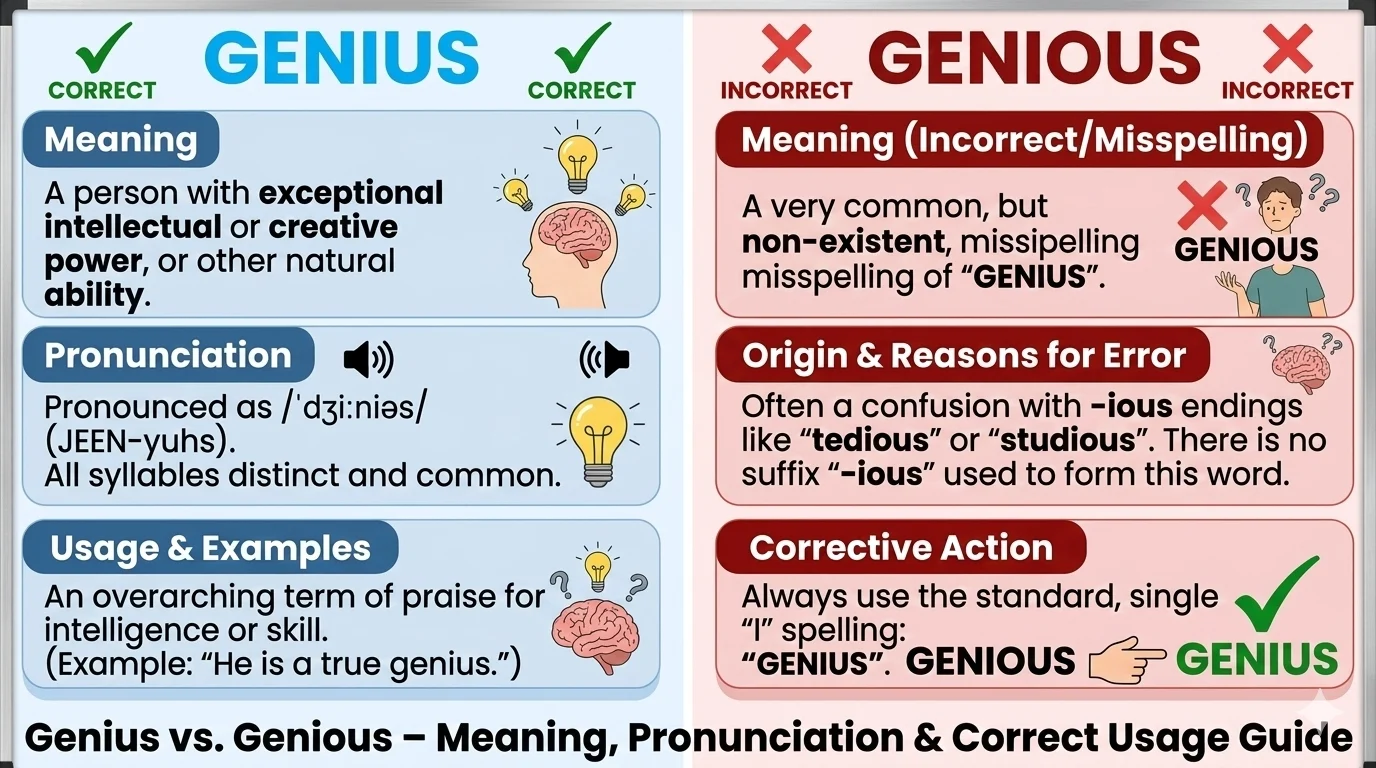
The correct spelling is GENIUS.
Genius is a noun and adjective that means exceptional intellectual or creative ability. “Genious” is always a misspelling and does not exist in English dictionaries.
Examples of correct usage:
- Albert Einstein was a true genius.
- She has a genius for solving complex problems.
- That idea is absolutely genius!
Incorrect usage:
- ❌ He is a genious mathematician.
- ❌ What a genious idea!
If you find yourself typing “genious,” simply remove the “o” and replace it with “u” to get the correct spelling.
The Origin of Genius
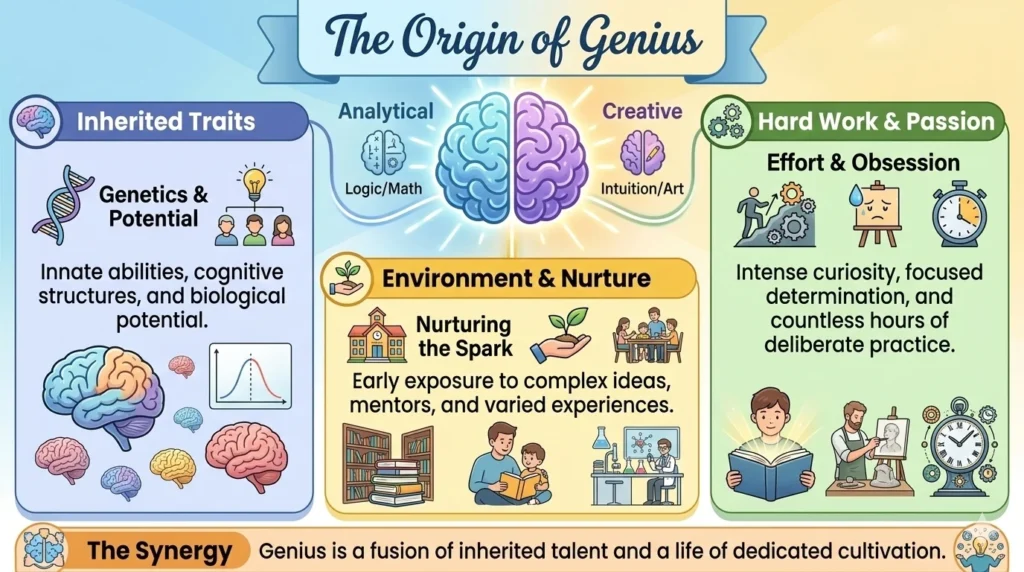
The word “genius” comes from ancient Rome. In Latin, “genius” referred to a guardian spirit that watched over a person from birth. Every person had their own genius, which shaped their character and destiny.
Over time, the meaning shifted. By the 16th century, “genius” began to describe a person’s natural ability or talent. In the 18th century, it evolved further to mean someone with extraordinary intellectual power.
Why do people spell it “genious”? This common error happens because:
- Many English adjectives end in “ous” (delicious, serious, curious)
- The pronunciation of “genius” sounds similar to words ending in “ous”
- People apply familiar spelling patterns to unfamiliar words
The confusion between “genious or genius” is purely a spelling error—the word has always been spelled G-E-N-I-U-S throughout its history.
British English vs American English Spelling
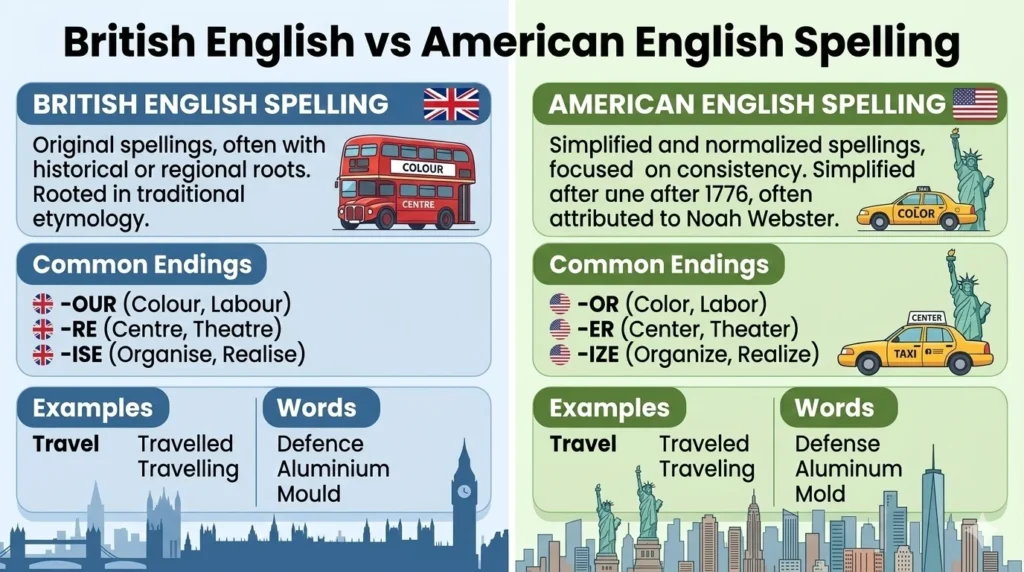
Here is some good news: both British and American English spell this word the same way. Unlike “color/colour” or “realize/realise,” “genius” remains unchanged on both sides of the Atlantic.
Comparison Table: Genius Spelling in Different English Variants
| English Variant | Correct Spelling | Incorrect Spelling | Example Sentence |
|---|---|---|---|
| American English | genius | genious | Steve Jobs was a creative genius. |
| British English | genius | genious | Shakespeare’s genius is undisputed. |
| Australian English | genius | genious | She has a genius for negotiation. |
| Canadian English | genius | genious | That solution is pure genius. |
As you can see, regardless of where you are writing, “genius” is the only acceptable spelling. The question “genious or genius” has the same answer worldwide.
Which Spelling Should You Use?
For US Audiences
Always use genius. Americans expect standard spelling, and “genious” will look like a careless mistake.
For UK and Commonwealth Audiences
Stick with genius. British readers are just as likely to notice the misspelling.
For Global English
Use genius. Since this word has no regional spelling variations, it is safe for international readers.
Professional advice: In formal writing, academic papers, or business communications, always double-check that you have written “genius” and not “genious.” Spell-check tools will catch this error, but they work best when you know the correct form.
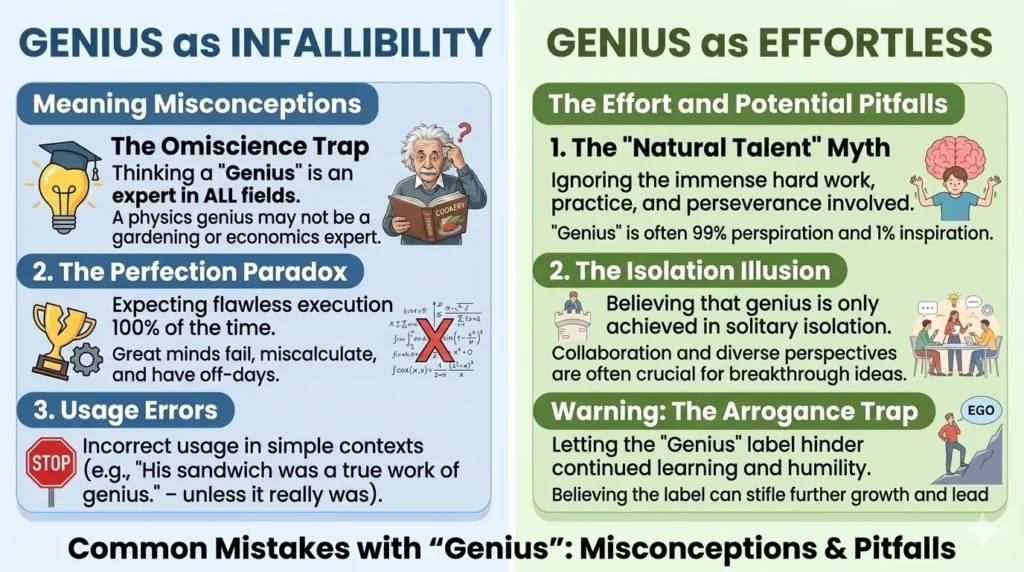
Common Mistakes with Genius
Even native English speakers make errors with this word. Here are the most frequent mistakes and how to fix them:
1. Spelling it “genious”
❌ Wrong: He is a true genious.
✅ Right: He is a true genius.
2. Using “genious” in searches
When people search “how do you spell genius as in smart?” or “who is a genious?” they are actually looking for “genius.” Search engines understand this, but your writing should not rely on that crutch.
3. Confusing noun and adjective forms
“Genius” works as both a noun and adjective:
- Noun: She is a genius. (a person)
- Adjective: That was a genius move. (describing the move)
4. Plural confusion
What is the plural of genius? You have two options:
- Geniuses (common usage): “There were three geniuses in the room.”
- Genii (rare, classical usage): Used when referring to mythical spirits or in very formal contexts.
5. Misunderstanding “you are genius”
When someone says “you are genius,” they mean you are exceptionally smart. However, grammatically, it should be “you are a genius” when using it as a noun.
Genius in Everyday Examples
In Emails

- Professional: “Your solution to the budget problem was genius.”
- Casual: “Thanks for the genius suggestion about the restaurant!”
In News Headlines
- “Musk’s Genius or Madness? Experts Weigh In”
- “Young Genius Graduates College at Age 12″
On Social Media
- TikTok/Instagram: “This hack is absolute genius! 🧠”
- Twitter/X: “Whoever designed this interface is a genius.”
In Formal Writing
- “Einstein’s scientific genius transformed modern physics.”
- “The book explores Mozart’s musical genius.”
Common Phrases
- “Stroke of genius” – a brilliant idea
- “Genius loci” – the spirit of a place
- “Hidden genius” – someone whose talents are not obvious
Genious or genius examples always show “genius” as the correct form in every context.
Genius – Google Trends & Usage Data
Analysis of search data shows interesting patterns for “genious or genius”:
Popularity by Country
- United States: High search volume for “genius,” with some “genious” misspellings
- United Kingdom: Similar pattern, slightly fewer misspellings
- India: Growing searches for “genius meaning” in English learning contexts
- Philippines: Frequent questions about spelling in academic settings
Search Intent Categories
- Spelling help: “How do you spell genius?” “Genious or genius definition”
- Meaning: “What does my genius mean?” “Genius meaning and sentence”
- Synonyms: “Genious or genius synonyms” “Another word for genius”
- Grammar: “Is it genius or genius?” “Genius noun or adjective”
Trending Topics
Searches for “genius” spike during:
- Award seasons (mentioning creative geniuses)
- Scientific breakthroughs
- Release of movies about famous intellectuals
- Back-to-school periods when students write papers
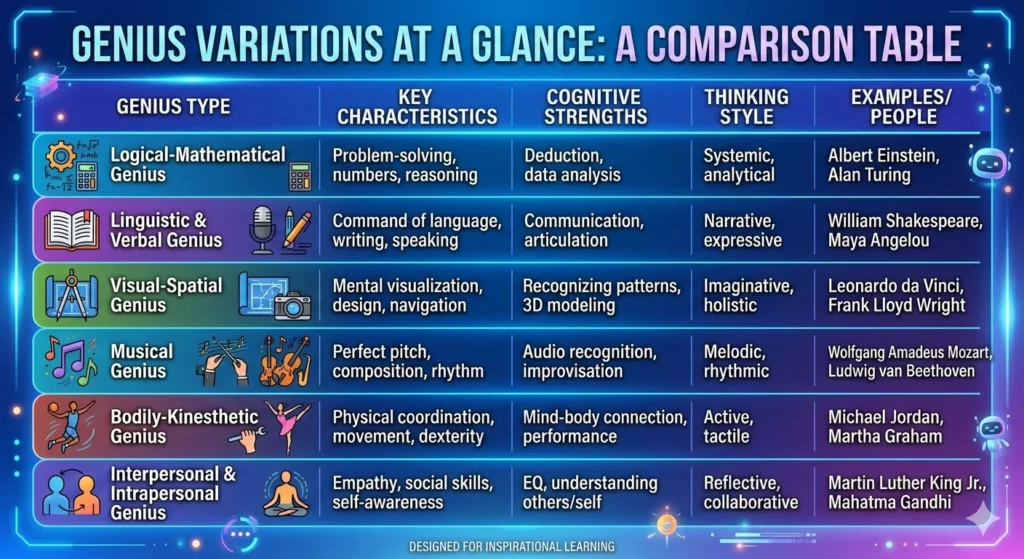
Comparison Table: Genius Variations at a Glance
| Form | Correct Usage | Example | Common Error |
|---|---|---|---|
| Genius | Noun/Adjective | She is a genius. | Genious |
| Geniuses | Plural (common) | Both were geniuses. | Geniouses |
| Genii | Plural (rare) | Ancient genii protected the city. | Genius’s |
| Genius’s | Possessive | The genius’s idea changed history. | Genius’ |
| Genius-level | Compound adjective | He has genius-level IQ. | Genious-level |
Frequently Asked Questions
1. How do you spell genius as in smart?
The correct spelling is G-E-N-I-U-S. It describes someone with exceptional intelligence or ability.
2. Who is a genious?
This is a common misspelling. The correct question is “Who is a genius?” meaning a person of extraordinary intellectual power.
3. What does my genius mean?
“My genius” refers to your unique talent, ability, or intellectual strength. It can also mean the guardian spirit in ancient belief.
4. Is it genius or genius?
Both spellings are the same—”genius” is correct. There is no alternate spelling. The confusion is between “genius” and the incorrect “genious.”
5. What are genious or genius synonyms?
Common synonyms include: brilliant, intellectual, prodigy, mastermind, virtuoso, gifted person, and brain. “Genious” has no synonyms because it is not a word.
6. What is the plural of genius?
The most common plural is “geniuses.” “Genii” is used in classical contexts but is rare in modern English.
7. Is genius a noun or adjective?
Genius can be both. As a noun: “He is a genius.” As an adjective: “That was a genius idea.” Some grammarians prefer “genius” as a noun only, but modern usage accepts it as an adjective too.
8. What is the genius meaning and sentence?
Genius means exceptional intellectual or creative power. Sentence: “Her genius for mathematics was evident from an early age.”
9. What does “you are genius” meaning?
“You are genius” is informal and means you are very smart. More grammatically correct is “You are a genius.”
10. How do I remember the correct spelling?
Think of “genius” containing “us” at the end—we are all part of genius. Or remember that “genious” has an extra “o” like “no” because it’s “no” good!
Conclusion
The answer to “genious or genius” is clear: genius is the only correct spelling. This word has a rich history dating back to ancient Rome and has maintained its spelling across all English-speaking countries. Whether you use it as a noun (“She is a genius”) or an adjective (“That’s genius”), the spelling never changes.
Remember these key points:
- “Genious” is always incorrect—think of “genius” containing “us”
- The word works in both British and American English without variation
- Common phrases like “stroke of genius” and “you are a genius” use the correct spelling
- When in doubt, let your spell-checker guide you, but now you know the rule
Next time you write about someone brilliant, a clever idea, or exceptional talent, you can confidently use “genius” without second-guessing. Your writing will look more professional, and you will have solved one of English’s most common spelling puzzles.