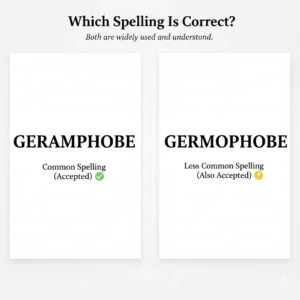
Do you panic when someone sneezes near you? Do you carry hand sanitizer everywhere you go? If so, you might have wondered, is it spelled germaphobe or germophobe? This is one of the most common questions people ask when describing a fear of germs.
In fact, many people search for this term because they are unsure which spelling is correct, want to know the difference, or are looking for the official term for germaphobe to use in writing.
This article solves that confusion. We will explore the origins of the word, compare the spelling rules, and provide clear advice on when to use each variation.
We will also dive into related topics like germaphobe symptoms, synonyms, and even how to say germaphobe in Spanish and germaphobe in Chinese.
By the end, you will be an expert on the topic, whether you consider yourself one or are just curious about the terminology.
Germaphobe or Germophobe means
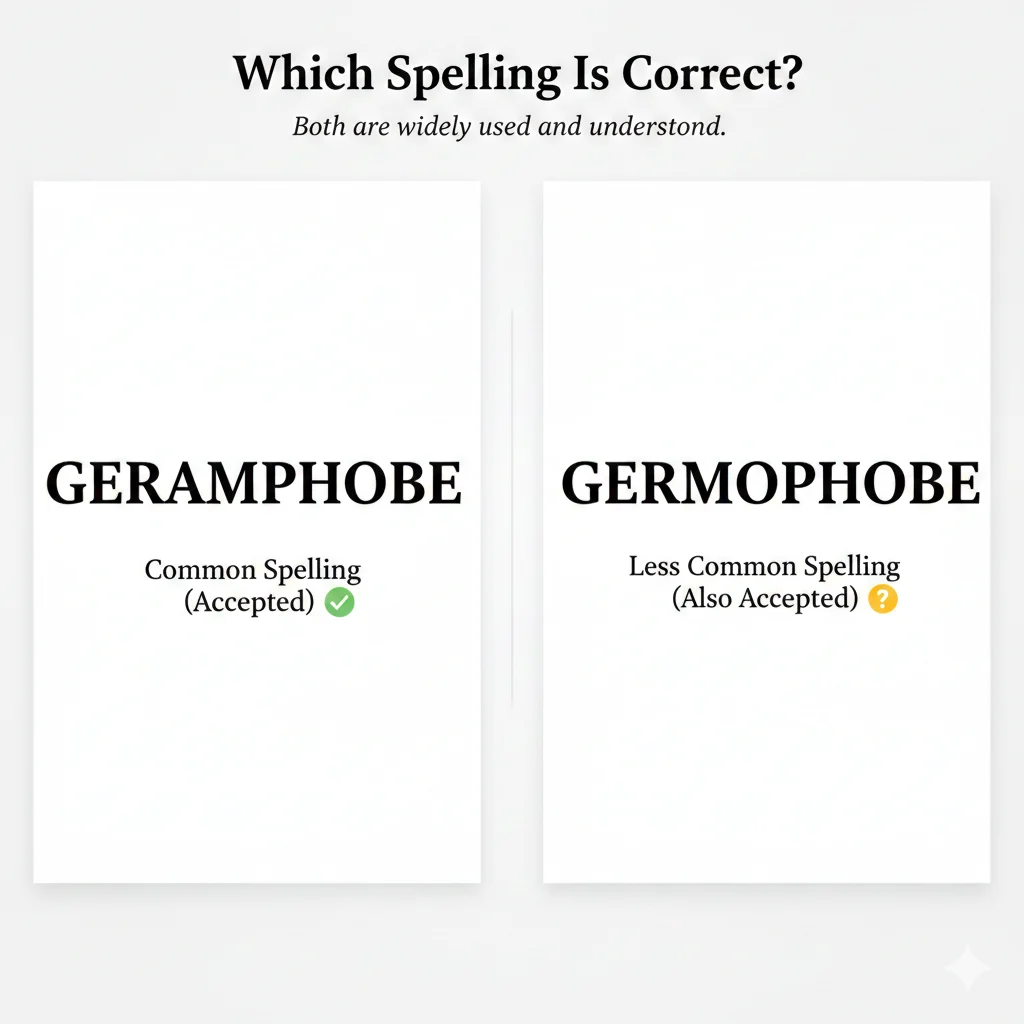
The quick answer is that both “germaphobe” and “germophobe” are correct and widely used . They mean the exact same thing: a person with an abnormal fear of germs, dirt, or contamination.
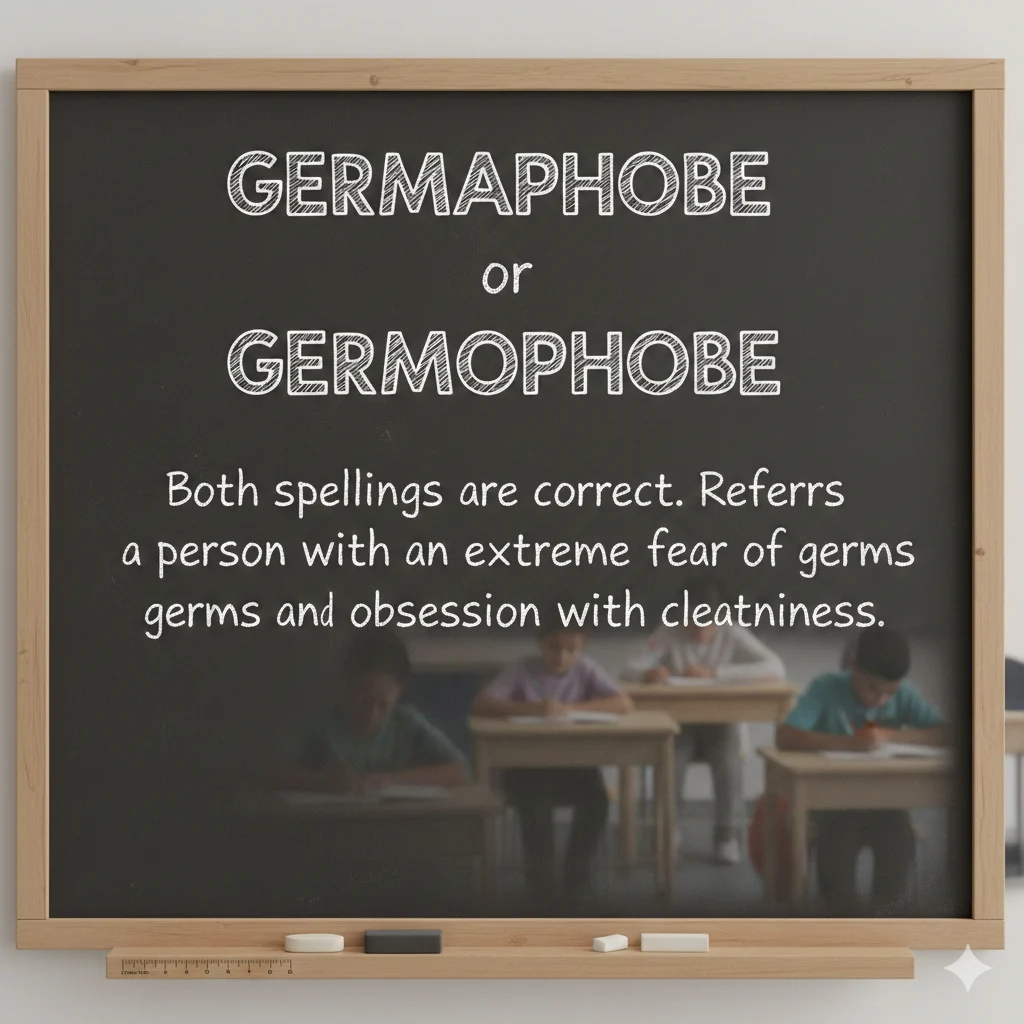
Think of it like the difference between “adviser” and “advisor”—both are acceptable, but one might look or sound slightly different depending on where you are.
- Example with Germaphobe: “My friend is such a germaphobe; she wipes down her entire desk with disinfectant wipes every morning.”
- Example with Germophobe: “As a self-proclaimed germophobe, he refuses to use public restrooms.”
So, if you see it spelled both ways, don’t worry. You are looking at two popular versions of the same word.
The Origin of Germaphobe
To understand why there are two spellings, we have to look at how the word was formed. The term is a combination of two parts: “germ” and “phobia” (fear).

However, the clinical, official term for this condition is actually mysophobia . The word “mysophobia” comes from the Greek words mysos (meaning “uncleanness”) and phobos (meaning “fear”) . It was coined in 1879 by a doctor named William Alexander Hammond .
So, what is the official term for germaphobe? In medical and psychological contexts, it is mysophobia. But in everyday language, the term “germaphobe” (or “germophobe”) became the popular way to describe someone with this fear.
The spelling difference comes from how we combine the root word “germ” with the suffix “-phobe.”
- Germ + a + phobe: The “a” acts as a connector, making it easier to say (germ-a-phobe). This leads to germaphobe.
- Germ + o + phobe: Similarly, the “o” is a common connector in Greek-derived words (like in “thermometer”). This leads to germophobe.
British English vs American English Spelling
While the origin explains the “a” and “o,” usage often comes down to geography. Is there a difference between British English and American English spelling for this word?

Generally, American English tends to favor germaphobe. It follows a simple pattern of combining an English word (germ) with a suffix. British English users might lean slightly more towards germophobe, as it mimics the structure of other clinical terms derived from Greek.
However, this is not a strict rule. Both spellings are understood and used on both sides of the Atlantic.
Here is a comparison table to show how they stack up:
Which Spelling Should You Use?
Choosing between germaphobe or germophobe depends on your audience and purpose.
- For a US Audience: If you are writing for an American blog, social media, or casual conversation, germaphobe is a safe and natural choice. It is the spelling you will see most often in US magazines and news outlets .
- For a UK or Commonwealth Audience: If your readers are in the UK, Australia, or New Zealand, germophobe might look slightly more polished and aligned with other phobia terms.
- For Global or Formal Writing: If you want to be technically precise, especially in a medical or psychological article, you should use the official term: mysophobia. However, if you are using the common term in a global context, either is fine. Just be consistent.
Ultimately, pick one and stick with it throughout your article. Both are correct, so your choice is a matter of style.
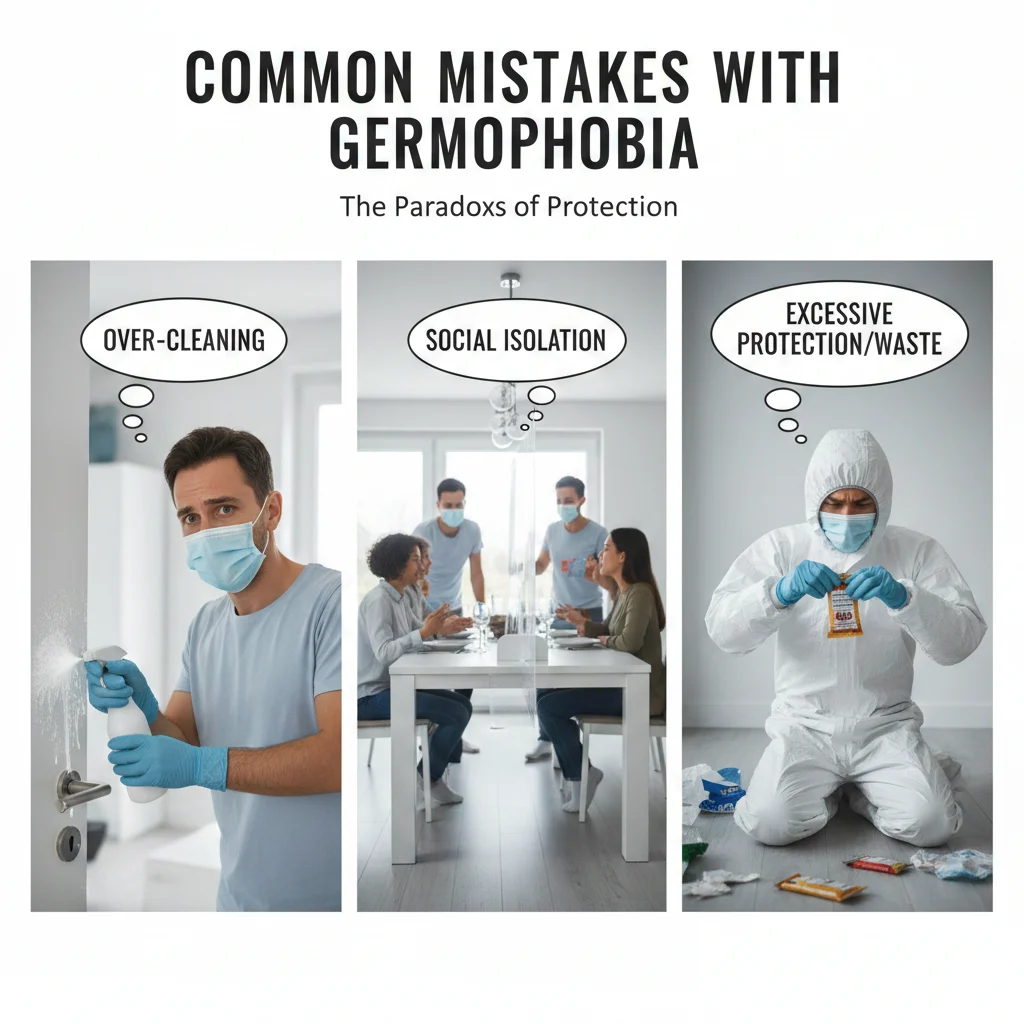
Common Mistakes with Germaphobe
Even with a simple word, people make a few common errors. Here is how to avoid them:
- Mistake: Confusing the spelling with other phobias.
- Correction: Remember that “phobe” comes from “phobia.” Don’t accidentally spell it “germaphobe” with an “f” as in “grafe.”
- Mistake: Thinking one is wrong and the other is right.
- Correction: As we’ve established, both is it germaphobia or germophobia? Both are accepted spellings for the fear itself.
- Mistake: Using it when you mean “mysophobia.”
- Correction: If you are discussing a clinical diagnosis, use mysophobia. If you are describing someone who just really hates dirty dishes, “germaphobe” is fine.
- Mistake: Questioning if the adjective form is real.
Germaphobe in Everyday Examples
Seeing a word used in different contexts helps solidify your understanding. Here are examples of how to use germaphobe and its variations in real life.
- In an Email (Informal): “Hi Dan, just a heads up, I’m a bit of a germaphobe, so would you mind wiping down the kitchen counter after you use it? Thanks!”
- In a News Headline: “Celebrity Opens Up About Living with Mysophobia: ‘It’s More Than Just Being a Germophobe‘”
- On Social Media: “Just watched a guy sneeze into his hands and then touch the door handle. I am a full-blown germaphobe and I am SCREAMING internally. 😱 #germs #anxiety”
- In Formal Writing: “Individuals exhibiting severe germaphobia symptoms, such as compulsive handwashing and avoidance of public spaces, may be diagnosed with a specific phobia like mysophobia” .
Germaphobe – Google Trends & Usage Data

If you look at search data, you will find a fascinating trend. The term “germaphobe” is searched for much more frequently than “germophobe,” particularly in the United States. This confirms its status as the more popular, colloquial spelling.
Interest in both terms spiked dramatically during global health events, such as the COVID-19 pandemic, when more people became aware of hygiene and, consequently, their own anxiety about germs . This data shows that while the clinical term is mysophobia, the world turns to “germaphobe” to describe the feeling in plain English.
Frequently Asked Questions (FAQs)
1. Is it spelled germaphobe or germophobe?
Both are correct! “Germaphobe” is more common in American English, while “Germophobe” is an accepted and widely used variant influenced by Greek word construction .
2. Is it germaphobia or germophobia?
Just like the person (phobe), the fear (phobia) can be spelled either way: germaphobia or germophobia. Both are acceptable.
3. What is the official term for germaphobe?
The official, clinical term is mysophobia . This is the word medical professionals use to diagnose an intense fear of contamination and germs.
4. What is germophobe? / What does germophobe mean?
A germophobe (or germaphobe) is a person who has an extreme or irrational fear of germs, dirt, or contamination. This fear often leads to behaviors like excessive hand washing and avoiding public places .
5. What are common germaphobe symptoms?
Common germaphobe symptoms include:
- Excessive hand washing or using hand sanitizer.
- Avoiding touching public surfaces (doorknobs, railings).
- Fear of physical contact with others.
- Overusing cleaning products at home.
- Refusing to share food or drinks .
6. What is a good germaphobe synonym?
There are several synonyms, ranging from clinical to casual:
- Clinical: Mysophobe
- Casual: Clean freak, neatnik
- Related: Hypochondriac (focuses more on illness than germs)
7. Is germaphobic a word?
Yes, germaphobic is the adjective form. For example: “His germaphobic behavior makes it hard for him to eat in restaurants” .
8. How do you say germaphobe in Spanish?
In Spanish, germaphobe is germofóbico (for a male) or germofóbica (for a female) . It is pronounced “her-moh-FOH-bee-co.”
9. How do you say germaphobe in Chinese?
In Chinese, you can describe a germaphobe as 有洁癖的人 (yǒu jiépǐ de rén), which means “a person with a cleanliness obsession.” The Cambridge Dictionary also translates it directly related to a fear of germs .
10. What is the pronunciation of germaphobe?
The germaphobe pronunciation is simple: JER-muh-fobe.
- JER (like the first part of “jelly”)
- muh (like the sound of “mu” in “mom”)
- fobe (rhymes with “robe”)
Conclusion
So, is it germaphobe or germophobe? The answer is that you have the freedom to choose. We have seen that while the official clinical term is mysophobia, the everyday word for someone with a fear of germs has two equally valid spellings . Your choice between germaphobe or germophobe might depend on your audience—with American English leaning toward the “a” and British English sometimes favoring the “o”—but both will be understood.
Remember that this term describes a real and often distressing condition. Understanding the difference between a casual “neat freak” and someone experiencing actual germaphobe symptoms is important. Whether you are writing an email, reading a news article, or looking for a germaphobe synonym, you now have the full picture.
Ultimately, language evolves to fit our needs. Both spellings serve the same purpose: to describe the very common human experience of wanting to stay clean and healthy. Use the one that feels right for you, and write with confidence.

“Laurence Sterne was a creative, expressive writer known for his unique style. At Wishveb.com, he adds charm and warmth to heartfelt wishes.”