The confusion comes mainly from differences in romanization—the method of writing Korean words using the Latin alphabet.
Some resources use “Hangeul”, while others prefer “Hangul”. Knowing the difference is essential if you are a student, teacher, writer, or content creator who wants accuracy and credibility.
In this guide, we will answer your questions, explain why both spellings exist, and show which one is preferred in different regions.
We will also provide examples of how to use the term correctly in emails, news, and everyday writing. By the end, you will know exactly when and how to use Hangeul or Hangul confidently.
Hangeul or Hangul – Quick Answer
Quick Answer: Both Hangeul and Hangul are correct spellings for the Korean alphabet.

- Hangeul: Preferred by South Korea’s official romanization system (Revised Romanization).
- Hangul: Often used internationally and in older texts.
Example:
- Correct: I am learning Hangeul to read Korean books.
- Correct: Hangul letters are simple to memorize.
The difference is mainly in romanization style. Think of it like “color” vs. “colour”—both are understood, but one might fit better depending on your audience.
The Origin of Hangeul or Hangul
The word Hangeul (한글) comes from “Han” (한) meaning Korea and “Geul” (글) meaning script or letters. Together, it literally means “Korean script.”

King Sejong the Great invented Hangeul in 1443 to improve literacy in Korea. Before Hangeul, Koreans used Chinese characters, which were complex and hard for ordinary people to learn. Hangeul’s invention made reading and writing accessible to everyone.
Why the Spelling Differences Exist
The spelling variations come from different romanization systems:
- Hangeul → Revised Romanization (official since 2000 in South Korea)
- Hangul → Older McCune-Reischauer system or informal use
This is why modern textbooks and websites usually prefer Hangeul, while international sources may use Hangul.
British English vs American English Spelling
Just like “color” (US) and “colour” (UK), the spelling of Hangeul/Hangul may vary depending on the audience.
| Feature | Hangeul (Recommended) | Hangul (Alternative) |
|---|---|---|
| Official South Korea use | ✅ Yes | ❌ No |
| Common in the US | ✅ Sometimes | ✅ Often |
| Common in the UK/Commonwealth | ✅ Yes | ✅ Sometimes |
| Academic publications | ✅ Preferred | ❌ Less common |
| Media usage | ✅ Increasing | ✅ Traditional |
Examples:
- US newspaper: “Learning Hangul is easier than expected.”
- UK textbook: “Hangeul is the official writing system of Korea.”
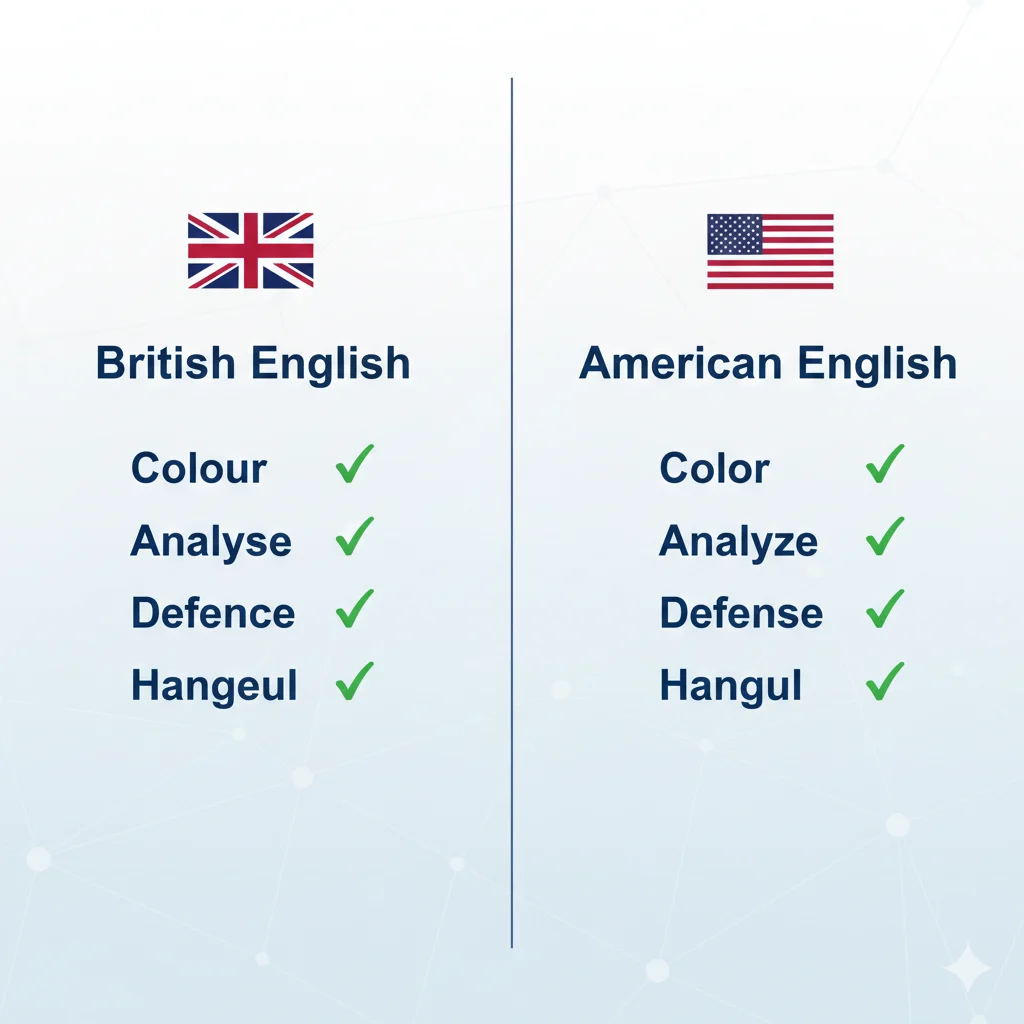
In general, Hangeul fits modern South Korean standards, while Hangul is widely recognized internationally.
Which Spelling Should You Use?
Choosing between Hangeul and Hangul depends on your audience:
- United States – Both are understood, but Hangul may feel more familiar.
- United Kingdom & Commonwealth – Hangeul aligns with official romanization.
- Academic / Formal Writing – Always prefer Hangeul.
- Informal or Online Usage – Either spelling is acceptable; just be consistent.
Rule of thumb: Use Hangeul for professional content and Hangul for casual or historical references.
Common Mistakes with Hangeul or Hangul
Many people make spelling and usage mistakes with this term. Here are the most frequent:
- Incorrect: Hangul is the official language of Korea.
Correct: Hangeul is the official writing system of Korea. - Incorrect: I am learning Hangoul.
Correct: I am learning Hangeul. - Incorrect: Hangel letters are easy.
Correct: Hangeul letters are easy. - Incorrect: Hangul is Chinese.
Correct: Hangeul is Korean, not Chinese.
Tips to Avoid Mistakes
- Remember: Hangeul/Hangul = script/alphabet, not language.
- Always check which romanization your source or audience prefers.
Hangeul or Hangul in Everyday Examples
Emails:
- Formal: “Please find attached a guide to Hangeul pronunciation.”
- Informal: “I’m learning Hangul, it’s fun!”
News Articles:
- “Hangeul Day is celebrated every October in South Korea.”
Social Media:
- Instagram post: “Check out my new Hangul handwriting!”
Academic Writing:
- “According to King Sejong’s decree, Hangeul was created to simplify literacy for common people.”
Using it in context makes your writing more natural and shows your readers you understand the term.
Hangeul or Hangul – Google Trends & Usage Data
Google Trends shows that searches for both spellings vary by country:
| Country | Popular Spelling | Notes |
|---|---|---|
| South Korea | Hangeul | Official system, education-related |
| United States | Hangul | Informal and media-friendly |
| United Kingdom | Hangeul | Academic and official sources |
| Australia | Hangeul | Follows UK conventions |
Trends also show spikes around Hangeul Day (October 9 in South Korea) and during Korean culture events. Content creators, teachers, and language learners often search this term during these times.
Comparison Table – Hangeul vs Hangul
| Aspect | Hangeul | Hangul |
|---|---|---|
| Official Korean Use | ✅ Yes | ❌ No |
| Romanization System | Revised Romanization | McCune-Reischauer |
| Preferred in Media | ✅ Increasing | ✅ Traditional |
| Academic Writing | ✅ Yes | ❌ Less common |
| Informal Use | ✅ Yes | ✅ Yes |
| Historical Texts | Sometimes | ✅ Often |
FAQs about Hangeul or Hangul
1. Are Hangeul and Hangul the same thing?
Yes, they both refer to the Korean alphabet; the difference is only in spelling.
2. Which is correct: Hangeul or Hangul?
Both are correct, but Hangeul is officially preferred in South Korea.
3. Why do people spell it differently?
Spelling differences come from romanization systems: Revised Romanization vs McCune-Reischauer.
4. Can I use Hangul in professional writing?
Yes, but Hangeul is more accurate and preferred for formal content.
5. Is Hangeul the Korean language?
No, Hangeul is the writing system. The Korean language is called Hanguk-eo (한국어).
6. When should I use Hangeul over Hangul?
Use Hangeul in academic, educational, and South Korea-related official content.
7. How do I pronounce Hangeul correctly?
It is pronounced as “Han-gul”, with a soft “g” sound.
Conclusion
Understanding Hangeul or Hangul helps avoid confusion and ensures your writing is accurate. While both spellings are recognized internationally, Hangeul follows South Korea’s official romanization and is recommended for academic, professional, and formal contexts. Hangul remains widely used in media, informal writing, and historical references.
Remember the key points:
- Hangeul = official spelling, professional use.
- Hangul = alternative, casual, or historical use.
- Avoid common mistakes like confusing the alphabet with the language itself.
- Always consider your audience: US, UK, or global readers.
By following these guidelines, you can confidently write about the Korean alphabet without confusion. Whether in emails, social media, news, or research, choosing the right spelling will make your content professional and trustworthy.