We use them first thing in the morning, when we answer the phone, and when we meet friends. “Hi” and “hello” are the tiny gateways to almost every conversation we have.
But if they mean the same thing, why do we sometimes feel unsure about which one to use? If you’ve ever paused before typing an email, wondered which is better hi or hello, or questioned if your greeting was too casual for a boss, you are not alone.
The confusion usually comes down to one simple factor: formality. This article will clear up the confusion once and for all.
We’ll explore the surprising history of these words, break down the difference between hi or hello in formal email situations, and give you simple rules to choose the perfect greeting every time. By the end, you’ll know instantly whether to drop a casual “hi” or a professional “hello.”
Hi or Hello? means

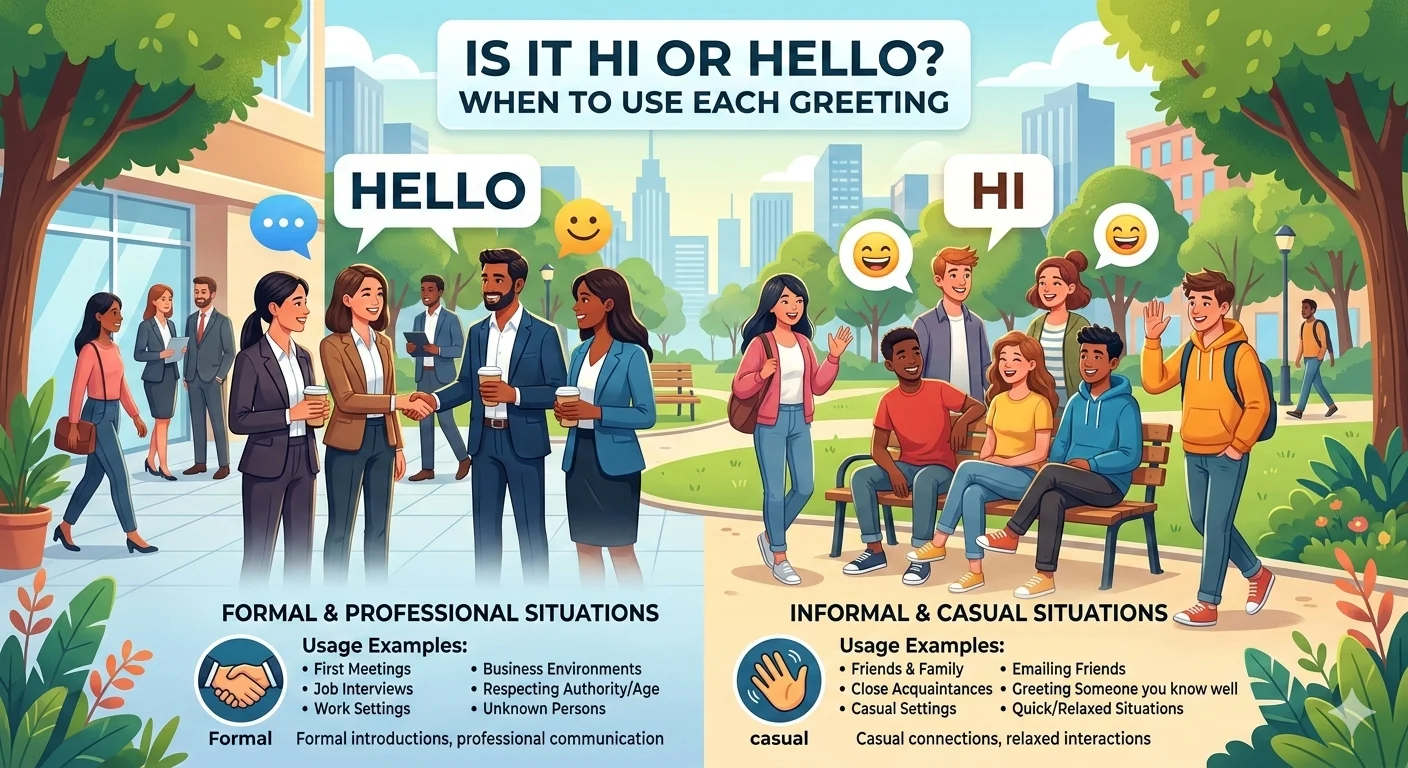
The quick answer is that “hello” is formal, and “hi” is informal. Think of “hello” as the polite, professional standard you use in formal situations or with people you don’t know. “Hi” is the friendly, casual version you use with friends, family, and coworkers you know well .
For example, you would greet a job interviewer with a polite “Hello, Mr. Smith.” But you would text a friend, “Hi or hello message”? You’d likely just say, “Hi, what’s up?” While they are both greetings, using one over the other sets the tone for the entire conversation.
The Origin of Hi and Hello
The words we use every day have fascinating histories. According to Dictionary.com, “hello” is a relatively new word, only becoming common in the 1800s. It evolved from older words like hallo, holla, and hollo, which people used to shout to get attention or hail a ferryman. Interestingly, when Alexander Graham Bell invented the telephone, he wanted people to answer with “Ahoy!” It was his rival, Thomas Edison, who suggested “hello,” and the rest is history .
On the other hand, “hi” is even older. It developed from the Middle English word hy, similar to “hey,” and was simply a sound to call attention. So, while both words serve the same purpose today, “hi” has been a casual call for attention for centuries, which explains why it still feels less formal than “hello” .
British English vs American English Spelling
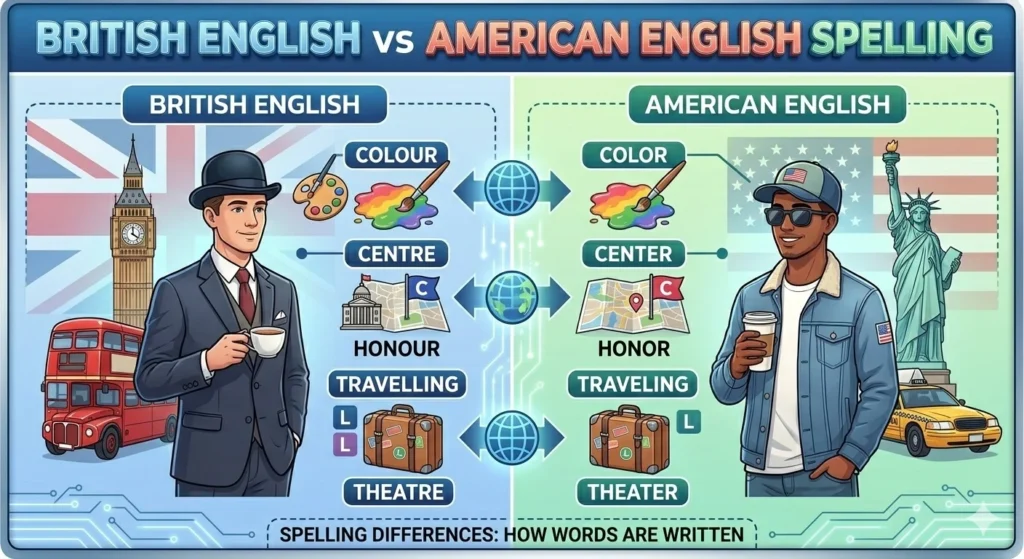
When it comes to spelling, both “hi” and “hello” are generally the same in the US and the UK, but there is one small historical quirk. The spelling “hullo” was once a common variant in Great Britain, used to express surprise or as a greeting . While you might still occasionally see “hullo” in classic British literature, it is largely outdated today.
Here’s a quick comparison of how these greetings are perceived:
Which Spelling Should You Use?
Choosing between hi or hello is simple if you think about your audience.
- For a US Audience: You have more flexibility. “Hi” is widely accepted in most workplaces, especially in tech or creative industries. However, for a first contact with a potential client or a senior executive, is hi or hello more professional? In this case, “hello” is the safer, more respectful choice .
- For a UK or Commonwealth Audience: There is often a slight preference for more formal language in initial business communications. Starting with “Dear” or “Hello” is very common. Using “Hi” right away can feel a bit too friendly if you don’t know the person.
- For a Global Audience: When in doubt, default to “hello.” It’s universally understood and rarely offends. It’s the little black dress of greetings—appropriate for almost any situation.
Common Mistakes with Hi and Hello
Even with simple words, people make mistakes. Here are a few to avoid:
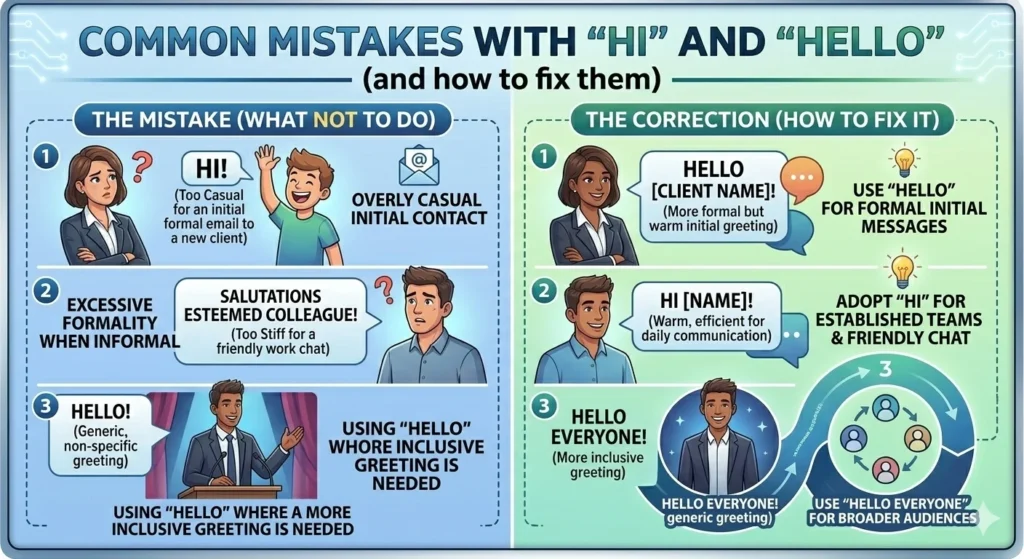
- Being too casual in a formal email: This is the biggest one. Using “Hey” or “Hi” in a job application or to a professor can seem unprofessional. For example, a hi or hello in formal email should always lean toward “Hello” .
- Worrying too much about the “right” reply: Many people search for hi or hello reply tips. The truth is, the best reply mirrors the greeting. If someone says “Hi,” you can say “Hi” back. If they say “Hello,” it’s polite to respond with “Hello.”
- Using the wrong tone: As one forum user pointed out, the emotion isn’t in the word itself, but in your tone of voice or the context of the message . A flat “hello” can sound cold, while a cheerful “hi” can be warm and welcoming.
Hi or Hello in Everyday Examples
Let’s look at how these greetings work in real life.
- In Emails: For a formal email, “Dear Hiring Manager,” or “Hello Ms. Davis,” is best. For a coworker, “Hi John,” is perfect . If you are wondering about hi or hello in tagalog or other languages, the same principle applies: use the formal version for strangers and the informal for friends.
- On Social Media: Informal wins here. A quick “hi” or “hey” in a direct message is standard.
- In Person: When you meet someone for the first time, a firm handshake and a clear “Hello, nice to meet you” makes a great impression.
- First Contact: If you are asking do you say hi or hello first to a stranger, “hello” is the polite way to initiate.
Hi or Hello Google Trends & Usage Data

While hard data fluctuates, the usage patterns are clear. In professional settings and formal writing, “hello” is the standard. However, in casual conversation and digital communication (like texts and instant messages), “hi” is far more common because it’s quick and easy. People also often wonder how does Gen Z say hi, and the trend is toward even more casual and creative variations like “hey,” “heyyy,” or simply “yo,” moving further away from the formal “hello.” This shows that language is always evolving, starting informal and becoming more formal only when the situation demands it.
Frequently Asked Questions
1. Which is more formal, hi or hello?
“Hello” is significantly more formal than “hi.” It is the preferred choice for business letters, formal emails, and addressing people you don’t know .
2. Can I use “hi” in a professional email?
Yes, but only if you have an existing relationship with the person. For a first email to a client or a boss, “Dear” or “Hello” is more professional. For a colleague you email daily, “Hi” is perfectly fine .
3. What is the difference between hi and hello in meaning?
The core meaning is the same: a greeting. The only real difference is the level of formality. “Hello” is standard; “hi” is informal .
4. Is it rude to just say “hi”?
It depends on the context. Saying a quick “hi” to a friend is not rude. However, starting a formal conversation or email with just “hi” can come across as too casual or even dismissive.
5. How do you say hi or hello in Japanese?
While this article focuses on English, it’s a common question. In Japanese, “Konnichiwa” is the standard greeting, similar to “hello,” and it’s used in most situations.
6. Should I say “hi” or “hello” when I reply to someone?
The best practice is to mirror the other person’s greeting . If they started with “Hi,” reply with “Hi.” If they used “Hello,” reply with “Hello.” This instantly matches their expected level of formality.
7. Why do people say “hi” instead of “hello”?
People usually say “hi” because it’s shorter, faster, and creates a friendly, casual atmosphere. It’s the default greeting among peers and in informal settings .
Conclusion
The choice between “hi” and “hello” is a small one, but it has a big impact on how your message is received. Remember the simple rule: “hello” is for formal situations and first impressions, while “hi” is for everyone you know and casual chats. Whether you are writing a hi or hello message to a friend or drafting a cover letter, thinking about your audience is key. Don’t stress over finding the “perfect” rule—just match your greeting to the situation. By following this simple advice, you’ll start every conversation on the right foot, building better connections one greeting at a time.

“Bram Stoker was a creative storyteller known for his powerful writing style. At Wishveb.com, he inspires readers with heartfelt, expressive wishes.”