Ever typed “homey or homie” into a search bar, unsure which version is correct? You’re not alone. This casual slang term, dripping with warmth and familiarity, causes widespread spelling confusion.
People search for it not just to spell it right, but to understand its nuanced meaning, use it appropriately, and avoid awkward mistakes. Is it a compliment about a person or a place?
Can you use it with anyone? This article cuts through the confusion, explaining the origins, regional differences, and modern usage of “homey” and “homie” to give you the confidence to use this popular term correctly, whether you’re texting a friend or writing a character’s dialogue.
Homey or Homie means
“Homey” and “homie” are two spellings of the same informal word, but they often carry different meanings in modern use.
- Homie (more common): Primarily means a close friend, someone from your neighborhood or circle. It’s a term of camaraderie. Example: “I’m going out with my homies tonight.”
- Homey (less common for people): Usually describes a feeling or place that is cozy, comfortable, and welcoming, like home. It can also be an older spelling for “friend.” Example: “Their new apartment has a really homey feel.”
For a person (friend), use “homie.” For an atmosphere or feeling, use “homey.”
The Origin of Homey/Homie
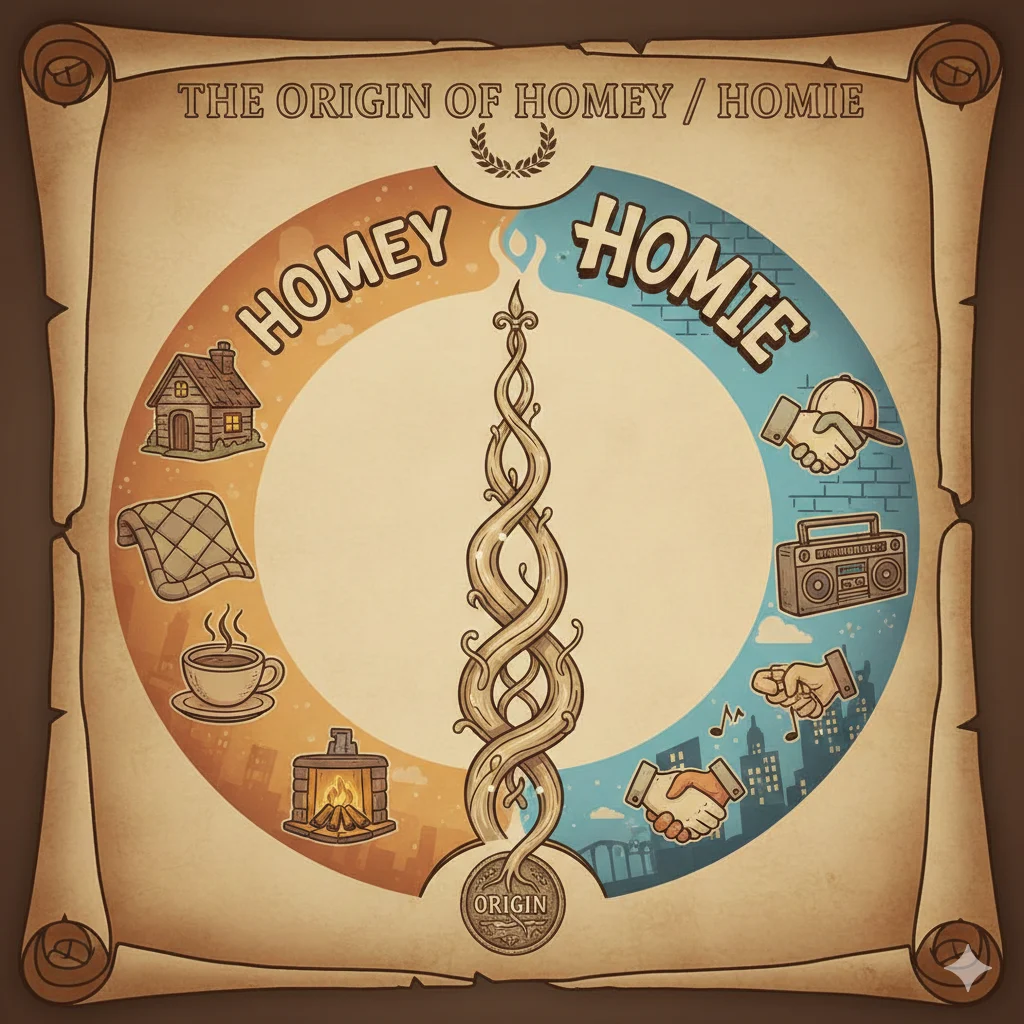
The word originates from African-American Vernacular English (AAVE), derived from “homeboy” or “homegirl.” These terms literally meant someone from your hometown or neighborhood. By the late 20th century, it was shortened to the slang “homey” or “homie.” The spelling difference isn’t about right or wrong, but about evolution and regional preference. “Homey” aligns with other English adjectives (e.g., “cozy,” “sunny”). “Homie” reflects a phonetic spelling that became standardized in hip-hop culture and mainstream slang, cementing its association with the meaning of “friend.”
British English vs. American English Spelling
The primary difference isn’t between British and American English, but between standard English and slang.
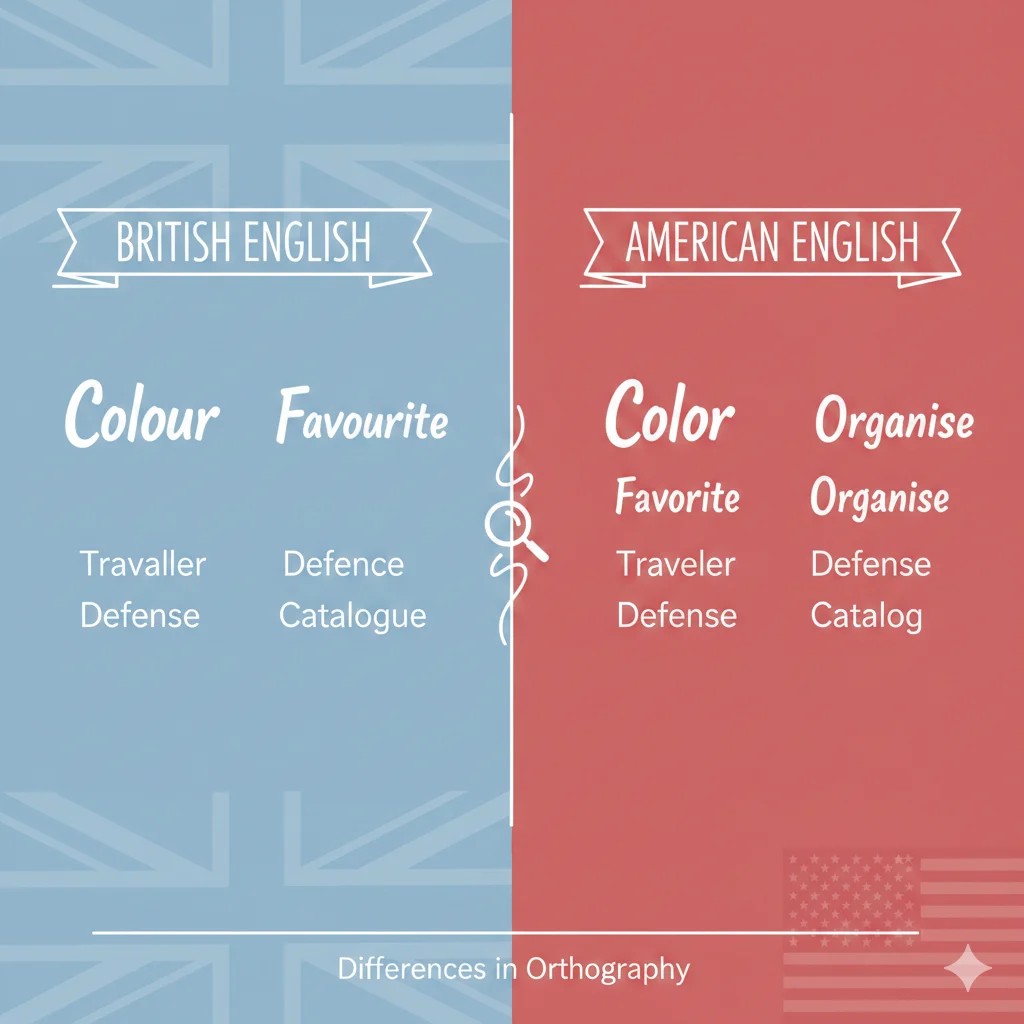
- American English: Dominantly uses “homie” for a friend and “homey” for a cozy atmosphere. “Homie” is the vastly more common spelling in pop culture, music, and everyday slang.
- British/Commonwealth English: The slang term is less ingrained. If used, “homey” might be seen for both meanings, but the American influence of “homie” is strong globally. The adjective “homey” (cozy) is perfectly standard in all English variants.
Comparison Table: Homey vs. Homie
| Feature | Homie | Homey |
|---|---|---|
| Primary Meaning | Close friend; someone from your circle. | Cozy, comfortable atmosphere (like home). |
| Common Context | Informal slang, hip-hop, casual conversation. | Descriptive adjective; older slang for friend. |
| Part of Speech | Noun. | Adjective (mostly); can be a noun. |
| Example Sentence | “Thanks for having my back, homie.” | “She made the dorm room feel homey.” |
| Global Prevalence | Very high as “friend” slang. | High as “cozy” adjective; lower as “friend” slang. |
Which Spelling Should You Use?
Your choice depends on your audience and intent.

- In the US (and for global informal/web content): Use “homie” for a friend. Use “homey” to describe a cozy place. This is the safest, most understood distinction.
- In the UK/Commonwealth: The adjective “homey” (cozy) is standard. The slang noun is less common, but “homie” would be recognized due to American media.
- For Global/Formal Writing: Avoid the slang noun entirely. Use “friend” or “companion.” The adjective “homey” (cozy) is acceptable in descriptive writing.
- Key Rule: When in doubt about the person (friend) vs. place (cozy) meaning, let the word’s job guide you. Is it a thing (noun)? Use homie. Is it describing something (adjective)? Use homey.
Common Mistakes with Homey/Homie
- Confusing “Homey” with “Homely”: This is a major error. In American English, “homely” means plain or unattractive. Calling a place “homely” is an insult, while “homey” is a compliment.
- Using “Homey” for a Friend in Modern Contexts: This can sound dated or out of touch, especially to younger audiences familiar with “homie.”
- Overusing in Formal Settings: Both are casual terms. Avoid in business emails, academic papers, or professional reports.
Homey/Homie in Everyday Examples
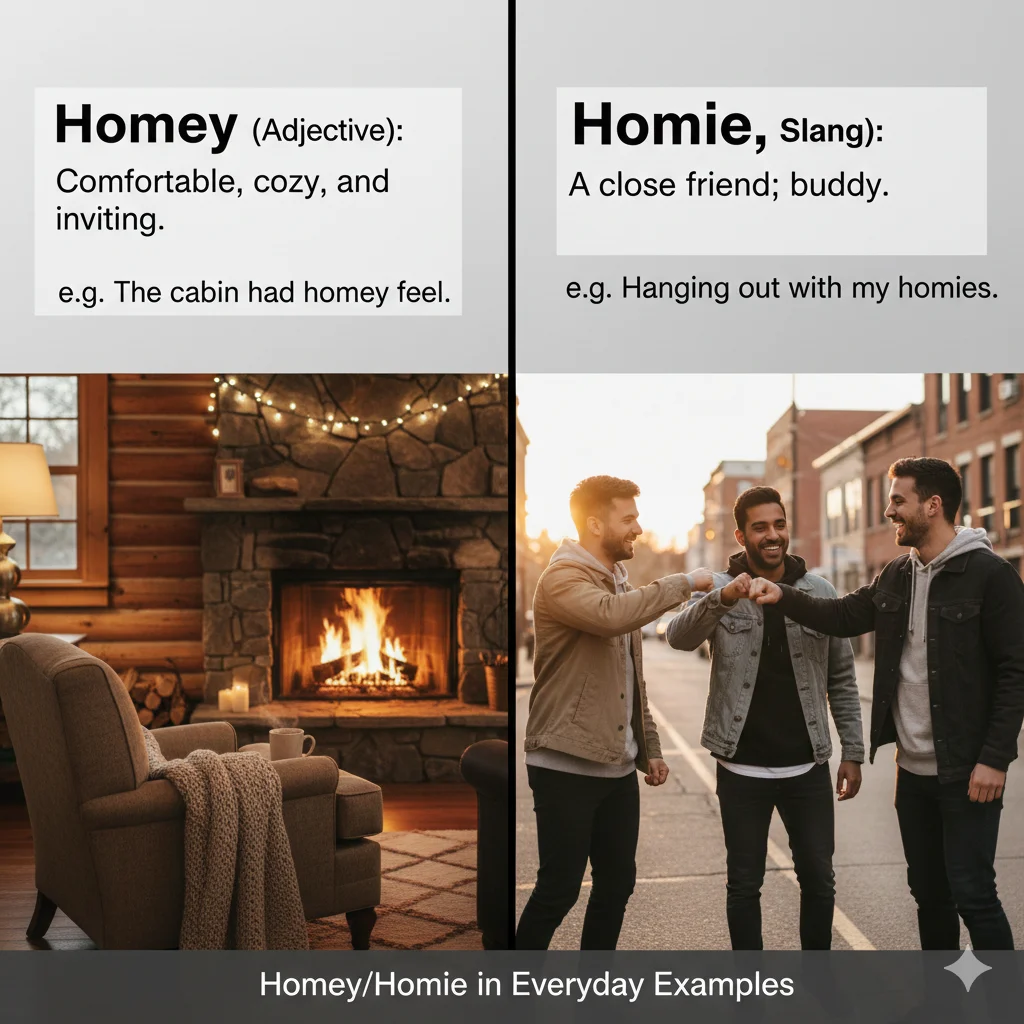
- Text/Social Media: “Great seeing you, homie! 🍻” / “Love what you’ve done with the place, it’s so homey.”
- Casual Email: “Hey Mark, catching up with some old homies this weekend.” (Only if you have a very informal relationship with the recipient).
- News/Culture Article: “The artist’s lyrics pay tribute to the homies he grew up with.” / “The cafe’s homey ambiance attracts students.”
- Formal Writing: Use alternatives. Instead of “He thanked his homies,” write “He thanked his longtime friends.”
Homey/Homie – Google Trends & Usage Data
Google Trends data shows “homie” is searched far more frequently globally than “homey,” highlighting its dominance as the slang term. Searches for both peak in the United States, followed by Canada and the Philippines, reflecting the global spread of American pop culture. The related search “homey or homie” has a consistent, steady volume, proving it’s a persistent point of confusion for writers and speakers worldwide.
Frequently Asked Questions (FAQs)
Q1: Is it spelled homie or homey?
A: Both are correct, but “homie” is standard for a friend, and “homey” is standard for a cozy feeling.
Q2: What is homey slang for?
A: As slang, it’s an older variant of “homie,” meaning a close friend from your neighborhood.
Q3: Can I say homie to a girl?
A: Yes. The female equivalent is often “homegirl,” but “homie” is commonly used in a gender-neutral way for any close friend.
Q4: Does homey mean friend?
A: It can, but this usage is less common now. “Homie” is the clearer, more modern term for “friend.”
Q5: What is a homey person?
A: A “homey person” likely means someone who makes others feel comfortable and at ease, like the adjective form. To call someone your friend, “He’s my homie” is more natural.
Q6: What does “homey place” mean?
A: It means a place that feels cozy, warm, inviting, and comfortable, similar to the feeling of being at home.
Q7: Is there a difference between “homey” and “homely”?
A: Yes, a crucial one. In American English, “homey” is positive (cozy). “Homely” means unattractive or plain. In British English, “homely” can mean cozy.
Conclusion
Understanding the difference between homey and homie is about mastering context. Remember the simple rule: “Homie” is your friend; “homey” is the feeling. While their origins are linked, modern usage has drawn a clear, practical distinction. For clear and contemporary communication, reserve “homie” for your trusted companions and use “homey” to compliment a comfortable vibe. Most importantly, avoid the accidental insult of confusing “homey” with “homely.” By choosing the right spelling for the right situation, you’ll sound natural, culturally aware, and avoid any linguistic faux pas.

“John Galsworthy was a refined storyteller known for expressive, emotional writing. At Wishveb.com, he brings graceful, heartfelt wishes to readers.”