Are you confused about the difference between pescetarian or pescatarian? You are not alone. Thousands of people search for this term every month.
They want to know what this diet means, how to spell it, and whether it is right for them. The confusion is real because you see both spellings online, in cookbooks, and on restaurant menus.
This guide solves that problem. It explains the simple definition, dives into the history of the word, and gives you clear advice on which spelling to use.
Whether you are thinking about changing your diet or just want to understand the term, this article covers everything. You will also find answers to common questions like do pescatarians eat milk and eggs? and is pescetarian the healthiest diet?
Pescetarian or Pescatarian means
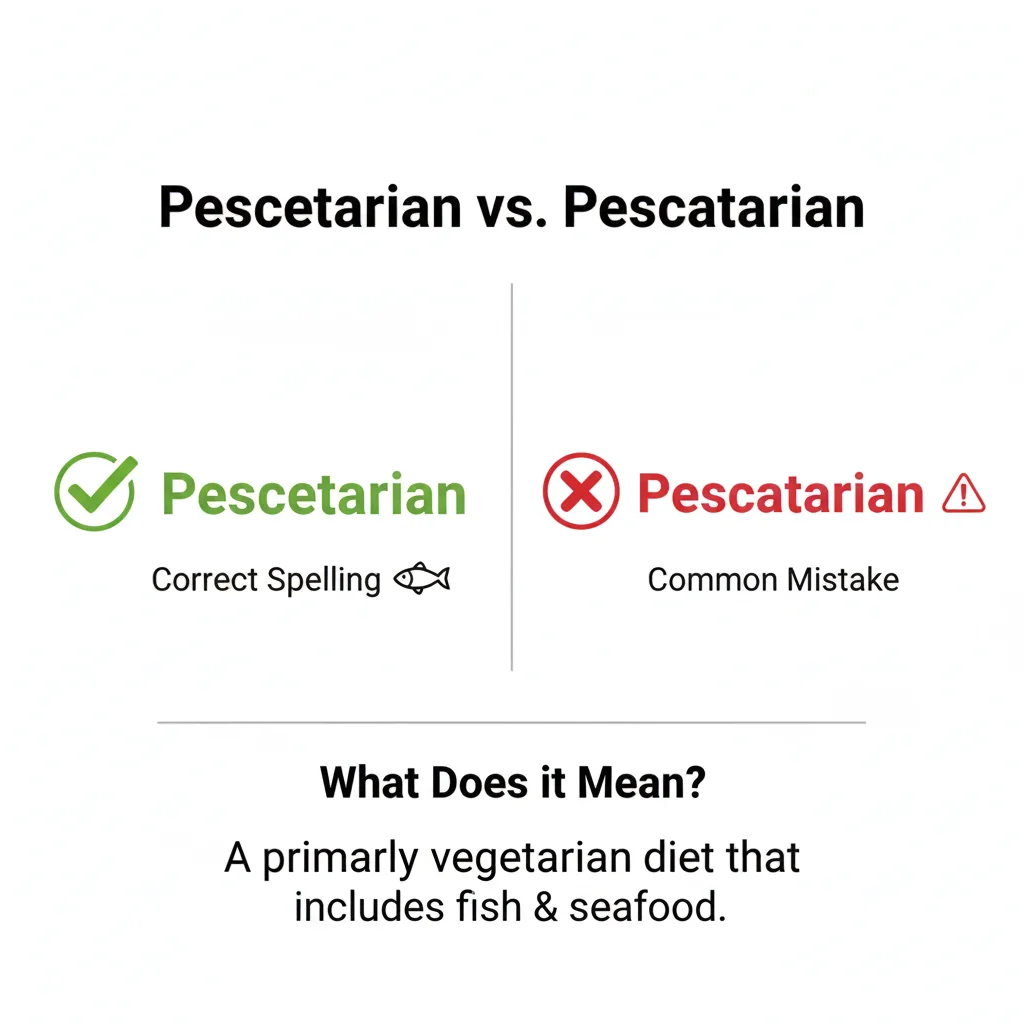
The quick answer is that both spellings are correct. They refer to the exact same thing: a person who does not eat meat from land animals (like chicken, beef, or pork) but does eat fish and seafood.
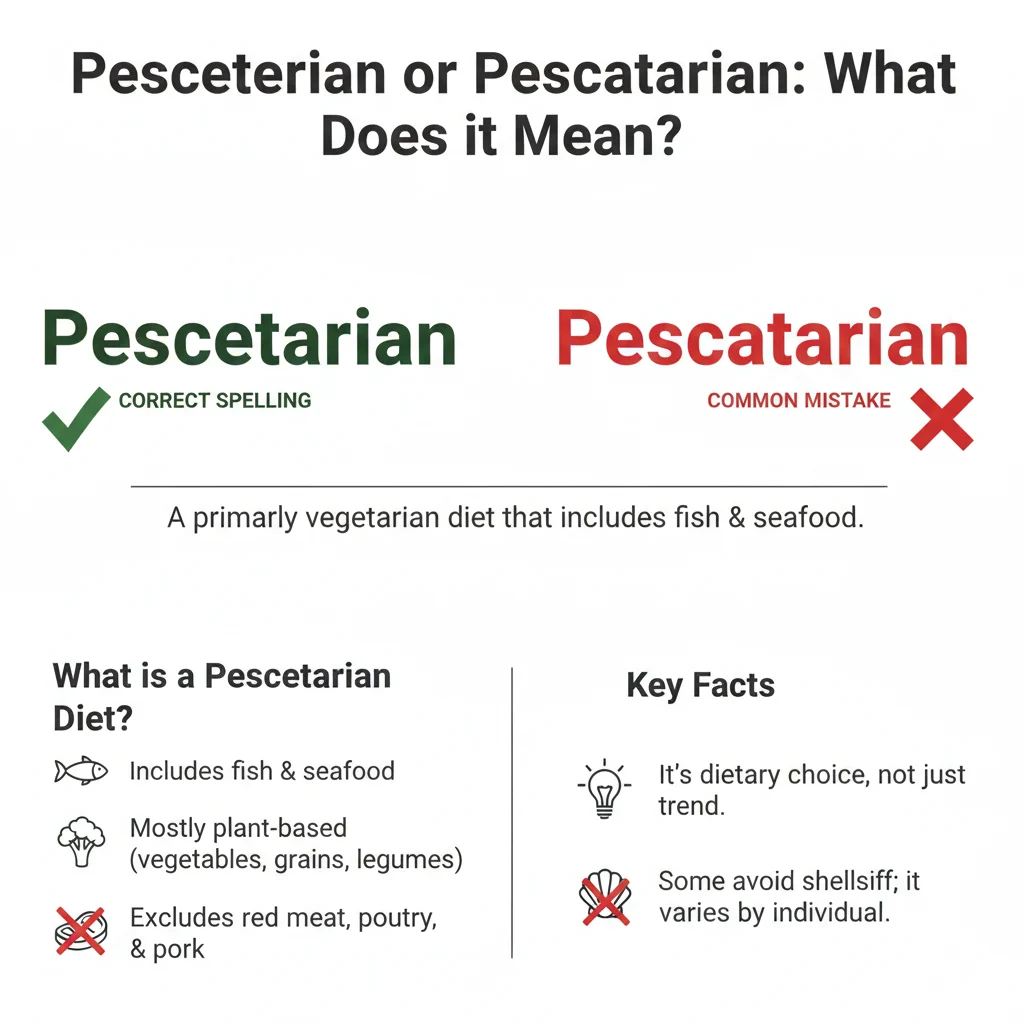
Think of it this way: it is a vegetarian diet plus fish.
- Examples of what they eat: Salmon, shrimp, tuna, crab, vegetables, fruits, grains, and usually dairy and eggs.
- Examples of what they do NOT eat: Chicken, steak, bacon, lamb, or turkey.
So, if someone asks, “Can you eat chicken as a pescatarian?” the answer is no. Chicken is poultry and is not allowed on this diet .
The Origin of Pescetarian or Pescatarian
To understand why there are two spellings, we have to look at where the word came from. It is a blend, or combination, of two words.
The first part comes from the Italian word “pesce,” which means “fish” . The second part comes from the word “vegetarian.” So, it literally means a “fish-vegetarian.”
The term is quite new. It first appeared in the early 1990s. The Merriam-Webster dictionary notes its first known use in 1993 . The Oxford English Dictionary lists the earliest evidence from 1991 . Because it is a new word, the spelling was not set in stone immediately.
The spelling difference comes from how people adapted the Italian root “pesce.” Some wanted to keep it closer to the original Italian (pesce), while others simplified it to match English spelling patterns (pesca).
British English vs American English Spelling
This is the main reason for the confusion. Generally speaking, the spelling follows a pattern based on where you are.
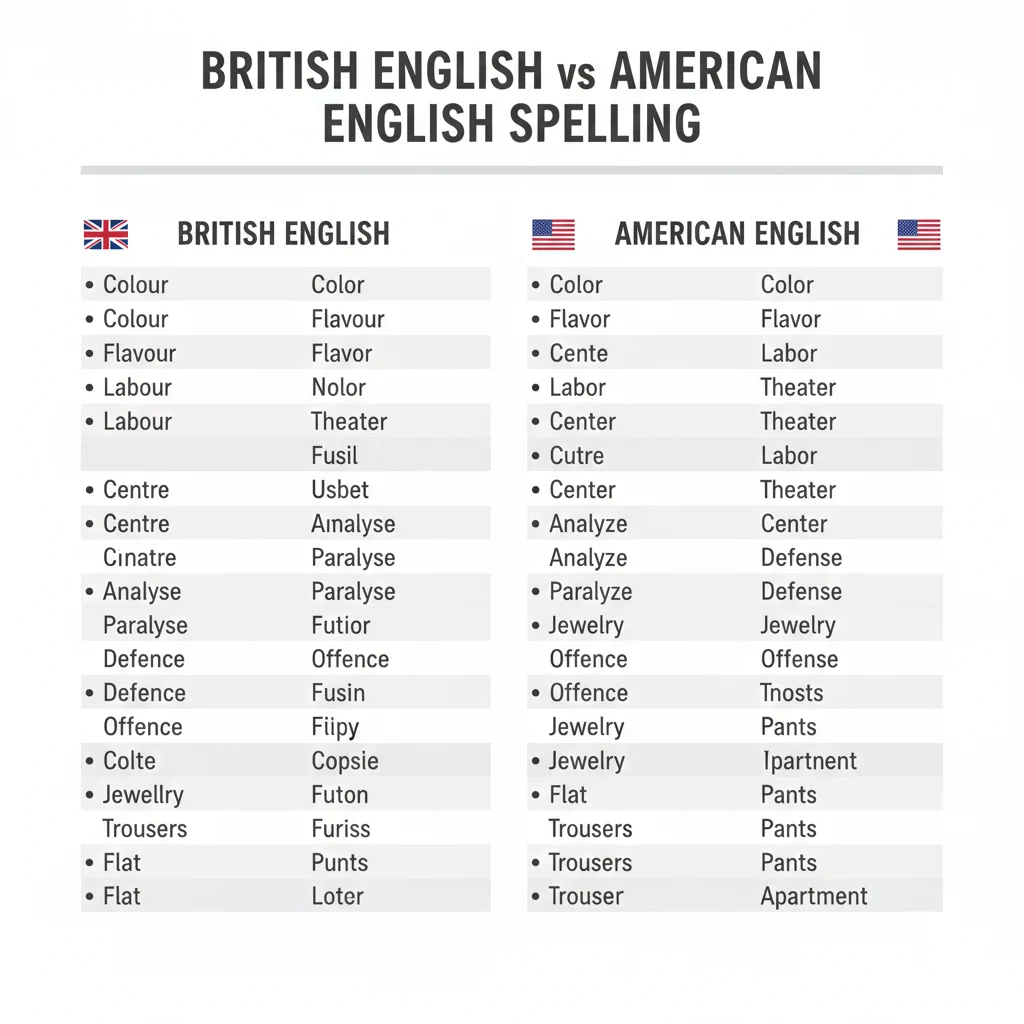
- British English / Commonwealth: The preferred spelling is usually pescetarian. (e.g., UK, Australia, New Zealand)
- American English: The preferred spelling is usually pescatarian. (e.g., US, Canada)
However, this is not a strict rule. Americans will understand “pescetarian,” and Brits will understand “pescatarian.” Both dictionaries, like the OED, list both versions . The pronunciation is very similar, with a slight difference in the emphasis on the middle syllable .
Here is a simple table to show the difference:
Which Spelling Should You Use?
If you are writing or searching for information, which one should you pick? It depends on your audience.
- For a US audience: Use pescatarian. This is the most common spelling in American English. Major US institutions like the Cleveland Clinic use this version .
- For a UK or Commonwealth audience: Use pescetarian. This aligns with the spelling often found in British publications .
- For a global audience: You can use either one. To be safe, pick one and stick with it throughout your text. Most people searching for “pescetarian or pescatarian” are trying to figure out the difference, so your content will be found regardless.
Common Mistakes with Pescetarian or Pescatarian
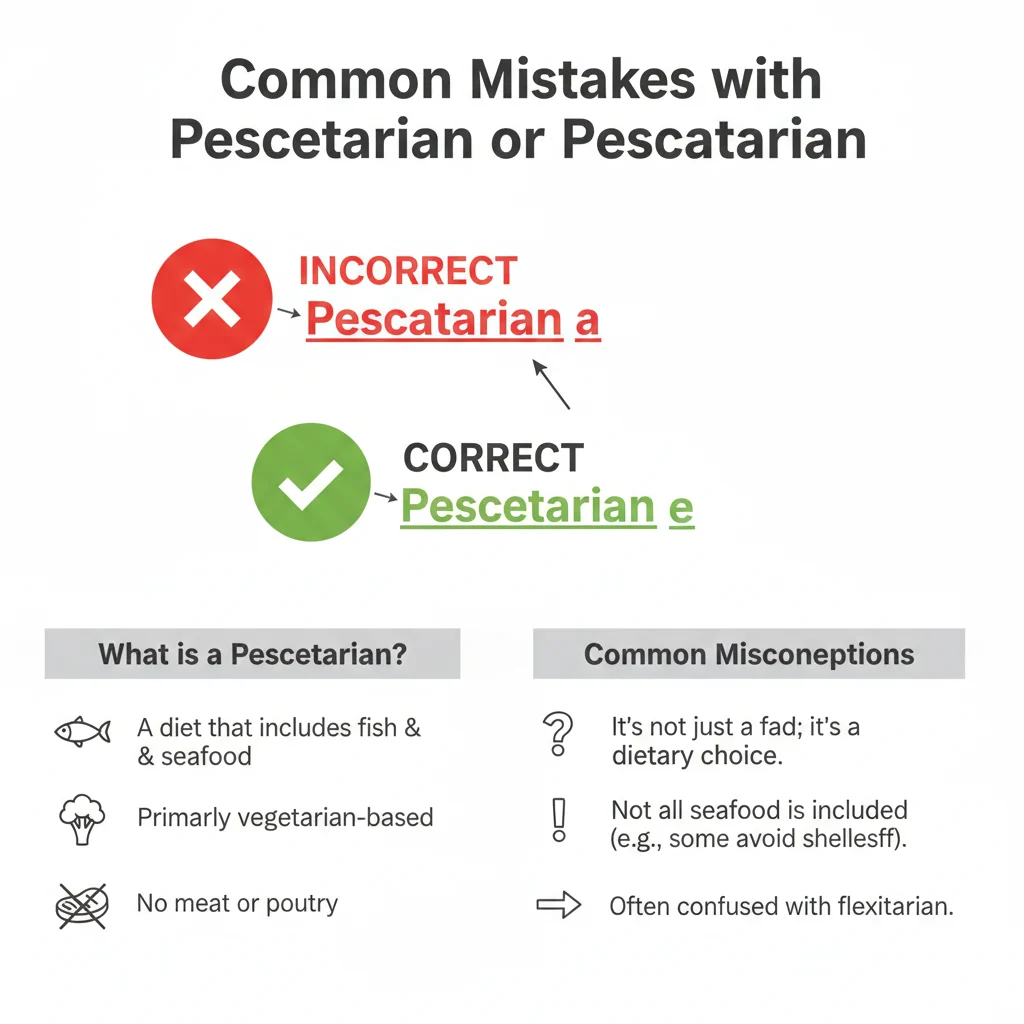
People often misunderstand what this diet really means. Here are the most frequent errors:
- Mistake #1: Thinking it includes chicken. This is a huge misconception. Can you eat chicken as a pescatarian? No. Chicken is meat and is not part of the diet. A pescatarian diet includes fish but excludes poultry .
- Mistake #2: Confusing it with vegetarian. While similar, they are different. Pescatarian vs vegetarian is a common comparison. Vegetarians do not eat any animal flesh at all, including fish. Pescatarians specifically make an exception for seafood .
- Mistake #3: Assuming it is always healthy. People often ask, “Is pescetarian the healthiest diet?” It can be very healthy, but it is not automatic. If you only eat fried fish and French fries, it is not healthy. A healthy pescatarian diet focuses on whole foods, vegetables, and lean fish .
- Mistake #4: Getting the name wrong. People sometimes wonder, “How do you call someone who eats only fish?” The correct term is a pescatarian (or pescetarian). You might also hear the term “pesco-vegetarian,” but it is less common .
Pescetarian or Pescatarian in Everyday Examples
Seeing how the word is used in real life can help you remember. Here are examples from different contexts:
- In an Email (US): “Hi Team, just a heads-up for the lunch meeting on Friday. I’m a pescatarian, so I’ll have the salmon salad.”
- In the News (UK): “The singer, a longtime pescetarian, praised the quality of the sustainable fish at the new Cornwall restaurant.”
- On Social Media: “Trying out a new pescatarian recipe tonight! Blackened cod tacos with slaw. #pescatarian #fishrecipes”
- In Formal Writing: “The study compared the health outcomes of omnivores, vegetarians, and those following a pescatarian dietary pattern.”
Pescetarian or Pescatarian – Google Trends & Usage Data
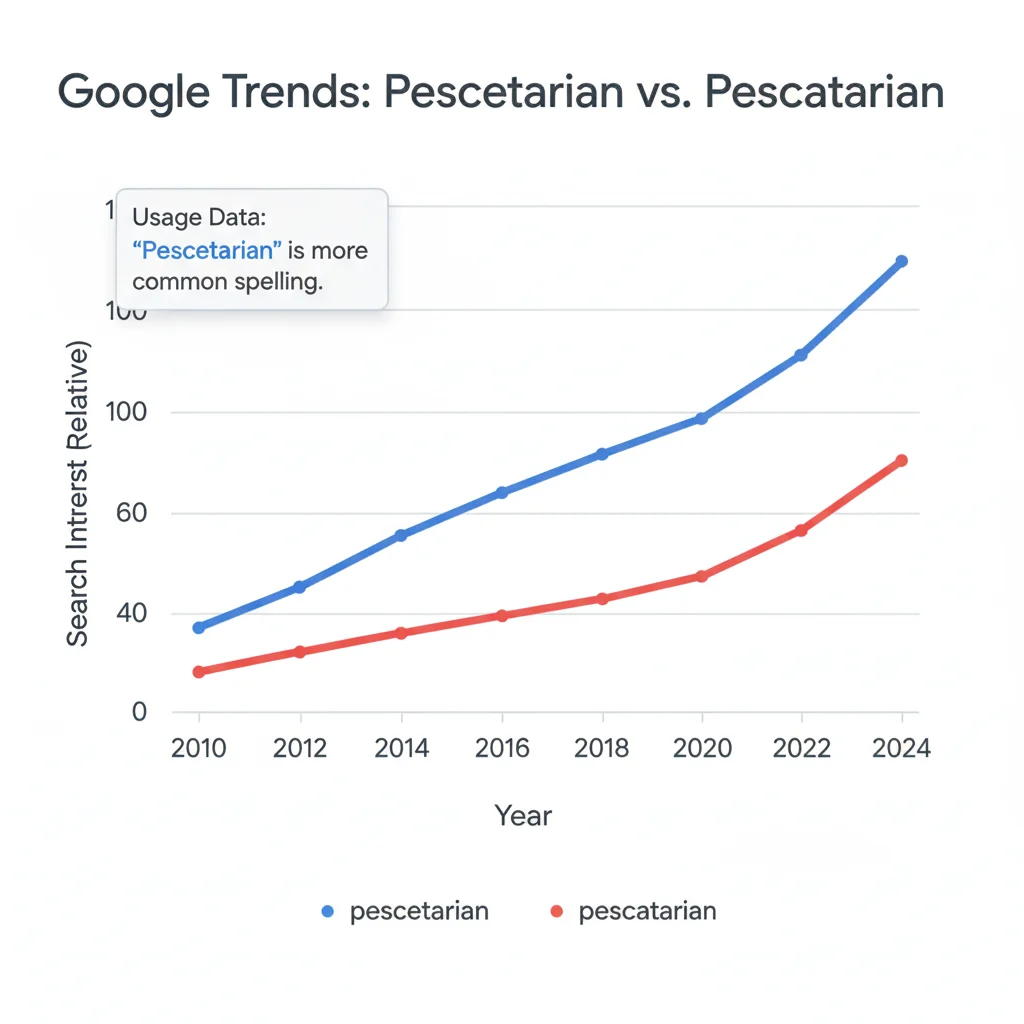
Interest in this diet is growing. In fact, searches for pescatarian recipes spiked significantly in early 2026, with a 170% increase according to recent data . This is often linked to New Year’s resolutions and a desire for a “softer reset” than going fully vegan.
Globally, about 3% of adults follow a pescatarian diet . It is more popular in certain regions:
- Africa and the Middle East: Show a higher incidence (around 5%) compared to other areas .
- Europe: Prevalence is around 3%, with slightly higher numbers in countries like Germany and Belgium .
- United Kingdom: It is a significant trend, especially among younger women aged 18-24 .
Comparison Table: Diet Variations
To help you see where pescetarian or pescatarian fits in, here is a comparison with other common diets:
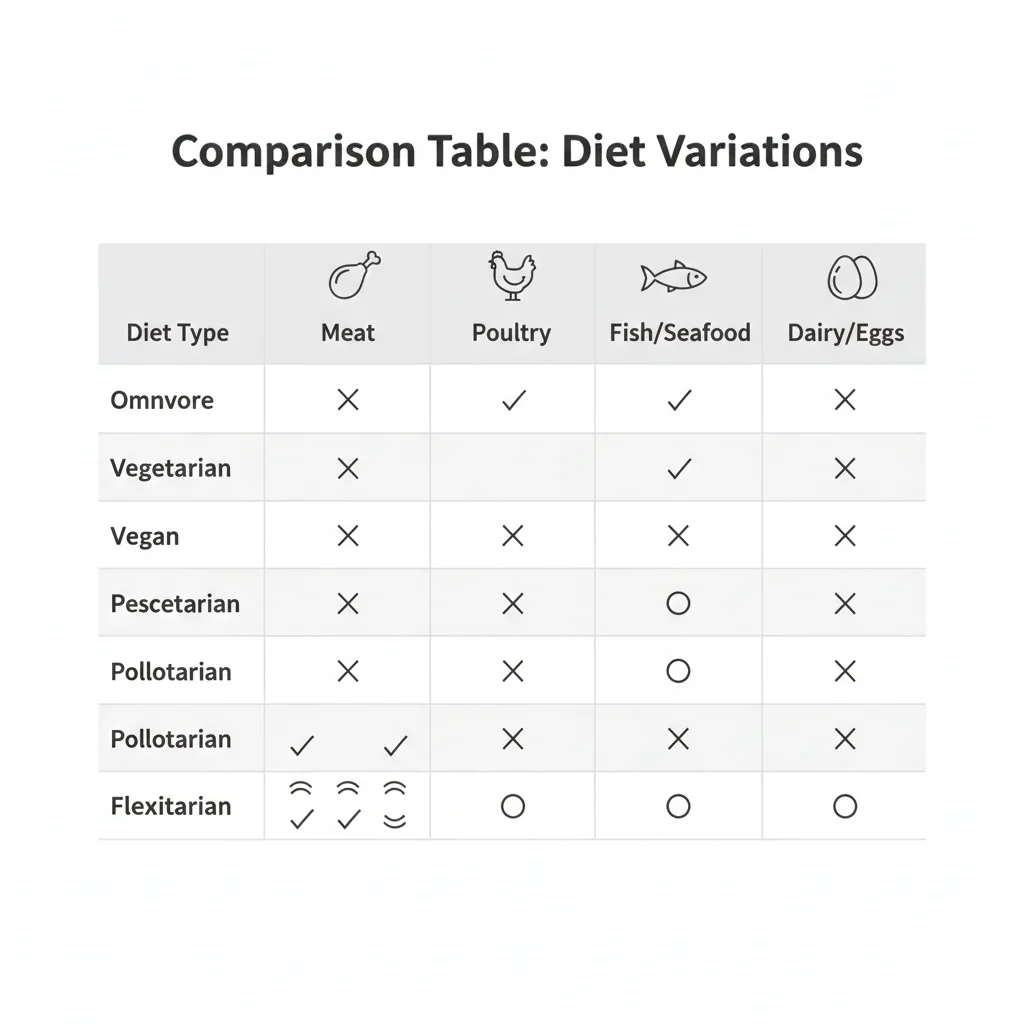
| Diet Type | Fish/Seafood | Poultry (Chicken) | Red Meat | Dairy & Eggs |
|---|---|---|---|---|
| Pescatarian | Yes | No | No | Usually Yes |
| Vegetarian (Lacto-Ovo) | No | No | No | Yes |
| Vegan | No | No | No | No |
| Pollotarian | Maybe | Yes | No | Usually Yes |
| Flexitarian | Sometimes | Sometimes | Sometimes | Yes |
| Omnivore | Yes | Yes | Yes | Yes |
As the table shows, a pescatarian diet is unique because it says no to land animals but yes to the bounty of the sea .
Frequently Asked Questions (FAQs)
Here are answers to the most common questions people have about this diet.
1. Do pescatarians eat milk and eggs?
Yes, usually. Most pescatarians include dairy products like milk, cheese, and yogurt, as well as eggs, in their diet. This is sometimes called a pescatarian food list staple. However, an individual could choose to avoid them .
2. Can you eat chicken as a pescatarian?
No. Chicken is poultry and is not allowed. The diet specifically excludes all land animal meats, including chicken, turkey, beef, and pork .
3. Is pescetarian the healthiest diet?
It is considered one of the healthiest. Research shows it lowers the risk of heart disease and cancer compared to regular meat-eating diets . The opposite of pescatarian would be a diet heavy in red and processed meats, which carries higher health risks.
4. How do you call someone who eats only fish?
You call them a pescatarian (or pescetarian). The term was created specifically for this dietary choice .
5. What is the correct pescatarian pronunciation?
In American English, it is pronounced pes-kuh-TAIR-ee-uhn. In British English, it is very similar: pess-kuh-TAIR-ee-uhn .
6. What is a pescatarian religion?
No single religion requires this diet. However, some religions have dietary laws that encourage it. For example, pescatarian religion connections are often seen in Catholicism (where some abstain from meat on Fridays but eat fish) and certain branches of Christianity and Buddhism that promote non-violence but make exceptions for seafood .
7. Is there a pescetarian or pescatarian in Urdu translation?
The concept is usually explained in Urdu as “مچھلی کھانے والا سبزی خور” (Machli khane wala sabzi khor), which translates to a “vegetarian who eats fish.” There is no single-word Urdu equivalent.
8. Is this diet safe for everyone?
For most people, yes. But pregnant women need to be careful about mercury in fish. It is best to choose low-mercury fish like salmon, sardines, and trout .
Conclusion
So, pescetarian or pescatarian—which one is right? Both are correct. The journey of this word from the Italian “pesce” to our modern tables explains the spelling variations we see today. If you are writing for an American audience, “pescatarian” is your best bet. For a British or international audience, “pescetarian” is perfectly acceptable.
More important than the spelling is the meaning. This diet is a flexible, healthy way of eating that excludes land meat but welcomes fish, seafood, and plenty of plants. It offers a great balance, providing the heart-healthy benefits of omega-3s from fish while reducing the risks associated with red meat . Whether you choose to spell it with an “a” or an “e,” you are talking about a conscious choice to eat well.

“John Galsworthy was a refined storyteller known for expressive, emotional writing. At Wishveb.com, he brings graceful, heartfelt wishes to readers.”