English learners and even native speakers often pause when they write a simple sentence like “I ___ the dog.”
Should it be I pet the dog or I petted the dog? 🤔
This confusion is the reason people search for “petted or pet” online. The word pet looks simple, but its grammar changes depending on tense, region, and sentence structure. Some people hear “I pet the dog yesterday”, while others insist “I petted the dog yesterday” is correct. Both appear in real life, which makes things even more confusing.
The problem comes from English verbs that do not always follow one clear rule. Add to this the difference between American English and British English, and the confusion grows fast. People want quick answers, correct grammar, and examples they can trust for writing emails, posts, or articles.
This article solves all of that. You will get a quick answer, deep explanation, real examples, grammar rules, and professional advice. By the end, you will clearly know when to use pet and when to use petted, without second-guessing yourself.
Petted or Pet – Quick Answer
Both “pet” and “petted” are correct, but they are used in different situations.
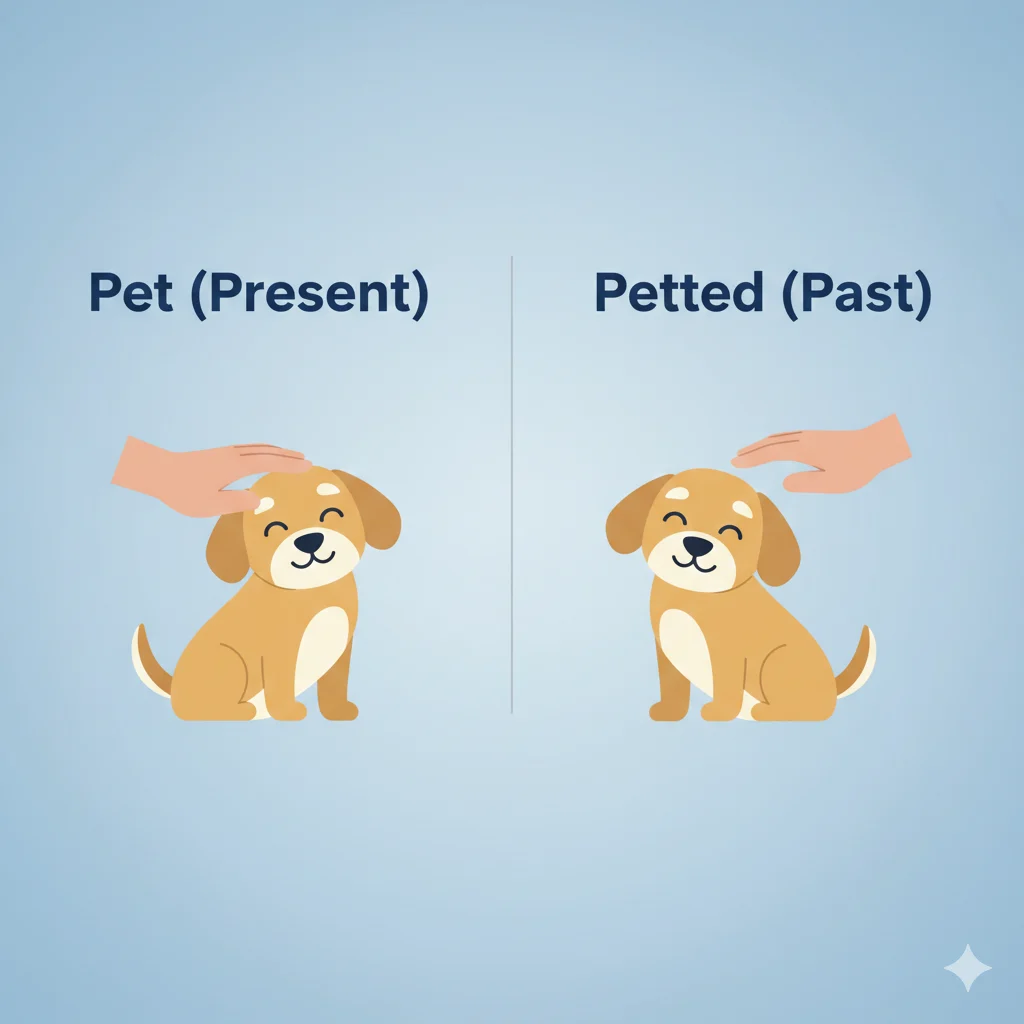
- Pet is the present tense and also the base verb
- I pet my cat every morning.
- Petted is the past tense and past participle
- I petted the dog yesterday.
In simple terms:
- Now or habit → pet
- Past action → petted
Example:
- I pet the dog every day. ✅
- I petted the dog last night. ✅
So yes, “petted” is a real word, and yes, “I petted the dog” is correct English.
The Origin of “Petted or Pet”
The word pet comes from the 16th century, originally meaning a spoiled or favored person. Over time, its meaning changed to include animals kept for pleasure, such as dogs and cats.
The verb to pet (meaning to stroke or touch gently) developed later. Like many English verbs, it formed its past tense by adding -ed, becoming petted.
Why spelling differences exist
English has many verbs that look irregular but are actually regular:
- play → played
- want → wanted
- pet → petted
The confusion exists because some speakers shorten the past tense in casual speech, especially in American English. This makes people think “pet” can also be past tense, even though “petted” is grammatically correct.
British English vs American English Spelling
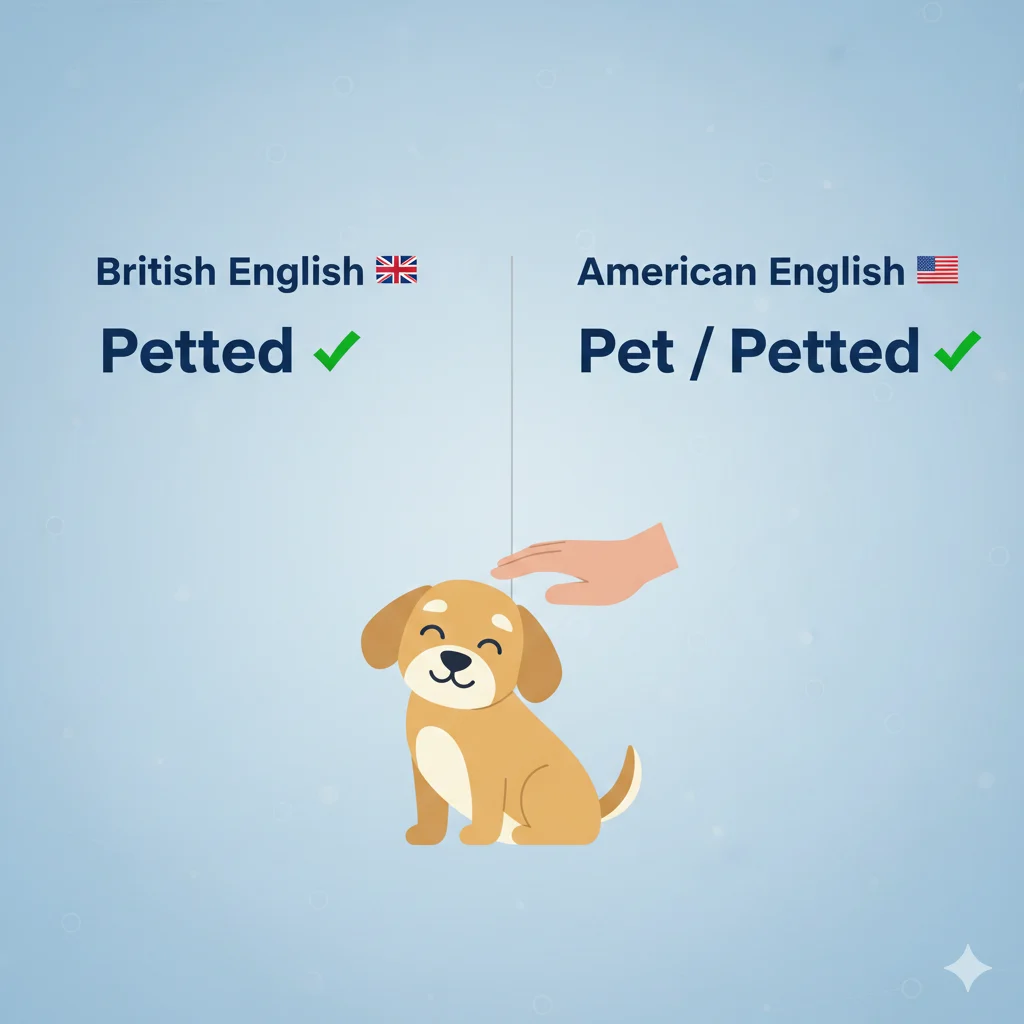
Both British and American English accept “petted” as the past tense. The difference is more about usage style, not spelling rules.
Key difference:
- American English sometimes uses “pet” as past tense in informal speech.
- British English strongly prefers “petted”.
Examples:
- American (informal):
I pet the dog yesterday. - British (standard):
I petted the dog yesterday.
Comparison Table
| Aspect | American English | British English |
|---|---|---|
| Present tense | pet | pet |
| Past tense (formal) | petted | petted |
| Past tense (informal speech) | pet | rarely used |
| Writing preference | petted | petted |
Important: In professional writing, both regions prefer petted.
Which Spelling Should You Use?
Your audience decides the best choice.
Use petted if:
- You are writing articles, blogs, emails, or school work
- Your audience is global
- You want clear and correct grammar
Use pet (past tense) only if:
- You are speaking casually
- You are writing dialogue or informal chat
- Your audience understands relaxed American English
Simple rule to remember:
👉 When in doubt, use “petted.”
It is always safe, always correct, and always professional.
Common Mistakes with “Petted or Pet”
Here are frequent errors people make and how to fix them.
❌ Mistake 1: Using “pet” for past tense in formal writing
- I pet the dog yesterday. ❌
- I petted the dog yesterday. ✅
❌ Mistake 2: Thinking “petted” is not a real word
- Is petted a word?
✔️ Yes, it has been used for centuries.
❌ Mistake 3: Mixing tense in one sentence
- I pet the dog and fed him yesterday. ❌
- I petted the dog and fed him yesterday. ✅
❌ Mistake 4: Confusing verb and noun
- The dog wants to be pet. ❌ (informal)
- The dog wants to be petted. ✅ (correct)
Petted or Pet in Everyday Examples
Emails

- I petted your dog while you were away.
- Please do not pet the animals without permission.
News
- The child gently petted the rescued puppy.
Social Media
- Just petted the cutest cat today 🐱
- I love to pet dogs at the park.
Formal Writing
- The therapy animals were petted by patients.
Sentence Comparison
- Present: The dog likes it when I pet him.
- Past: The dog slept after I petted him.
Petted or Pet – Google Trends & Usage Data
Search behavior shows that people often look for:
- Is petted a word
- Petted or pet past tense
- The dog wants to be pet or petted
Usage by region:
- United States: High searches for informal vs formal usage
- UK & Commonwealth: Strong preference for “petted”
- Global learners: Focus on grammar correctness
Context matters:
- Speaking: relaxed rules
- Writing: strict grammar
Keyword Variations Comparison Table
| Variation | Meaning | Correct Use |
|---|---|---|
| pet | present tense | I pet my dog |
| petted | past tense | I petted my dog |
| be pet | informal passive | spoken only |
| be petted | correct passive | writing & speech |
FAQs About “Petted or Pet”
1. Is it “I petted the dog” or “I pet the dog”?
Both are correct, but “petted” is correct for past tense.
2. Is there a word called “petted”?
Yes. “Petted” has been a standard English word for hundreds of years.
3. Which is correct, pet or petted?
- Pet → present
- Petted → past
4. When did “petted” become a word?
It appeared in English texts by the early 1700s.
5. Is “the dog wants to be pet” correct?
It is informal.
“The dog wants to be petted” is grammatically correct.
6. Can “pet” be past tense?
Only in very informal American speech, not in proper writing.
7. What should I use in exams or articles?
Always use “petted.”
Conclusion: Final Advice on Using “Petted or Pet”
The confusion between petted or pet is common, but the rule is simple once you understand it. Pet is the present tense and base verb. Petted is the correct past tense and past participle. Both words are real, correct, and useful—but only when used in the right context.
If you are speaking casually, you might hear people say “I pet the dog yesterday.” This happens mostly in American English conversation. However, in writing, education, blogging, and professional communication, “petted” is always the better choice. It avoids confusion and shows clear grammar.
Remember the safest rule:
👉 Present = pet
👉 Past = petted
By following this guide, you can confidently write sentences, answer grammar questions, and explain the difference to others. No more second-guessing. English becomes easier when rules are clear—and now, petted or pet should never confuse you again.

“John Galsworthy was a refined storyteller known for expressive, emotional writing. At Wishveb.com, he brings graceful, heartfelt wishes to readers.”