Have you ever typed “repore or rapport” into Google, unsure which is right? You’re not alone. This common search reveals a widespread spelling confusion.
People are searching because they want to use the word correctly in emails, resumes, or conversations, especially when describing a vital professional or personal connection. They might ask, “What is a good repore?” or wonder about the “meaning of repour or rapport,” revealing the phonetic spelling traps many fall into.
This article solves that confusion. We’ll clarify the correct spelling, explore its origins, and give you practical advice.
Whether you’re building client relationships or strengthening bonds with colleagues, understanding this term is the first step to creating genuine, trusting connections. Let’s settle the repore or rapport debate once and for all.
Repore or Rapport means
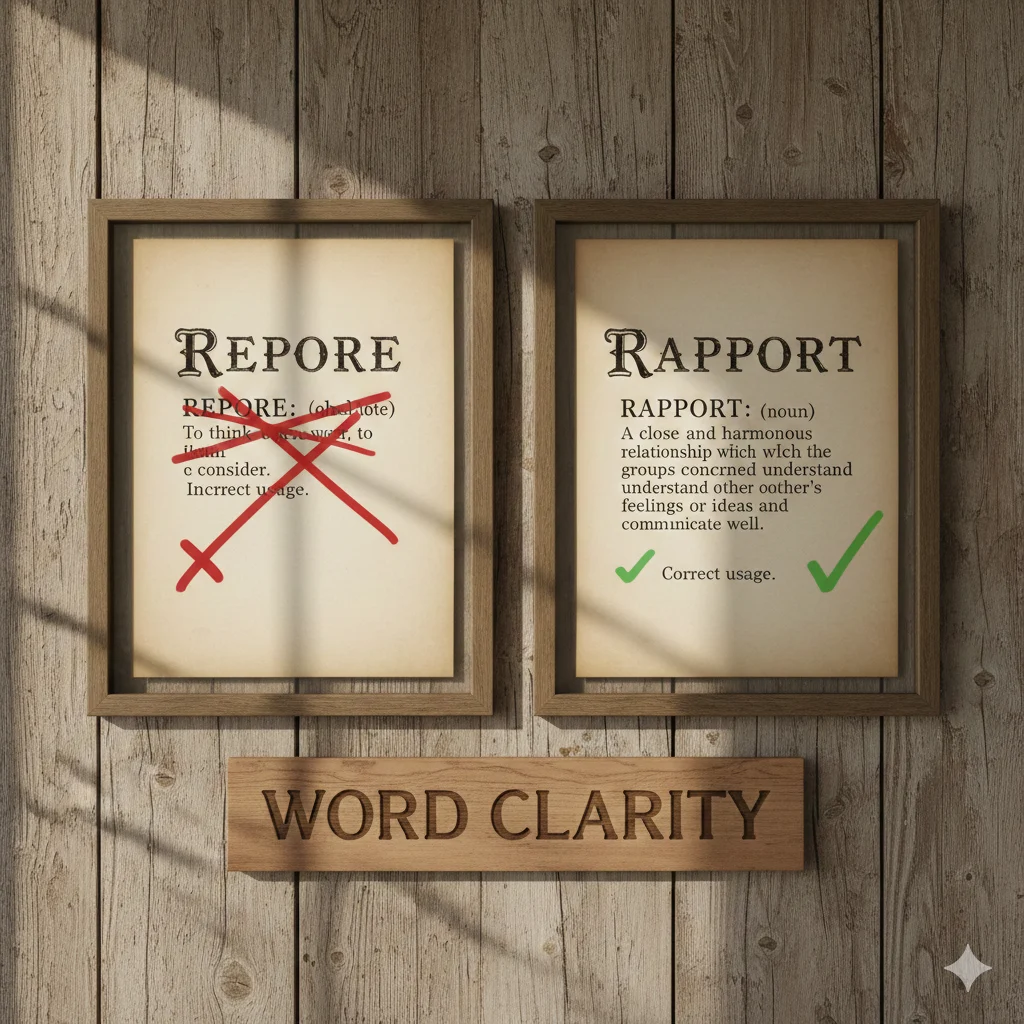
The correct spelling is rapport. “Repore,” “repour,” and “repor” are common misspellings based on how the word sounds when spoken. Rapport (pronounced rah-POUR) means a close, harmonious relationship where people understand each other’s feelings and communicate effectively.

Examples:
- “The manager built instant rapport with her new team.”
- “They had a great rapport, making the project a success.”
- (Incorrect): “We need to build a good repore.” (This should be “good rapport”).
The Origin of Rapport
The word rapport comes from the French verb rapporter, which means “to bring back” or “to relate.” It entered English in the 16th century, carrying the sense of a connection or relationship. The confusion in spelling, like “repore” or “repour,” is purely phonetic. English speakers hear “rah-pour” and spell it as it sounds. The double ‘p’ and silent ‘t’ are non-intuitive, making “rapport” a classic spelling bee challenge. It has no connection to the word “report,” though they are sometimes mistakenly linked.
British English vs. American English Spelling
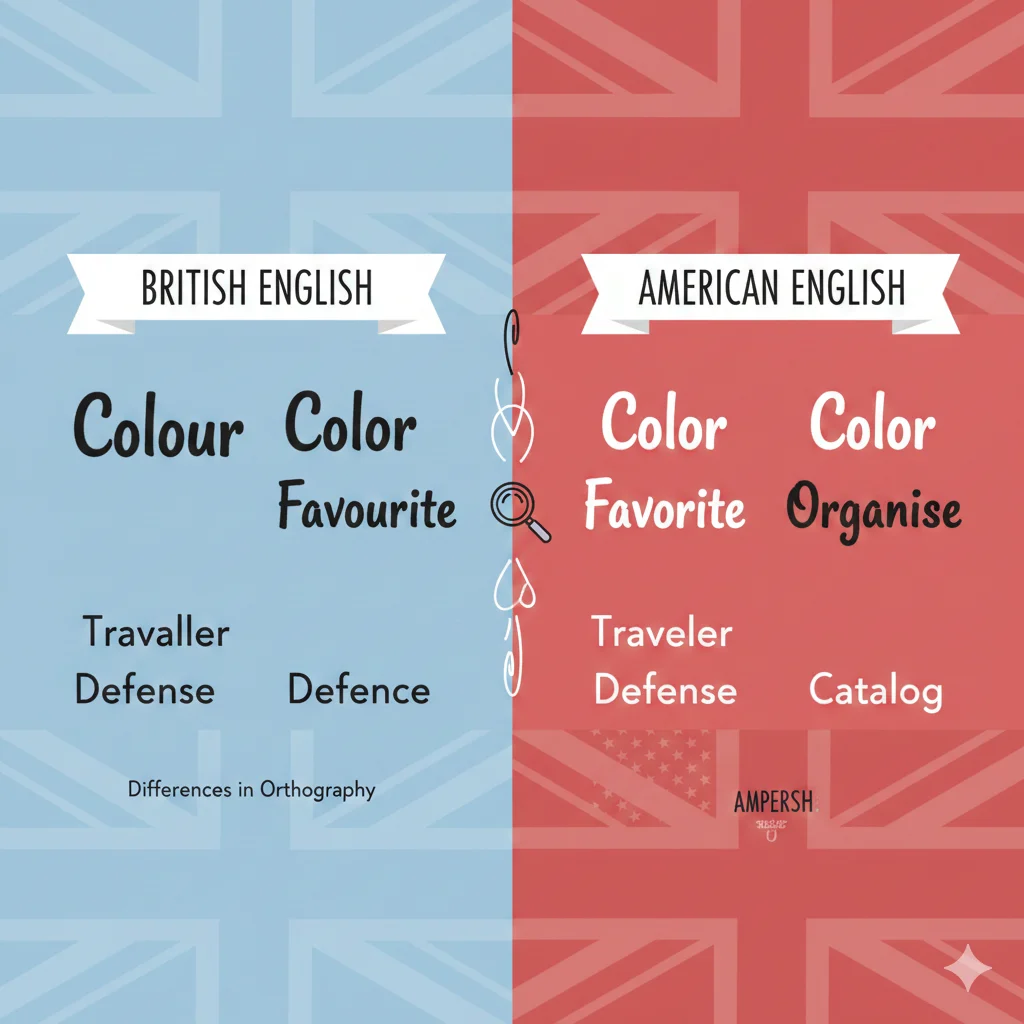
There is no difference in spelling for “rapport” between British and American English. The correct spelling is rapport in both dialects. The confusion lies only in the common misspellings. However, understanding general spelling differences helps explain why someone might guess “repore.”
| Feature | American English | British English | Example with “Rapport” |
|---|---|---|---|
| -or vs. -our | Often uses -or | Often uses -our | Color (US) vs. Colour (UK). This leads to the misspelling “repour.” |
| Simplified Spelling | Tends to simplify | Often keeps original form | This does not apply to “rapport.” It is always spelled rapport. |
Which Spelling Should You Use?
You should always use rapport.
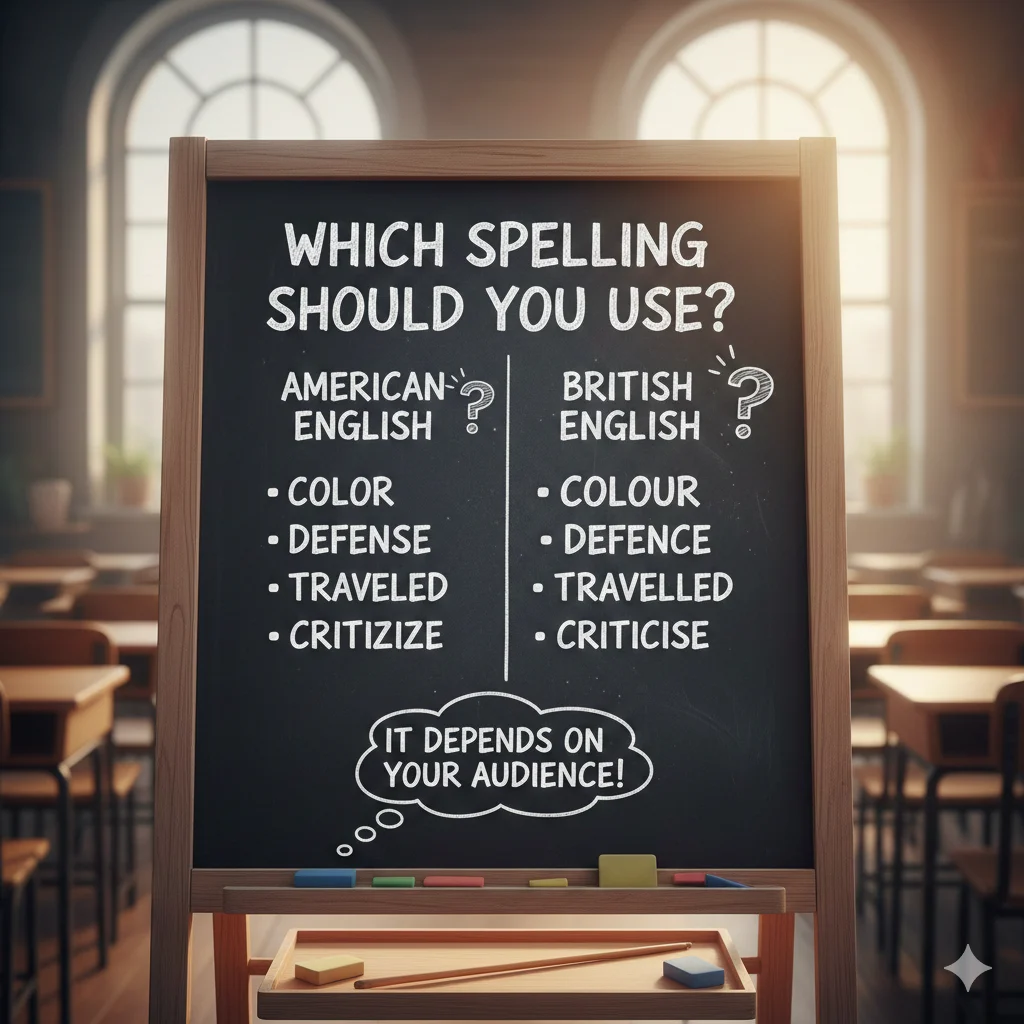
- In the US & Canada: Use rapport.
- In the UK, Australia, and Commonwealth: Use rapport.
- For Global/Formal Business: Use rapport. Using “repore” or “repour” in a professional document (like a resume or client email) will be seen as a spelling error and may undermine your message.
For building repore with someone, remember the correct phrase is rapport with someone.
Common Mistakes with Rapport

- “Repore”: The most common error. Remember the double ‘p’: rapport.
- “Repour”: This mistake comes from the pronunciation and the “our” spelling common in British English. The word is not “re-pour.”
- “Repor”: A shortened, incorrect version. Always include the final ‘t’.
- Confusing with “Report”: While you “report on” something, you “build rapport with” someone.
- Incorrect Preposition: Saying “rapport to someone” is less common. The standard phrase is rapport with someone.
Rapport in Everyday Examples
- Email: “Thank you for the meeting. I felt we had a great rapport and I look forward to collaborating.”
- News Headline: “The diplomat’s rapport with world leaders was key to the treaty’s success.”
- Social Media (Reddit): A post on “rapport reddit” might read: “Any tips for building rapport with remote team members?”
- Formal Writing: “The study emphasizes the therapist-client rapport as the strongest predictor of positive outcomes.”
Rapport – Google Trends & Usage Data

Google Trends data confirms that searches for the correct term “rapport” are consistently and significantly higher globally than for “repore.” Searches for “good repore or rapport” spike, showing users are actively trying to correct their spelling. Interest in the term is highest in English-speaking countries like the US, UK, Australia, and Canada, particularly in business-focused regions. This aligns with its importance in professional development, sales, psychology, and leadership contexts.
Comparison Table: Keyword Variations
| Correct Term & Meaning | Common Misspellings & Notes |
|---|---|
| Rapport (n.): A harmonious, understanding relationship. | Repore: Incorrect phonetic spelling. |
| Good Rapport: A strong, positive connection. | Good Repore: Incorrect. Use “good rapport.” |
| Rapport with someone: The correct phrasing. | Repor with someone: Incorrect spelling and phrasing. |
| Rapport Synonym: Understanding, connection, bond, harmony. | Repour or Rapport: “Repour” is a misspelling. |
Frequently Asked Questions (FAQs)
Q1: Is it repore or rapport?
A: It is rapport. “Repore” is a common misspelling.
Q2: What is a good repore?
A: The correct phrase is “good rapport.” It describes a strong, positive, and trusting relationship where communication is easy.
Q3: What is the meaning of repour or rapport?
A: “Repour” is not a word in this context. Rapport means a close and sympathetic relationship marked by mutual understanding.
Q4: What does repor mean?
A: “Repor” is not a standard English word. It is a frequent misspelling of rapport.
Q5: How do you pronounce rapport?
A: It is pronounced rah-POUR (rhymes with “door”).
Q6: What is a good synonym for rapport?
A: Common rapport synonyms are connection, bond, understanding, harmony, and affinity.
Q7: How do I build rapport with someone?
A: Key ways include: active listening, finding common ground, using positive body language, showing genuine empathy, and being authentic.
Conclusion
Understanding the difference between repore and rapport is more than just spelling—it’s about accurately naming a powerful human connection. The correct term is unequivocally rapport. Whether you’re writing an email, preparing for a job interview, or discussing rapport in relationships, using the correct spelling lends you credibility. Remember, building good rapport is about fostering trust and mutual understanding. By avoiding common errors like “repour” or “repor,” you communicate more professionally. Keep in mind the key takeaways: the word is French-derived, spelled with two ‘p’s and a silent ‘t’, and is always used as rapport with someone. Use this knowledge to build stronger connections in every part of your life.

“Bram Stoker was a creative storyteller known for his powerful writing style. At Wishveb.com, he inspires readers with heartfelt, expressive wishes.”