Have you ever watched a YouTube video about electronics and heard the host talk about using a “soddering” iron? Then, you read a DIY guide that spells it “solder” and got confused. You are not alone.
Thousands of people search for “solder or sodder” every month because they hear one thing and see another.
This confusion is completely normal and boils down to the fascinating history of the English language. This article will settle the debate once and for all.
We will explore what is a sodder, why solder is pronounced sodder in some places, and how to spell it correctly depending on where you are in the world. By the end, you will never mix up solder or sodder in english again.
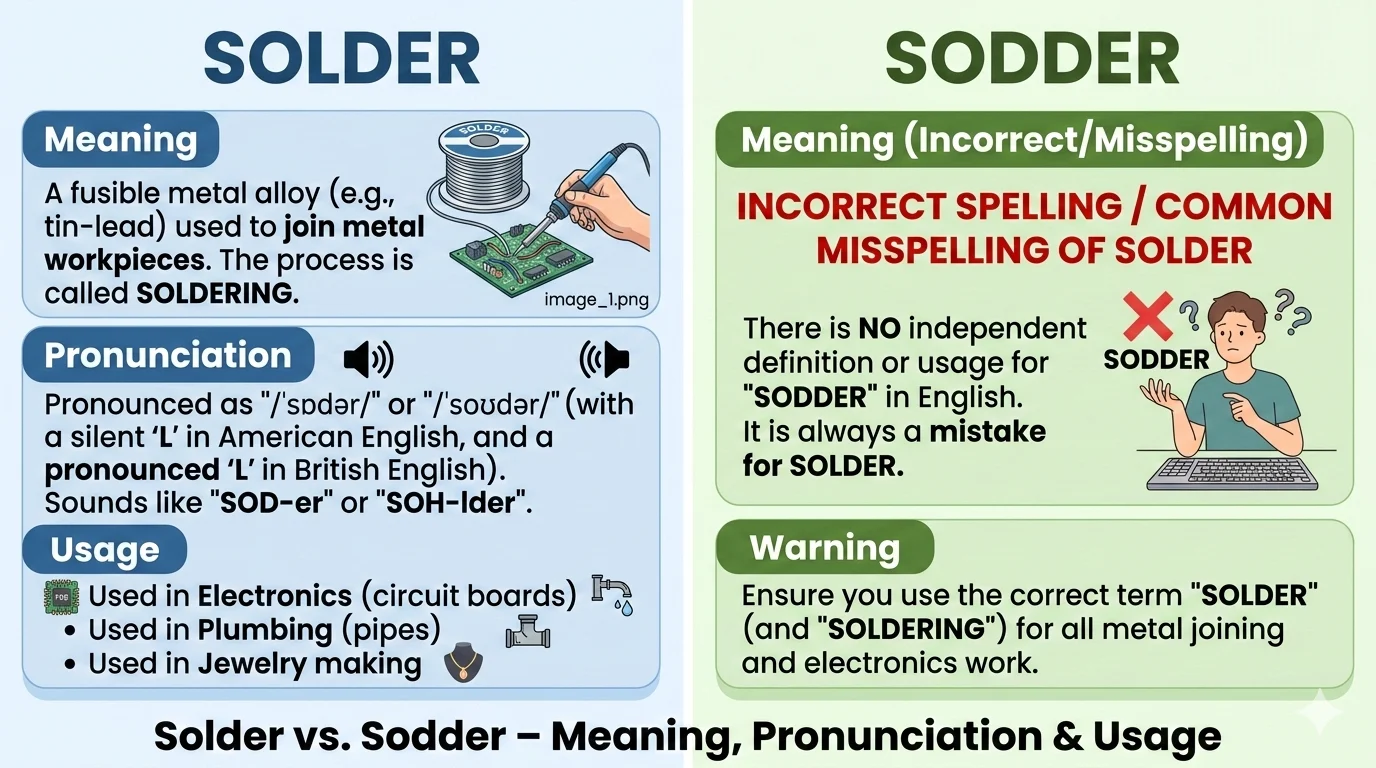
Solder or Sodder means
The quick answer is that both pronunciations are correct, but the spelling is always “solder.”
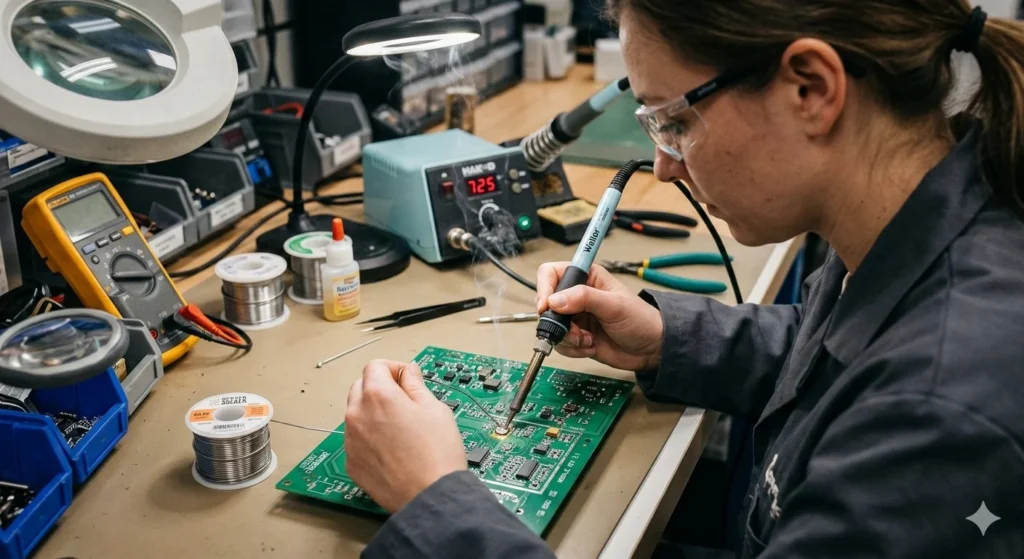
The word refers to a metal alloy used to join two metal pieces together . If you are in the United States, you pronounce it “sodder” (rhyming with “fodder”). If you are in the United Kingdom, you pronounce it “sold-er” (rhyming with “folder”) .
- Example (US): “I need to buy a new Solder Gun to fix this circuit board.”
- Example (UK): “Pass me the soldering iron, please.”
So, if you are writing an email or a report, you must write solder. If you are speaking in America, you say “sodder.”
The Origin of Solder
To understand why this spelling nightmare exists, we have to look at history. The word comes from the Latin word solidare, which means “to make solid” . When the word traveled into Old French, the locals dropped the “l,” turning it into souder (which is still very close to the modern French word souder). This “L-less” version entered Middle English as words like souder or sowder .
However, in the 15th and 16th centuries, educated scholars thought it was fancy to bring back the Latin roots of words. They added the “l” back into the spelling of many words to make them look more like Latin. “Souder” became “solder” to look like its parent, solidare . The pronunciation, however, didn’t always catch up.
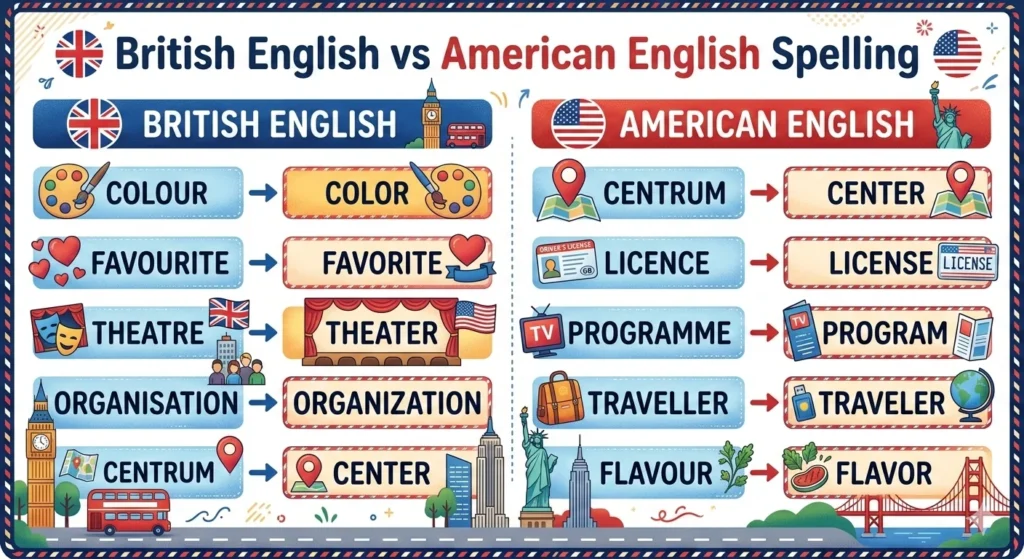
British English vs American English Spelling
This is where the transatlantic split happens. When the spelling changed, the pronunciation in different regions evolved separately.
- American English: Americans largely kept the older, “L-less” pronunciation that came from French. This is why how do British pronounce solder sounds different from the American version. In the US, the word is pronounced “sod-der” ( /ˈsɒdər/ ) . It rhymes with “fodder.” Who says soder? Americans say it this way, sticking to the historical sound of the word .
- British English: In the UK, the pronunciation evolved to match the new spelling. This is called a “spelling pronunciation.” Brits saw the “l” in the word and started saying it. So, solder pronunciation british is “sold-er” ( /ˈsəʊldə/ ), rhyming with “holder” .
Here is a simple table to break it down:
| Variation | Spelling | Pronunciation (Phonetic) | Example Context |
|---|---|---|---|
| American English | Solder | Sod-der (sounds like fodder) | “I’ll need my Solder Gun.” |
| British English | Solder | Sold-er (sounds like folder) | “We learned soldering in school.” |
| Common Misspelling | Sodder | N/A (Pronunciation guide) | Seen in old texts, but incorrect today. |
Which Spelling Should You Use?
If you are writing, the rule is simple: always use the spelling “solder.” The spelling “sodder” is considered a historical variant or a common misspelling today, despite Noah Webster once trying to change it to match the sound .
- For a US Audience: When speaking, use “sodder.” When writing for a technical manual in the US, it is fine to use “solder” (the spelling) but note that the voiceover or internal monologue of a reader will likely be “sodder.”
- For a UK / Commonwealth Audience: Use the spelling “solder,” and you can pronounce it with the “l” sounding out loud.
- For a Global Audience (like the internet): Stick to the spelling “solder.” You can choose your pronunciation based on your preference, but be aware that solder pronunciation audio clips online will vary.
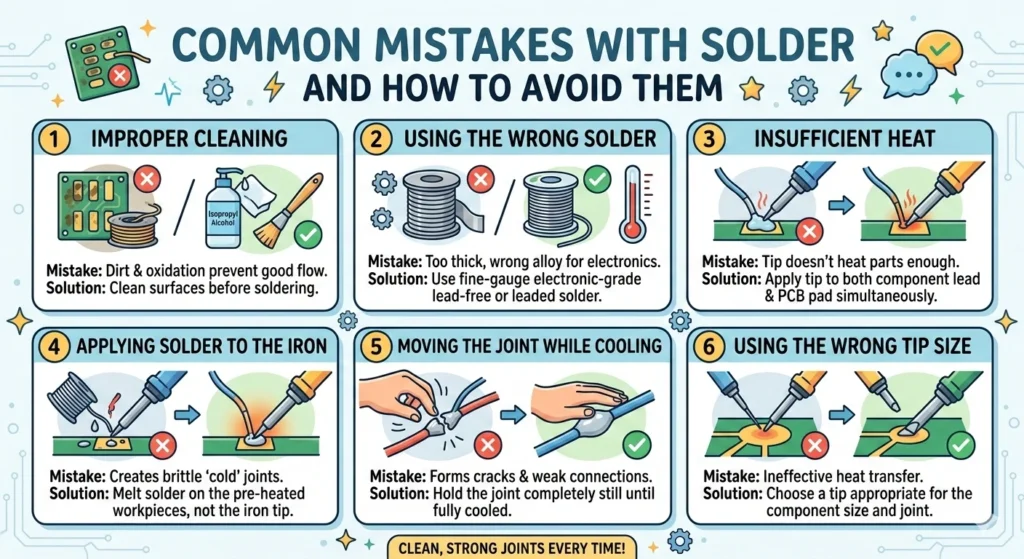
Common Mistakes with Solder
Because of this unique word, people make a few common errors.
- Spelling it “Sodder”: This is the most common error. Because Americans pronounce it “sodder,” many beginners try to spell it that way. However, how do you spell sodder? In modern English, you don’t. You spell it solder, even if you don’t say the ‘L’ .
- Pronouncing the ‘L’ in the US: If you are learning English or visiting the US, pronouncing the ‘L’ might mark you as a non-native speaker or sound overly formal. You might get a confused look if you ask for a “sold-ering iron” at an American hardware store.
- Confusing it with “Soldier”: Sometimes, new learners confuse the sound of “sodder” with “soldier.” While some old dialects used “sojer” for soldier, the words are unrelated .
Solder in Everyday Examples
Seeing the word in context helps solidify the difference.
- In an Email (Formal): “Please ensure the solder joints on the PCB are clean and free of cold joins.”
- In the News: “The technician used a soldering iron to repair the antique radio.”
- On Social Media (YouTube): “Hey guys, today we’re going to do some sodering (referring to the sound, not the spelling) on this old graphics card.”
- In a DIY Guide: “Soldering is the process of joining metals with solder.”
Solder – Google Trends & Usage Data
If you look at search data, you will find that the query “is it solder or sodder” is highly popular in the United States. This is because Americans hear the word before they see it written down.

- United States: The search for “sodder” is high because people are typing what they hear. There is high interest in solder pronunciation American and solder pronunciation audio to confirm the sound .
- United Kingdom & Australia: Searches are almost exclusively for “solder,” as the spelling matches the pronunciation. People in these regions might search for “solder pronunciation british” to confirm the subtle differences in vowel sounds compared to the US.
Antipasto or Antipasta: Don’t Make This Food Spelling Error 🚫🍝
Frequently Asked Questions (FAQs)
1. Is it pronounced solder or sodder?
Both are correct. In American English, it is pronounced “sodder.” In British English, it is pronounced “solder” (with the ‘l’ sounded) .
2. What is a sodder?
“Sodder” is simply the phonetic spelling of how Americans pronounce the word “solder.” It is not a different tool or material. If you are asking what is a sodder, you are asking about solder, the metal alloy used for joining metals .
3. How do British pronounce solder?
The British pronounce it “sold-er,” making the ‘l’ sound. It rhymes with “holder” or “colder” .
4. Why is solder pronounced sodder in the US?
Because the US kept the older pronunciation from French, which dropped the ‘l’. When the spelling was later changed back to include the ‘l’ (re-Latinization), the American accent held onto the original sound .
5. Which is correct: solder or sodder in English?
The only correct spelling is “solder.” “Sodder” is a common misspelling based on the American pronunciation .
6. Is there a difference between soldering and welding?
Yes. Soldering joins metals by melting a filler metal (solder) into the joint without melting the base parts. Welding melts the base parts themselves together .
7. What is a Solder Gun?
A Solder Gun is a tool used for soldering. It looks like a pistol and is used to melt the solder wire to create electrical connections .
Conclusion
The battle of solder or sodder is a perfect example of English being a living, breathing language. While the spelling is fixed as solder, the pronunciation depends entirely on your side of the Atlantic Ocean. If you are writing a paper, stick with the spelling solder. If you are talking to a friend in Texas, ask them to pass the “sodder.” If you are in London, ask for the “sold-er.”
Ultimately, whether you are using a Solder Gun for a hobby project or working as a professional plumber, understanding this quirk of language helps you communicate clearly. Now that you know the difference, you can focus on the actual work—creating strong, solid bonds between metals without worrying about a silent ‘l’.