Are you struggling with whether to write “I swam” or “I have swum”? You’re not alone. Every day, thousands of people search for “swam or swum” because this irregular verb causes real confusion. The good news? The rule is simpler than you think.
The quick answer: Use swam when talking about a completed action in the past without a helping verb (“I swam yesterday”). Use swum after helping verbs like have, has, or had (“I have swum there before”) .
This article will clear up your confusion once and for all. Whether you’re writing an email, a school paper, or just want to speak correctly, you’ll learn exactly when to use each word. We’ll cover everything from basic rules to tricky exceptions, with plenty of examples you can use right away.
By the end, questions like “Is swum a word in the UK?” and “What is the past perfect tense of swimming?” will have simple, clear answers. Let’s dive in!
Swam or Swum means
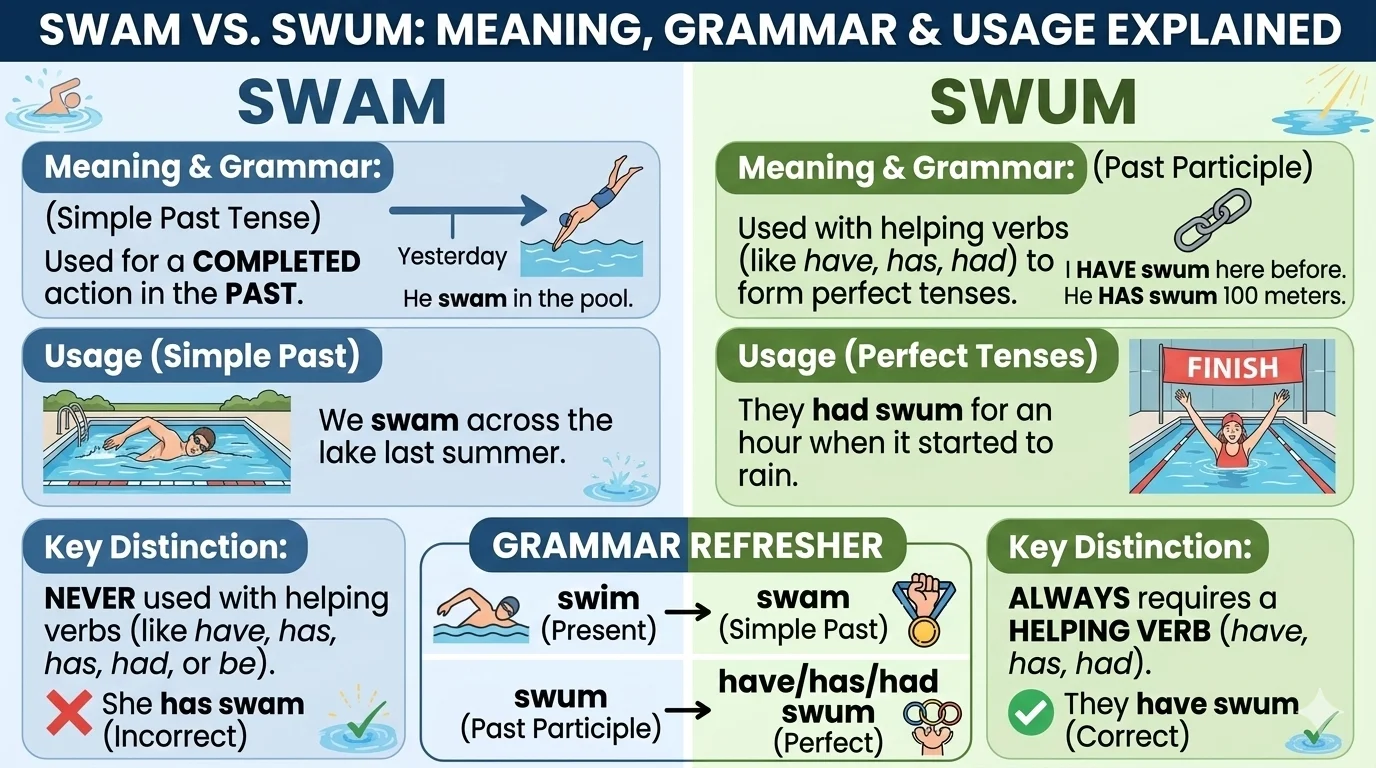
Swam is the simple past tense. Use it when an action happened and finished in the past, with no helping verb.
Swum is the past participle. Use it with helping verbs like have, has, or had.
Here are examples showing the difference:
| Incorrect | Correct | Explanation |
|---|---|---|
| I have swam in that lake | I have swum in that lake | After “have,” use swum |
| She had swam before work | She had swum before work | After “had,” use swum |
| Yesterday I swum a mile | Yesterday I swam a mile | No helping verb = use swam |
| They have swam every day | They have swum every day | After “have,” use swum |
Think of it this way: swam stands alone, while swum needs a partner (have, has, or had) .
The Origin of Swam and Swum
Swim comes from Old English “swimman,” and it’s been part of the language for over a thousand years . The reason we have both swam and swum? English is full of irregular verbs that change their spelling for past tenses.
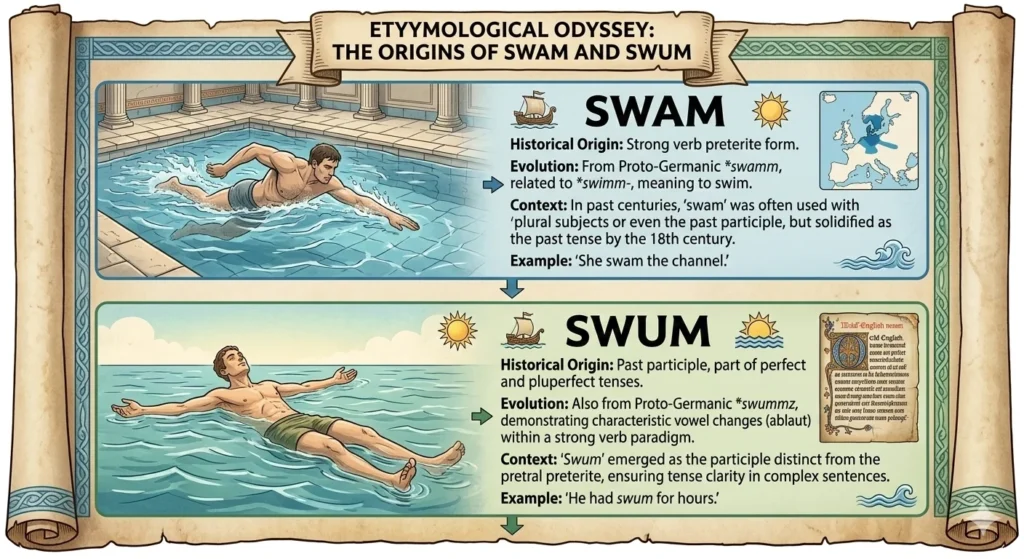
Swim follows a pattern shared with other common verbs:
- Ring: rang (past), rung (past participle)
- Sing: sang (past), sung (past participle)
- Drink: drank (past), drunk (past participle)
- Begin: began (past), begun (past participle)
This pattern (i → a → u) comes from Old English verb classes. Native speakers learn it naturally, but it confuses everyone at first. The important thing to remember: swim is not a regular verb, so never say “swimmed” – that’s always wrong .
British English vs American English Spelling
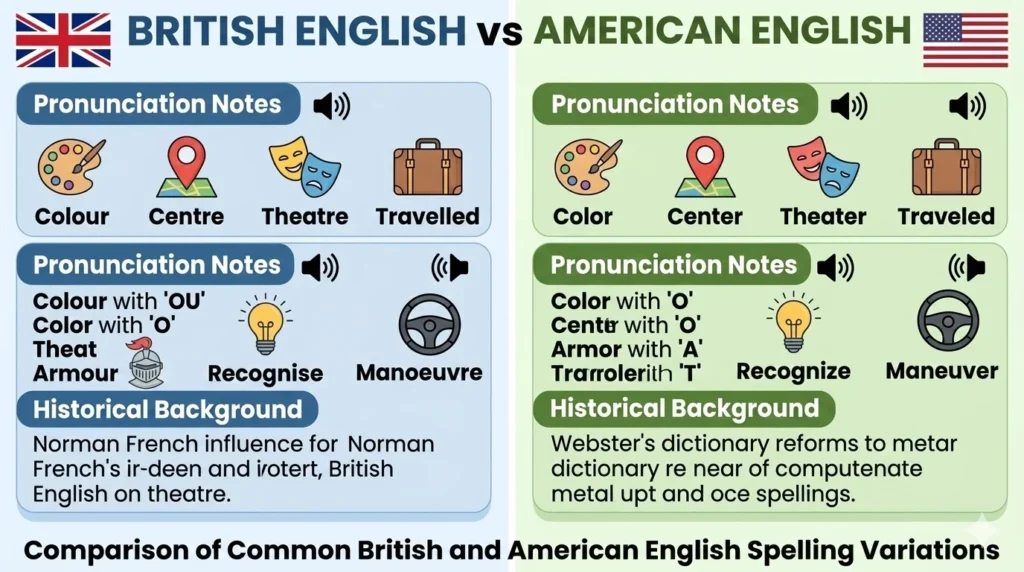
Good news: both British and American English follow the exact same rules for swam and swum . There’s no difference between how they’re used in the UK versus the US.
Here’s a comparison of how each form is used in both varieties of English:
| Verb Form | When to Use | Example (UK/US Both Correct) |
|---|---|---|
| Swim | Present/future | “I swim every morning” / “I will swim later” |
| Swam | Simple past | “She swam across the lake yesterday” |
| Swum | Past participle | “They have swum in the ocean” / “He had swum before dawn” |
| Swimming | Gerund/present participle | “Swimming is good exercise” |
The Oxford Learner’s Dictionary confirms that swum is the standard past participle in British English, exactly as it is in American English . So whether you’re writing for a UK or US audience, use swam for simple past and swum with helping verbs.
Which Spelling Should You Use?
Your choice depends entirely on grammar, not geography. Here’s simple advice for any situation:
For US audiences (and everywhere else):
- Use swam when the action is finished and there’s no helping verb
- Use swum after have, has, or had
For UK and Commonwealth audiences:
For global English:
- This rule works everywhere. English speakers worldwide understand both forms, but using them correctly shows strong writing skills.
When in doubt: Ask yourself, “Is there a helping verb (have, has, had) before it?” If yes, choose swum. If no, choose swam. This simple test works 100% of the time.
Common Mistakes with Swam and Swum
Here are the errors people make most often – and how to fix them:
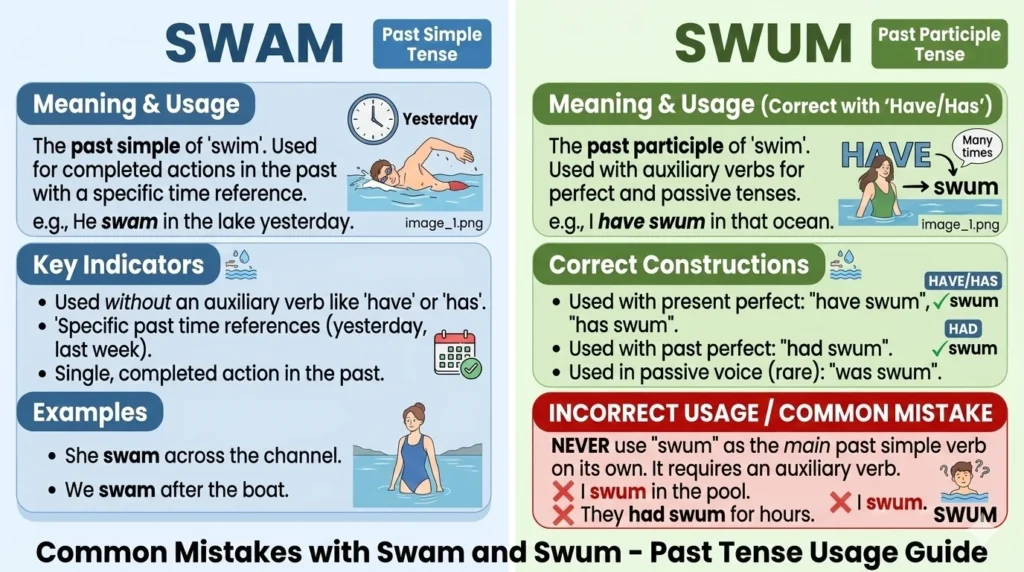
1. Using “swam” after have, has, or had ❌
Wrong: “I have swam in that pool before.”
Right: “I have swum in that pool before.”
2. Using “swum” without a helping verb ❌
Wrong: “Yesterday I swum three miles.”
Right: “Yesterday I swam three miles.”
3. Using “swimmed” ❌
Wrong: “She swimmed the channel last year.”
Right: “She swam the channel last year.”
4. Forgetting the helping verb with perfect tenses ❌
Wrong: “I swum there many times.”
Right: “I have swum there many times.”
5. Mixing up tenses in the same sentence ❌
Wrong: “I have swam every day and swam a mile each time.”
Right: “I have swum every day and swam a mile each time.”
The most common mistake by far is using “have swam.” Even native speakers get this wrong in casual conversation. But in writing, always use “have swum” .
Swam or Swum in Everyday Examples
Let’s see how these words appear in real situations:
In News Articles
- “The athlete swam the final leg of the relay race.”
- “She has swum across the English Channel three times.”
In Social Media
- “Just swam my fastest lap ever! 🏊♂️”
- “I’ve never swum in such cold water before!”
In Emails
- Informal: “I swam this morning before work.”
- Formal: “The team has swum in competitions throughout the region.”
In Conversation
- “We swam out to the buoy and back.”
- “Have you ever swum in the ocean at night?”
In Formal Writing
Notice that swum often appears in longer, more complex sentences where there’s a helping verb, while swam keeps things simple and direct.
Swam or Swum – Google Trends & Usage Data
Search data reveals interesting patterns about how people use these words:
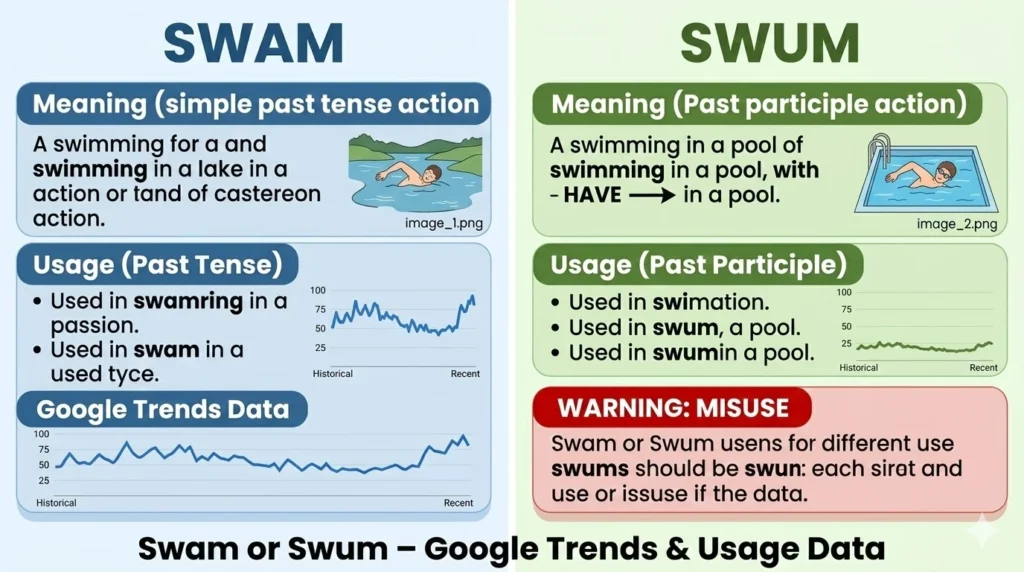
What people search for:
- “I have swam or swum” – one of the most common questions
- “Is swum a word” – many people doubt it exists
- “Swam or swum past tense” – clear confusion about which is which
- “Swam or swum meaning” – users want definitions
- “Is it swam or swum” – the basic question people ask
Popular questions include:
- “When to use swam and swum?”
- “Is swum a word in the UK?” (Yes, it is)
- “What is the past perfect tense of swimming?” (It is “had swum”)
- “What is an example of swam?” (“She swam yesterday”)
Country patterns: Both terms are searched worldwide, with “swam” more common in simple searches and “swum” appearing in grammar questions. UK users search for “swum” as often as US users, confirming it’s standard in both varieties .
Context matters: In swimming communities and forums, people debate correct usage frequently, showing that even experienced swimmers sometimes need reminders about the grammar rule .
Comparison Table: Swam vs Swum at a Glance
| Aspect | Swam | Swum |
|---|---|---|
| Grammar term | Simple past tense | Past participle |
| Needs helping verb? | No | Yes (have, has, had) |
| Example sentence | “I swam yesterday.” | “I have swum before.” |
| When to use | Finished past action | Completed action with connection to present |
| Common mistake | Using it after “have” | Using it alone |
| Similar verbs | Rang, sang, drank, began | Rung, sung, drunk, begun |
| Can it stand alone? | Yes | No |
Frequently Asked Questions
When to use swam and swum?
Use swam for simple past tense without a helping verb: “She swam yesterday.” Use swum after have, has, or had: “She has swum before.”
Is swum a word in the UK?
Yes, absolutely. Swum is the standard past participle in British English, just as it is in American English. The Oxford Learner’s Dictionary confirms swum as the correct past participle form .
What is the past perfect tense of swimming?
The past perfect tense is “had swum.” For example: “She had swum for an hour before we arrived.” Past perfect describes an action completed before another past action .
What is an example of swam?
Simple examples: “I swam in the ocean yesterday.” “They swam across the lake.” “He swam faster than anyone else.” Swam describes a completed action in the past with no helping verb .
Is it “I haven’t swam” or “I haven’t swum”?
Correct: “I haven’t swum.” Because “haven’t” includes the helping verb “have,” you must use the past participle “swum.” “I haven’t swam” is grammatically incorrect .
What is the difference between swam and swum meaning?
Both words refer to the same action of swimming. The difference is grammatical: swam is the simple past tense, while swum is the past participle used with helping verbs. Their meaning is identical – they both describe swimming that happened in the past .
Has swum or have swum – which is correct?
Both are correct, depending on the subject:
- Use has swum with he, she, it: “She has swum today.”
- Use have swum with I, you, we, they: “I have swum today.”
Is it “I had swam” or “I had swum”?
Correct: “I had swum.” After “had” (past perfect), you must use the past participle “swum.” “I had swam” is incorrect .
Can you say “I have never swam”?
No. Always say “I have never swum.” Because “have” is a helping verb, it requires the past participle “swum” .
What are similar verbs to swim?
Swim follows the same pattern as ring/rang/rung, sing/sang/sung, drink/drank/drunk, and begin/began/begun. All change from i in present, to a in past, to u in past participle .
Conclusion
Now you know the simple rule that solves the swam vs swum confusion. Use swam for simple past actions without a helping verb. Use swum after have, has, or had.
Let’s recap the key points:
- Swam stands alone: “We swam at the beach.”
- Swum needs a partner: “We have swum at that beach.”
- This rule works the same in both American and British English
- Never use “have swam” or “had swam” in writing
- The past perfect tense is always “had swum”
The most common question people search for is “I have swam or swum?” Now you know the answer is always “I have swum.” Whether you’re writing an email, posting on social media, or speaking in a formal setting, this rule will guide you correctly every time.
Remember the helping verb test: if you see have, has, or had nearby, choose swum. If not, choose swam. With this simple trick, you’ll never hesitate again. Now dive in and use your new knowledge with confidence!

“Samuel Butler was a sharp, insightful writer. At Wishveb.com, he inspires readers with clever, heartfelt wishes that connect emotions beautifully.”