Do you hesitate every time you write “used” or “use”? You’re not alone. This small spelling choice is a major source of confusion for English learners and even native speakers.
People search for “used or use” because they want to write correctly and avoid common grammar mistakes.
They are often puzzled by phrases like “I used to go” versus “I use it daily,” or questions like “Did you used or use it?” This confusion stems from verb tenses, the special phrase “used to,” and subtle spelling rules.
This article will solve that confusion. We’ll provide a quick answer, dive into the grammar, and give you simple, professional advice so you can always choose the correct word with confidence.
Used or Use – Quick Answer
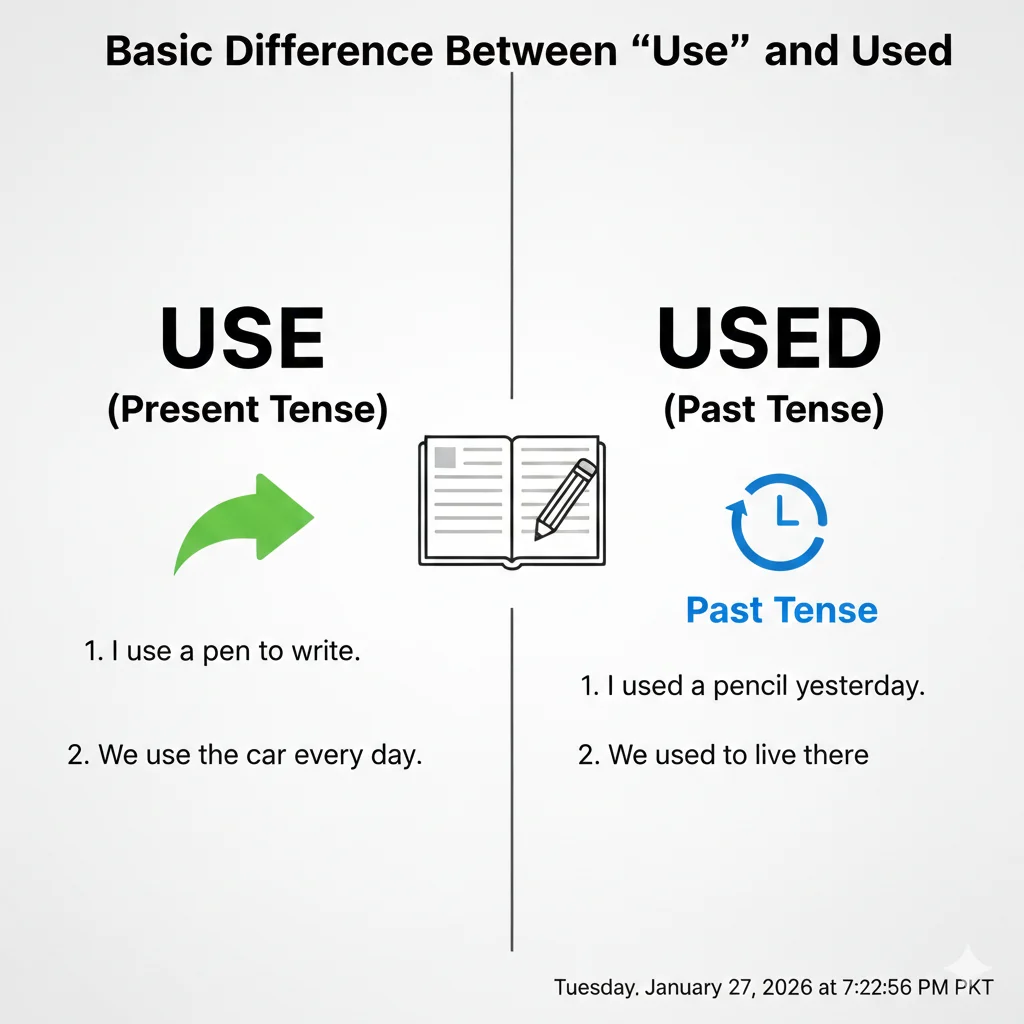
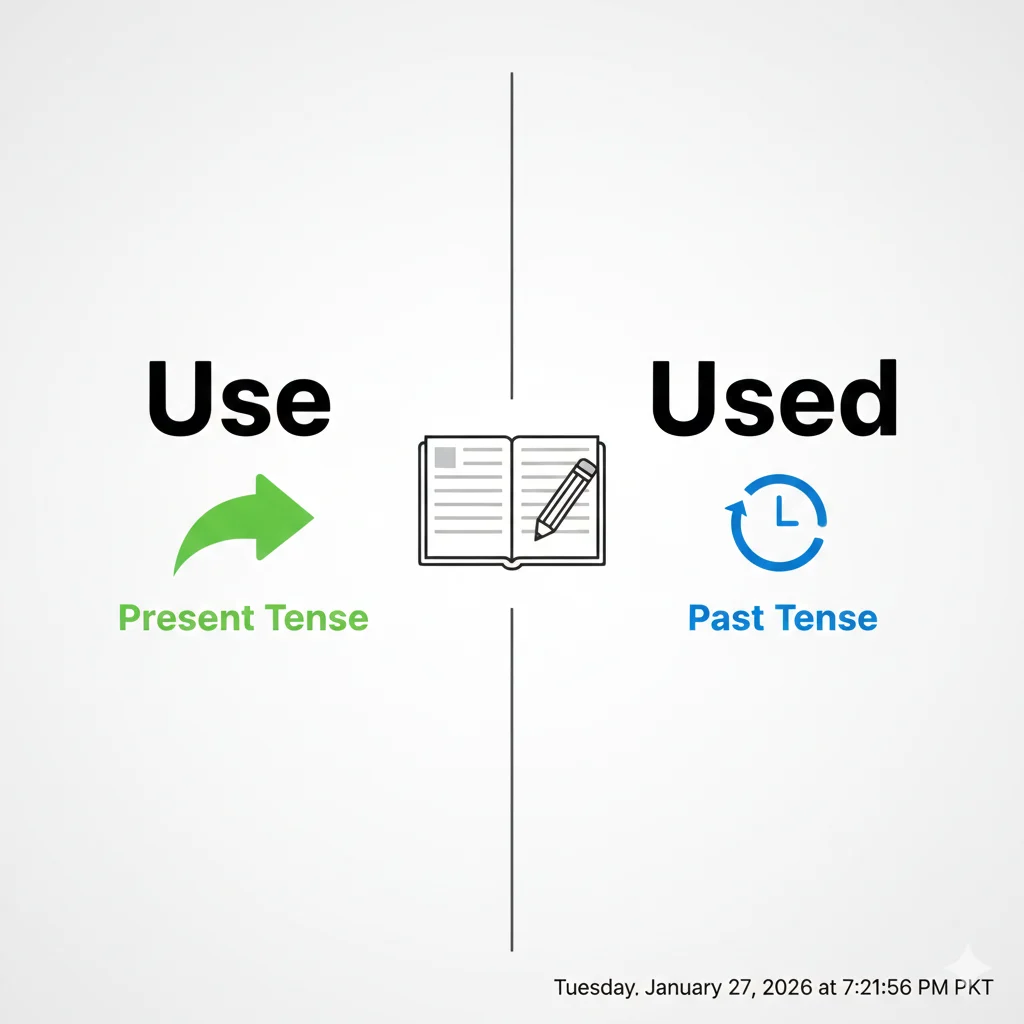
“Use” is the base form of the verb (present tense). “Used” is the past tense and past participle. For example: “I use a pen now.” “I used a pen yesterday.” However, “used to” is a special phrase for past habits or being accustomed to something. For past tense actions, you typically use “used.” In questions with “did,” always use the base form “use”: “Did you use it?” (Not “did you used”).
The Origin of “Used or Use”
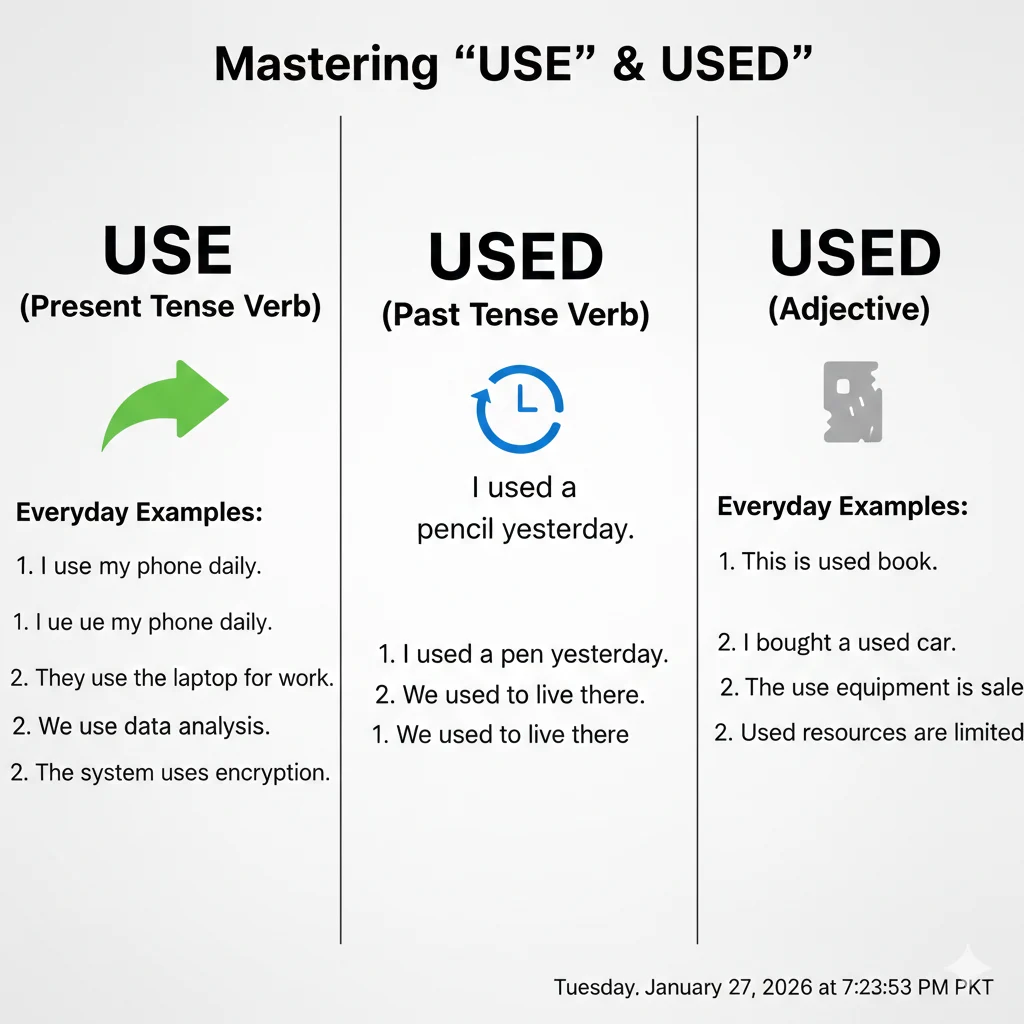
The word “use” comes from the Old French “user,” meaning to employ or practice. The “-ed” ending is the standard way to form the simple past tense in English. The confusion arises because when we form questions or negatives in the past tense with “did,” we revert to the base verb “use” (e.g., “He did not use it”). The unique phrase “used to” for past habits has been in the language for centuries, solidifying “used” as the correct spelling in that specific context, regardless of the auxiliary verb.
British English vs American English Spelling
The spelling of “used” and “use” is the same in both British and American English. The difference lies in the associated vocabulary. For instance, British English might pair it with “lorry,” while American English uses “truck.” The core grammar rules for used or use past tense remain identical. A key point of convergence is the phrase “used to,” which is standard across all English variants.
| Feature | American English | British English |
|---|---|---|
| Spelling of ‘Use/Used’ | Identical: use, used | Identical: use, used |
| Common Collocation | I use a truck. | I use a lorry. |
| Phrase “Used to” | Standard: I used to drive. | Standard: I used to drive. |
Which Spelling Should You Use?
- For a US Audience: Use “used” for the simple past (“I used it”) and “used to” for past habits. Always use “use” after “did” (“Did you use it?”).
- For a UK/Commonwealth Audience: The same rules apply as for the US audience. There is no spelling difference.
- For a Global/ESL Audience: Follow the standard rule: “use” for present/future, “used” for past actions. Remember the special case: “used to” for past habits. The phrase “I’m used to it” (meaning accustomed) is always spelled with a ‘d’.
Common Mistakes with “Used or Use”
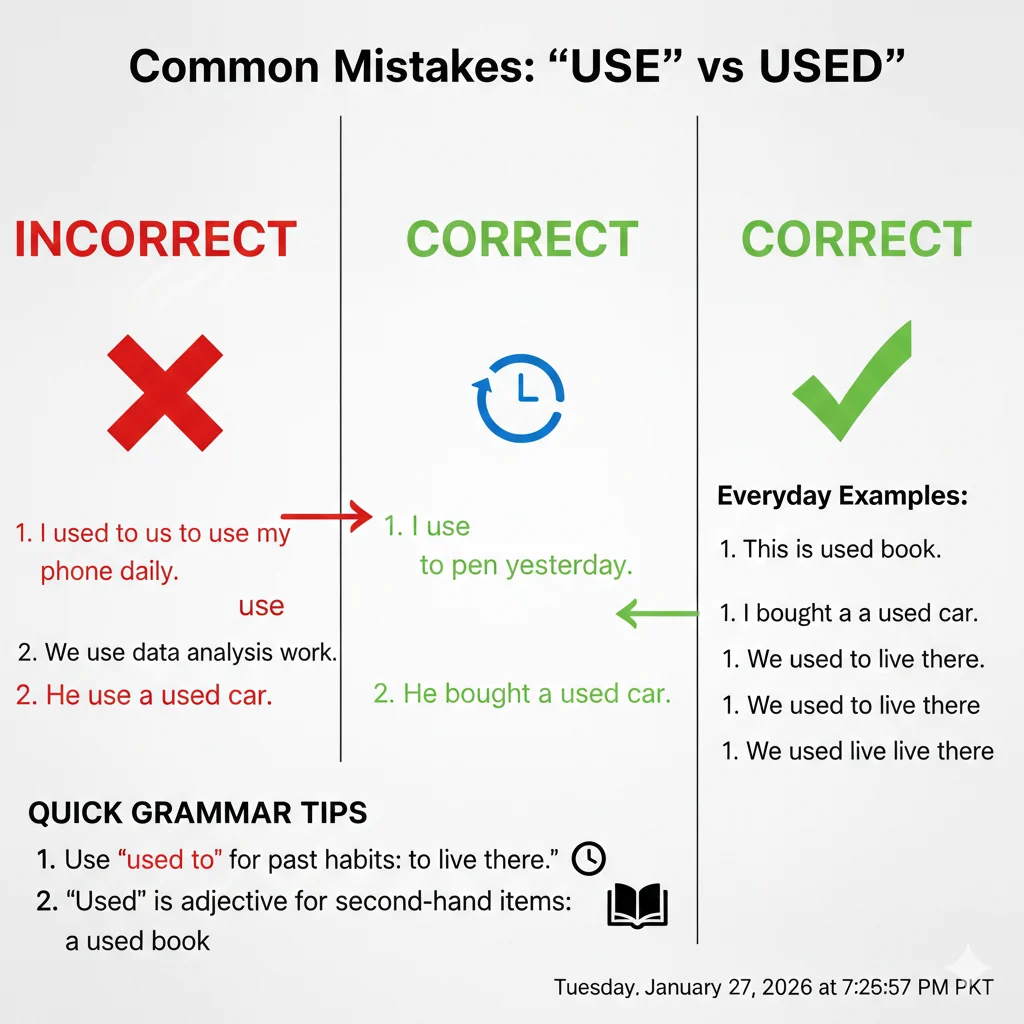
- Incorrect: Did you used the computer? (Wrong after “did”)
Correct: Did you use the computer? - Incorrect: I use to live there. (For a past habit)
Correct: I used to live there. - Incorrect: I am use to the noise. (For being accustomed)
Correct: I am used to the noise. Or, I’m used to it. - Incorrect: She is getting use to the new job.
Correct: She is getting used to the new job.
Used or Use in Everyday Examples
- Email: “Please use the attached form. As we used last quarter’s data, the results improved.”
- News Headline: “City Uses New Technology to Fix Potholes.”
- Social Media: “Getting used to this new phone! #tech”
- Formal Writing: “The method used in this study has been widely adopted.”
Used or Use – Google Trends & Usage Data
Online search data shows consistent global searches for “used to meaning” and “use to or used to,” indicating widespread uncertainty. Searches like “did you used or use” spike in English-learning regions and in academic periods. The correct form “used to” is vastly more searched than the incorrect “use to,” showing people’s instinct to find the right answer. This usage data confirms that this is a persistent point of grammar needing clarification.
FAQs: Used or Use
Q1: Should I use or used?
Use “use” for present tense and “used” for past tense. Example: “I use a map today.” “I used a map yesterday.”
Q2: Did you used or use?
Always “use” after “did.” “Did you use the correct tool?”
Q3: Is it correct to say used to be or use to be?
“Used to be” is correct for describing something in the past. “This used to be a field.”
Q4: What is correct used for?
“Used” is correct for the past tense of the verb “use” and for the phrases “used to” (past habit) and “be/get used to” (accustomed to).
Q5: Can you give me use to or used to examples?
- Used to: “I used to play piano.” (Past habit)
- Use to: Only appears after “did” or “didn’t.” “Didn’t she use to work here?”
Q6: I’m used to it or I’m use to it?
“I’m used to it” is always correct. This means you are accustomed to it.
Q7: Getting use to or used to?
The correct phrase is “getting used to,” meaning becoming accustomed.
Conclusion
Mastering “used or use” comes down to a few clear rules. Remember: “use” is for the present, and “used” is for the past. The special phrase “used to” always has a ‘d’ when talking about past habits or states. After “did,” always revert to the base form “use.” Finally, to express being accustomed, the correct phrases are “be used to” and “get used to.” By understanding these key distinctions—used or use past tense, use to or used to examples, and the meaning of I’m used to it—you can eliminate this common error from your writing and speaking. Keep it simple: when in doubt about a past action or habit, “used” is usually the safe choice.

“John Galsworthy was a refined storyteller known for expressive, emotional writing. At Wishveb.com, he brings graceful, heartfelt wishes to readers.”